Facebook
 Google
 GitHub
 Linkedin
Hey,
After reading several papers regarding the kelvin connection and the difference between 4 wires and 2 wires connection. I end-up by choosing to use a 2 pads current sense resistor for my PCB. The problem I am encountering right now is that when trying to use a kelvin connection for a 0603 shunt resistor, the tracks are too big to be connected inside the resistor, as it can be seen below :
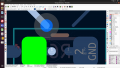
I tried to modify the nettie to achieve smaller dimensions but still in vain, the problem isn't with the nettie, it's within the dimensions of the resistor itself.
Ps: If you want to suggest to go for a bigger shunt resistor, it will be an overkill for my circuit. With 0.1 Ohms and (0.5A)
The datasheet recommends a shunt resistor of 0.01 ohm, which gives a voltage drop of 5 mV (with 500 mA and 4.2 V). However, the ADC operates with a range of -125 mV to 125 mV. That's why I opted for a 0.1 ohm resistor, the voltage drop will be 50 mV, which makes the ADC more sensitive to voltage variations. I don't want to go for a bigger resistor because the actual rated power of this resistor is 25 mW, which justifies the choice of a 0603 (0.1 ohm) resistor with a rated power of 100 mW. If I go for a bigger resistor it will has the power rating of 250mW which can be an overkill for my circuit.
Regards,
[MODERATOR: Fixed broken image link]
After reading several papers regarding the kelvin connection and the difference between 4 wires and 2 wires connection. I end-up by choosing to use a 2 pads current sense resistor for my PCB. The problem I am encountering right now is that when trying to use a kelvin connection for a 0603 shunt resistor, the tracks are too big to be connected inside the resistor, as it can be seen below :
I tried to modify the nettie to achieve smaller dimensions but still in vain, the problem isn't with the nettie, it's within the dimensions of the resistor itself.
Ps: If you want to suggest to go for a bigger shunt resistor, it will be an overkill for my circuit. With 0.1 Ohms and (0.5A)
The datasheet recommends a shunt resistor of 0.01 ohm, which gives a voltage drop of 5 mV (with 500 mA and 4.2 V). However, the ADC operates with a range of -125 mV to 125 mV. That's why I opted for a 0.1 ohm resistor, the voltage drop will be 50 mV, which makes the ADC more sensitive to voltage variations. I don't want to go for a bigger resistor because the actual rated power of this resistor is 25 mW, which justifies the choice of a 0603 (0.1 ohm) resistor with a rated power of 100 mW. If I go for a bigger resistor it will has the power rating of 250mW which can be an overkill for my circuit.
Regards,
[MODERATOR: Fixed broken image link]