How to choose right op-amp for feed back control loop

Thread Starter

mazers

Joined Mar 3, 2026
6
Hello,
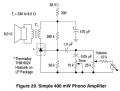
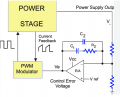
I am working on PSFB DC-DC converter and I prefer analog control so I need to pick a op-amp for type 2 compansation . I also add buffer op-amps in current or voltage feedback paths for stability. Which specifications should I concern for fast response ? and Can you give an example op-amp model ?
1788767536592.png
 

crutschow

Joined Mar 14, 2008
38,764
You need to quantify what "fast response" is and then pick an op amp from a manufacturer with a gain-bandwidth that will meet that requirement.
Other considerations, are input voltage offset, common-mode range for single-supply operation, and cost.
Op amp manufacturers include Analog Devices, Texas Instruments, and Microsemi among many others.
A Google search will list more.
 

schmitt trigger

Joined Jul 12, 2010
2,211
There are several performance requirements, but amongst them:
-single supply
-the input common mode range should include ground.
-The output should also swing very close to ground.
-Wide supply voltage range.

As Cruts has mentioned, the gain-bandwidth product depends on your loop bandwidth, which in most cases it isn’t very demanding.

EDIT: the ubiquitous LM358 has been successfully used in SMPS error amp.
 

ci139

Joined Jul 11, 2016
2,029
slew rate and overshoot/settling may be important to consider (sometime the slower amp may perform better due it's slower/ more relaxed response HF cut off)
your schematic shows a differential (AC) feedback chains only ?
using buffer op amps adds latency (more accurate design requirements to gain a predictable control loop) ~ in case implementable using transistors is occasionally faster and cleaner (in a sense of ringing noise settling stability)
 

Ian0

Joined Aug 7, 2020
13,258
No op-amp will be too fast! The frequency response is set by C1, C2 and R2.
The faster the op amp you choose the less it will be influenced by its own slew rate and internal dominant pole capacitor, and the more it can be predicted by the time constants of C1, C2 and R2.
For instance, if you choose the LM358 as @schmitt trigger said, its slow speed might be doing the job of C1.

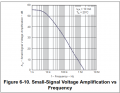
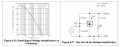
[EDIT] The TL431 is a popular choice, and its open-loop response looks like this. So presumably, it must be fast enough.
Screenshot from 2026-09-07 18-59-34.pngIts only problem here would be its lowest output voltage being 2.5V.
 
Last edited:

crutschow

Joined Mar 14, 2008
38,764
The TL431 is a popular choice,
That is a programmable voltage reference, not an op amp.
It is often used to control an opto isolator in a feedback loop, but it doesn't necessarily replace an op amp or perform its feedback compensation.
 

ci139

Joined Jul 11, 2016
2,029
i have perhaps more than couple of times tested various DiY feedback nets with the best stability/latency using 1 to 3 direct coupled transistor stages - ! however ! - these were the feedback/control-loop tests which had each a varying operating window - e.g. - startup to different loads / various fixed loads / near max load - suppressed starting or killed the oscillations at certain circuits = none of them was a clocked SMPS -- problem with op amps are deriving from
  • required** supply (for many it's ±15V to get its **full potential)
  • I/O ranges
  • sensitivity e.g. some higher speed op amps require heavy driving
  • over-gain too hard feedback forces output becoming unstable or unstable at certain loads
    -vs- low gain may result at low precision or occasionally poorly regulated output . . .
  • as i mostly targeted low supply I/O voltage levels - it fast reduced available/affordable op amp options**

i guess - today there's sufficient variety of controllers available for common power@voltage output ranges -- many of which can be paralleled
 
Last edited:
Top