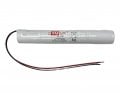
A 4.8V NiCd battery pack (4 cells in series) exhibits a characteristic charge curve that
rises from roughly 4.8V-5.2V, maintains a slow increase, and peaks around 6.0V-6.2V (approx. 1.55V/cell) before a slight voltage drop (Negative Delta Voltage) indicating full charge. Constant current charging at 0.1C for 16 hours is the standard method.
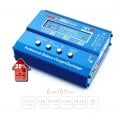
This article explains it in detail. My experience with building such a charger was that I could not reliably detect the delta V when charging, I had to turn off the current and measure the battery voltage periodically. With that regimen, the final open circuit voltage was roughly 1.4V per cell.
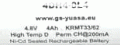
In the photo in post #1 there is someinformation printed on the battery, that I can not read. Probably that includes information about charging the battery.
One warning is that the wrong charging power can cause anoverheat and make the battery burst. THAT is messy and dangerous.
That is the standard C/20 trickle charge. At that current. it will not be damaged even if you leave it in too long. You only see the delta V when fast charging at C/2 to C, in this case 2 to 4 Amps. Typically, you would charge for20 hours at that rate to get a full charge.
It is clearly 4x 1.2v batteries stacked in series. One of the tricks of obsolescence! It reduces the battery pack's life in a slow and sneaky way that you cannot even complain about the short life of a battery pack that you did not charge 200 cycles. The underlying reason is that eventho all batteries come from the same product line, they are not 100% identical in terms of initial charge, chemistry etc. and when they are charged up in series, one of them gets more stressed than the others and wont hold charge. This affects the performance of the whole pack. charging lipo or ni cad batteries in series is bad. For your battery, you can use the light bulb trick. A 50W 12v halogen bulb in series with a 5V power supply should be safe and fast enough