Facebook
 Google
 GitHub
 Linkedin
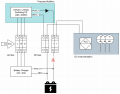
We currently use a LiFePO4 40A battery charger to charge a bank that will provide sustained power to our main DC bus in cases of power outage at a rural location. I want to modify this system to take the 120VAC input power to utilize a more appropriate and regulated DC switching power supply source for all the downstream 24V DC instrumentation and electronics.
I would preferably like the 24V battery power to be available immediately and not switched like you see on some budget UPS systems. Just dropping a 480W AC/DC regulator we have on the shelf is an option, but I have reservations about that. Even with a diode added to prevent the charger from backfeeding into the output of the new regulator, I am concerned that the regulator being added would potentially trigger into an overloaded fault state if the bank charge fell too low and it attempted to charge the bank with the regulator during normal use. What is the traditional approach here without utilizing complex, custom circuitry and still allowing for a seamless transition between the switched source?
Right now, all the downstream instrumentation can handle the max DC output voltages from both regulator and charger, but it seems more appropriate to ensure a reliable 24V DC bus with less voltage variance since new DC instrumentation with a narrower input voltage threshold isn't out of the question. I was thinking a Zener diode across the DC bus to regulate excess voltage would address this, but it would not address the overloading of the regulator.
Thanks
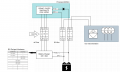
I would preferably like the 24V battery power to be available immediately and not switched like you see on some budget UPS systems. Just dropping a 480W AC/DC regulator we have on the shelf is an option, but I have reservations about that. Even with a diode added to prevent the charger from backfeeding into the output of the new regulator, I am concerned that the regulator being added would potentially trigger into an overloaded fault state if the bank charge fell too low and it attempted to charge the bank with the regulator during normal use. What is the traditional approach here without utilizing complex, custom circuitry and still allowing for a seamless transition between the switched source?
Right now, all the downstream instrumentation can handle the max DC output voltages from both regulator and charger, but it seems more appropriate to ensure a reliable 24V DC bus with less voltage variance since new DC instrumentation with a narrower input voltage threshold isn't out of the question. I was thinking a Zener diode across the DC bus to regulate excess voltage would address this, but it would not address the overloading of the regulator.
Thanks
Last edited: