Facebook
 Google
 GitHub
 Linkedin

Design Context
I have a motor powered by an LDO, whose GND (GND_MT) is controlled by an N-channel MOSFET (IRLML6344) in a low-side switch configuration.
This MOSFET switches the ground of the entire motor power circuit (GND_MT), allowing it to activate only when the MOSFET channel is closed.
The MOSFET’s gate is driven by the Q̅ output of a D-type flip-flop (74LVC1G80GV), which toggles state when a button is pressed.
The circuit is powered by a Li-Ion battery. A USB-C connector on a second PCB provides 5V only for charging the battery, not for directly powering the system.
The Problem
When I touch the USB-C connector with the charger cable (even before fully plugging it in), the motor activates, as if the MOSFET were turning on by itself.
But it shouldn’t:
Things I’ve already tried without success:
What I’m looking for
I’m trying to find a simple solution that doesn’t require a full redesign. Ideally, something that stabilizes the behavior without permanently tying GND_MT to the system ground, since it must be controlled via the MOSFET.
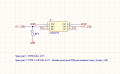
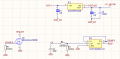
I’ve attached the relevant part of the schematic showing the flip-flop, LDO, and MOSFET, as well as the USB-C charging section.
Any ideas or insight would be greatly appreciated!
I have a motor powered by an LDO, whose GND (GND_MT) is controlled by an N-channel MOSFET (IRLML6344) in a low-side switch configuration.
This MOSFET switches the ground of the entire motor power circuit (GND_MT), allowing it to activate only when the MOSFET channel is closed.
The MOSFET’s gate is driven by the Q̅ output of a D-type flip-flop (74LVC1G80GV), which toggles state when a button is pressed.
The circuit is powered by a Li-Ion battery. A USB-C connector on a second PCB provides 5V only for charging the battery, not for directly powering the system.
The Problem
When I touch the USB-C connector with the charger cable (even before fully plugging it in), the motor activates, as if the MOSFET were turning on by itself.
But it shouldn’t:
- The button hasn’t been pressed.
- The flip-flop logic shouldn’t change (but it does — seemingly triggered by this contact).
- The flip-flop supply remains stable and active throughout.
Things I’ve already tried without success:
- Added a 100kΩ resistor between GND_MT and BAT+ → no effect.
- Connected the USB-C shield to GND → no improvement.
- Placed various capacitors (100 pF to 10 nF) between GND and BAT+.
- Added a capacitor between the ENABLE signal (gate of the MOSFET) and GND → didn’t help.
What I’m looking for
I’m trying to find a simple solution that doesn’t require a full redesign. Ideally, something that stabilizes the behavior without permanently tying GND_MT to the system ground, since it must be controlled via the MOSFET.
I’ve attached the relevant part of the schematic showing the flip-flop, LDO, and MOSFET, as well as the USB-C charging section.
Any ideas or insight would be greatly appreciated!