How do you verify electronic component suppliers?

Status
Not open for further replies.

Thread Starter

Bounds

Joined Sep 19, 2025
1
Hi everyone,

I’ve been working on sourcing components for a few embedded and power projects recently, and I’ve run into a recurring issue that I’d like to get some input on.

For commonly used parts (like STM32 MCUs, AMS1117 regulators, or some MOSFETs), availability seems to fluctuate a lot depending on the supplier. Even when parts are listed as “in stock,” lead times or actual delivery can be inconsistent.

A couple of specific challenges I’ve noticed:

* Some distributors list parts but cancel or delay after order confirmation
* Pricing varies significantly for the same part number
* Risk of receiving remarked or non-original components (especially from smaller vendors)

For example, I was recently comparing a few STM32 variants and noticed big differences in pricing and stock reliability across suppliers. It made me wonder how others here handle supplier selection and verification.

I’ve been using a mix of major distributors and smaller independent suppliers. I also came across some sites that aggregate availability and offer alternatives (<link removed>), but I’m still not fully confident in evaluating new sources.

So I wanted to ask:

1. How do you usually verify if a supplier is reliable (especially for bulk orders)?
2. Do you stick strictly to authorized distributors, or do you sometimes use independent suppliers?
3. Any tips for identifying potential counterfeit components before or after purchase?
4. Are there specific platforms or tools you trust for cross-checking availability and pricing?

Would really appreciate hearing how others approach this, especially for production-level or medium-volume orders.

Thanks in advance.

MOD EDIT: Link removed.
 
Last edited by a moderator:

panic mode

Joined Oct 10, 2011
4,864
when some of your orders get messed up to delayed, you will have the reliability info you were looking for. major distributors (as mentioned already) only distribute original parts. chance of getting fake parts is next to nothing. this is not necessarily the case when buying from other (unauthorized) sources. bad deal like this is the major issue and reputation killer. so my advice is to stick with authorized distributors if you care about it.
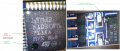
btw i also buy tons of junk (modules etc.) for evaluation and fun. for example one can get all sorts of fakes from eBay, Amazon, AliExpress etc. for example i knowingly ordered few blue pill boards (STM32) even though i knew they are fake. i just wanted to see how they compare to real deal. as expected they had half the RAM, and needed a bit of arm wrestle to get the program loaded. looking at the product one can see that IC surface is no longer smooth, either sanded off or burned by laser. uit looks gray instead of black so contrast with marking is lower than on original. that is easily seen on same IC in the dot in lower left corner. that is how entire surface is supposed to look like. other parts on same product also with black surfaces are also included.

1773771773798.png

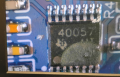
sometimes they don't use fake chips but try to erase marks. here is an example where unit where drop meant to dissolve and erase surface was dropped incorrectly (TPS40057)
1773772115962.png

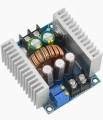
That was on the 20A buck covnerter:
1773772221350.png
 

dl324

Joined Mar 30, 2015
18,218
1. How do you usually verify if a supplier is reliable (especially for bulk orders)?
2. Do you stick strictly to authorized distributors, or do you sometimes use independent suppliers?
Only buy from authorized resellers who only buy directly from manufacturers or authorized resellers.
3. Any tips for identifying potential counterfeit components before or after purchase?
Not an issue if you only buy from authorized resellers.
 

kaindub

Joined Oct 28, 2019
176
I’m guessing you are a small time manufacturer. In large organisations, they have purchasing departments that look after such issues. They do nothing more than source suppliers and components and monitor supplier performance and quality. And large organisations get stiffed from time to time.
when you are a small manufacturer you have to take on all these functions. It’s time consuming. The first thing you can do at the design stage is to make sure you can multi source parts. Know the lead time for all components. The minimum build time is the longest deliver time for any part. Availability can change quickly. Consider forward ordering. It’s often easier to delay orders than to quicken up an order.
 

SamR

Joined Mar 19, 2019
5,470
To make an omelet you have to break eggs.;)
To become a supplier for the company you had to sign a sheaf of Terms and Conditions including a 1 million USD indemnity insurance policy. Not every vendor was willing to do so. Lawyers... Which suited me just fine as the vendors who did supplied us with quality goods and services. Just another hoop that I didn't have to jump through along with the purchasing dept. also taking care of the bidding process for construction contracts. Let me concentrate my work on my design and specifications and not all the other BS. One nice perk of working for a Fortune 500 corporation. Until they went bankrupt from a CEO who mismanaged the company. Hercules Incorporated no longer exists after being in business for over a hundred years. en.wikipedia.org › wiki › Hercules_Inc
 

du00000001

Joined Nov 10, 2020
189
I'm working for a medium-sized company (3000+ employees).
Meanwhile, the "technical purchasing department" (scratch the "technical" - they have no idea about this aspect) appreciates my support - they have really weird conceptions about the capabilities of the distributor guys (not much technical expertise as well).
But to get to my current standing I had to stomp on some toe now and then. So I'm not shy to do the stomping when necessary.:)
My routine saying: "Now I have to become a bit unpopular." Have to live with that.
 

parts4you

Joined May 31, 2025
3
Digi-Key and Mouser are best at posting realistic lead-times and tend to hold more stock than the others. Accordingly, their mark-ups are a bit higher. Arrow, Avnet, Newark (owned by Avnet), Future, TTI, Master, are all reliable. FindChips is my favorite quick search site and my buyer likes TrustedParts.
 

eetech00

Joined Jun 8, 2013
4,704
So I wanted to ask:

1. How do you usually verify if a supplier is reliable (especially for bulk orders)?
You have to have a "quality check" in your receiving (inspection) department.
Usually with AQL (Acceptable Quality Level) standards set by you company.

2. Do you stick strictly to authorized distributors, or do you sometimes use independent suppliers?
Use suppliers authorized by your company that have proven to meet your quality levels.

3. Any tips for identifying potential counterfeit components before or after purchase?
This should show up in quality inspection. Keep a history.

4. Are there specific platforms or tools you trust for cross-checking availability and pricing?

Would really appreciate hearing how others approach this, especially for production-level or medium-volume orders.
Its all about your company setting quality standards and holding suppliers accountable to them.
You will need lots of funds and purchasing power.
 
Status
Not open for further replies.
Top