How do planes crash into each other?

Thread Starter

Robin Mitchell

Joined Oct 25, 2009
819
Hi all,

Just watch the Aftermath trailer and I have a question. This may sound really insensitive and stupid but....

How do planes crash in midair? Surely, both pilots see a dirty great big plane headed towards them.
 

cmartinez

Joined Jan 17, 2007
8,730
Hi all,

Just watch the Aftermath trailer and I have a question. This may sound really insensitive and stupid but....

How do planes crash in midair? Surely, both pilots see a dirty great big plane headed towards them.
Not necessarily. Remember that airspace is three dimensional. Whereas while walking or driving we're accustomed to perceiving our surroundings without looking up or down... A tragedy very illustrative of this point is the time in which two news helicopters collided in mid air, killing all their occupants.
 

Reloadron

Joined Jan 15, 2015
7,866
On Friday, December 16, 1960, a United AirlinesDouglas DC-8, bound for Idlewild Airport (later renamed John F. Kennedy International airport) in New York City, collided with a TWALockheed L-1049 Super Constellation descending into the city's LaGuardia Airport. One plane crashed on Staten Island, the other into Park Slope, Brooklyn, killing all 128 people on both aircraft and six people on the ground. The accident became known also as the Park Slope plane crash. On Staten Island, it became known as the Miller Field crash.
The aircraft that went into the Park Slope section went in a few blocks from my grandparents Brownstone. My grandfather was a doctor and knew nobody would have survived. A bowling alley was used as a temporary morgue. Here is how it happened. Mid air collisions do not always involve aircraft seeing each other.

I was living and working in San Diego at NAS North Island when this happened and remember it well.
Pacific Southwest Airlines (PSA) Flight 182 was a Boeing 727-214 commercial airliner, registration, N533PS[2] that collided with a private Cessna 172 light aircraft, registration, N7711G[3] over San Diego, California, at 9:01 am on Monday, September 25, 1978. It was Pacific Southwest Airlines' first accident involving fatalities. The death toll of 144 makes it the deadliest aircraft disaster in California history. Until the crash of American Airlines Flight 191, it was also the deadliest plane crash in U.S. aviation history.
Here is how it happened.

The latter was a classic midair where neither plane saw the other till it was after the fact. These were two I actually watched the smoke from, up close and personal. I will never forget either but remember my grandfathers face on the first when he said they were all dead and they needed a temporary morgue. I was ten years old.

Ron
 

spinnaker

Joined Oct 29, 2009
7,830
Not too mention pilots also need to deal with weather.

Probably the biggest problem is two people doing a stupid thing at the same time.

Happens all the time on the water. You have to wonder how two boats can crash into one another on a huge ocean but it happens. When I sailed, would rarely need to give way because I was sailing. If I met another sailboat on starboard or a manually powered craft I would head for their stern even if I knew I had plenty of room to pass them in front of their bow. You can't hit someone that is moving away from you unless they do something really stupid at the last minute. :)

Another issue is not being attentive. I remember coming out of the South River on the Chesapeake Bay. Traffic all over the place. I had a huge Genoa flying so my vision was limited forward from the helm. I had asked my crew to watch for traffic forward because I could not easily see from my position. Well I guess they got to gabbing and weren't paying attention. I decided to duck my head below the bottom of genie and 100 meters ahead I saw some idiot anchored in a Boston Whaler right in the middle of the channel. Had I not seen him I would have split the boat right in half and likely killed the occupants. I had 100 meters and was only moving at around 5-6 kts. Can you imagine if I was moving at 500kts? You really don't have much time to make up for taking your eyes off the ball at that speed.
 

GopherT

Joined Nov 23, 2012
8,009
Hi all,

Just watch the Aftermath trailer and I have a question.
If your question is, "will I ever get that 2 minutes back?" No. It was a waste of time. Next time read the comments before starting to watch the trailer.

This may sound really insensitive and stupid but....
Go ahead and ask, there are no stupid questions, just people that stay stupid when questions go unasked.

How do planes crash in midair? Surely, both pilots see a dirty great big plane headed towards them.
What? Ignore what I said above!
 
Last edited:

nsaspook

Joined Aug 27, 2009
16,259
Happens all the time on the water. You have to wonder how two boats can crash into one another on a huge ocean but it happens. When I sailed, would rarely need to give way because I was sailing. If I met another sailboat on starboard or a manually powered craft I would head for their stern even if I knew I had plenty of room to pass them in front of their bow. You can't hit someone that is moving away from you unless they do something really stupid at the last minute. :)
Ships bottleneck at choke points and usually don't just randomly follow a path to the next port on the open seas. I would assume airplanes do the same.

The Straits of Malacca and Singapore are nightmares to navigate.
 

absf

Joined Dec 29, 2010
1,968
I've seen a lot of National Geographic Documentaries on Air Crash Investigations. One of the mid-air collision was the Russian pilots mis-understood English from the Air Port Controller.

If I remember correctly. The collision was on an Indian airport. The Russian plane was going to land while a Dutch plane was taking off. Got to find this documentary again...

The most touching part was what the survivors have spoken. Some changed their jobs after the crash. Most valued their lives and their loved ones more than what they used to before the crashes.

Allen
 
Last edited:

wayneh

Joined Sep 9, 2010
18,091
This thread makes me think of this:


Those are two bullets that met each other mid-flight. If you visit Civil War museums, almost all of them will have these on display. They're surprisingly not as rare as you would think. It tells me a lot about, and well symbolizes, that conflict.
 

#12

Joined Nov 30, 2010
18,224
I see it, but it's hard to believe. What would I have to do to make 2 bullets intersect in 3 dimensions? (X, Y, and time)
Fairly impossible if I only get one try.
According to wayneh's post, you just have to get two armies to fire a few hundred thousand bullets at each other and the odds of an intersection are higher than 1/100,000.

But airplanes? That seems similar to two blind mackerels intersecting because they have 4 dimensions to work with.
Now look at airplane traffic for this planet. There are over 100,000 commercial flights every day and there are "standard" altitudes they use (which diminishes the freedom of one of the variables). Frightening! If airplanes were stupid, I would predict an intersection almost every day.:eek:

But airplanes aren't stupid. They have several methods to detect nearby traffic.
And it seems to be working. There were 29 airplane crashes in 2015 and 31 crashes in 2016 and that includes all crashes, not just two airplanes intersecting. That's way better than 1/1million odds...but there are a million commercial flights every week.

Sometimes they intersect.
 

atferrari

Joined Jan 6, 2004
5,002
Ships bottleneck at choke points and usually don't just randomly follow a path to the next port on the open seas. I would assume airplanes do the same.

The Straits of Malacca and Singapore are nightmares to navigate.
Traffic separation schemes do exist precisely for areas like that. Google for Malacca Strait or S'pore Strait.

Edit to add:
Every time we navigated through, pirats were the main concern.
/Edit
An interesting variation: 75 vessels, all at the anchor. You, in the middle of the lot, trying to leave the anchorage in night time with winds force 10. Hope for no interference in the VHF channel you intend to use. (Tripoli roads - 1971).
 
Last edited:

nsaspook

Joined Aug 27, 2009
16,259
Traffic separation schemes do exist precisely for areas like that. Google for Malacca Strait or S'pore Strait.

Edit to add:
Every time we navigated through, pirats were the main concern.
/Edit
An interesting variation: 75 vessels, all at the anchor. You, in the middle of the lot, trying to leave the anchorage in night time with winds force 10. Hope for no interference in the VHF channel you intend to use. (Tripoli roads - 1971).
I've sailed the Straits (and been to Singapore's Bugis Street a few times for laughs) many times on watch (radar and visual) while in the Navy and have unfortunately seen the handy work of pirates on boats (during the Vietnam/Cambodia boat people era) in the area.
 
Last edited:

Ramussons

Joined May 3, 2013
1,567
I've seen a lot of National Geographic Documentaries on Air Crash Investigations. One of the mid-air collision was the Russian pilots mis-understood English from the Air Port Controller.

If I remember correctly. The collision was on an Indian airport. The Russian plane was going to land while a Dutch plane was taking off. Got to find this documentary again...

The most touching part was what the survivors have spoken. Some changed their jobs after the crash. Most valued their lives and their loved ones more than what they used to before the crashes.

Allen
The only mid air collision in Indian airspace was between a outgoing Saudi and a incoming Khazak flight.
https://www.google.co.in/url?sa=t&r...s3FI3c&usg=AFQjCNFbIS6AwVsRtutfMm_BvW1m-EGgZQ

The visibility from the cockpit of all commercial aircraft is very limited. The modern cars too are becoming, similarly, visibility limited.
 

absf

Joined Dec 29, 2010
1,968
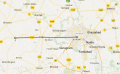
Thank you for the updates. I watched that on the NGC and is slightly different from the Utube videos. The crash site was above Charkhi Dadri and is only 91.45 km from New Delhi....

The documentary reported that it was a 1 in 100 million probability accident.

Charkhi Dadri to New Delhi_crop.PNG
Both air-crafts did not have TCAS (Traffic Collision Avoidance System) installed in their planes in 1996.

Allen
 
Last edited:
Top