How do I know which Mosfet to use in a circuit

Thread Starter

fanno15

Joined Dec 7, 2017
6
Hello,

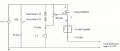
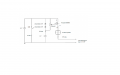
I'm fairly new to electronics and would like to get a better understanding of where and when to place components. I came across a simple enough circuit online and am wondering how I choose the correct specifications for components (specifically the MOSFET and Rheostat). If someone could help me out or point me in the direction of some helpful resources, it would be much appreciated. Laser diode power circuit.png
 

Alec_t

Joined Sep 17, 2013
15,126
Welcome to AAC!
I suggest you don't build that circuit, because of several likely issues with it, the main one being it could destroy the laser diode :eek:.
What are the laser diode specs? Can you post a link to its datasheet?
What exactly are you trying to do with the laser?
 

dl324

Joined Mar 30, 2015
18,397
Welcome to AAC!

Cropped version of the schematic to remove unnecessary whitespace:
upload_2017-12-7_8-51-39.png
The most important parameters will be threshold voltage and current capability.

Be wary of random circuits you pull from the internet. The one you posted is crap.

Start with the power indicator LED. LEDs these days have a forward voltage of 2-3V, depending on color, the circuit you found would 40-60mA through the LED; which would make most LEDs unhappy.

Requiring dual supplies is bogus.

The thing labeled Rheostat is a potentiometer. A potentiometer connected as a rheostat is a two terminal device; not three.

The gate drive for the MOSFET is specious.

With 0.25 ohms of drain resistance, the MOSFET could source 20A.

There aren't many discrete MOSFETs that have a separate substrate terminal as shown in the schematic.

Please post the source of the schematic. The author deserves proper attribution.
 

Thread Starter

fanno15

Joined Dec 7, 2017
6
Hey all,

My Boss asked me to recreate this circuit, but if you could let me know what improvements I could make and why that would be awesome. The posted circuit is not the one I found online, It was originally designed by a student working on the laser diode (I think they're more into the physics of the laser than the circuitry, hence the crudeness). I'm mainly trying to get the laser to work again, with an output between 1.4-1.9V. Another student group tried attaching a raspberry pi to the circuitry to automate the process and unfortunately did not get the result they were looking for. I was asked to essentially reverse engineer the setup to the original working circuit, which I was told was this. The laser diode is a F20-808-1 and the best data sheet I could find is in the following link.

http://www.apolloinstruments.com/product_fcmodule.html#options

Thanks for the welcome, I look forward to learning all about circuits!
 

Alec_t

Joined Sep 17, 2013
15,126
So, it's a 20W output laser. Pretty dangerous then, in unskilled hands.
It's unclear from the datasheet what the rated input current would be for that specific laser, as it only quotes one 'typical' value for a whole range of output powers :rolleyes:.
I'm no expert on driving lasers, but presumably you should be looking to provide a controlled current source: not a particular driving voltage.
Another student group tried attaching a raspberry pi to the circuitry to automate the process
Automate what process?
Given that the original circuit has major problems, which could prove expensive, ask your boss if an alternative with a better prospect of working is allowable.
 
Last edited:

philba

Joined Aug 17, 2017
959
Also, it appears there is a driver option. I would recommend to your boss that you purchase that. If you were more skilled in electronics, you might be able build a good driver but since you are asking these questions, I think you have a steep learning curve to get to a level of quality and reliability needed for business. Pulling random circuits off the internet is not going to get you there anytime soon.

and on the attribution point, I think a good spanking is called for.
 

dl324

Joined Mar 30, 2015
18,397
Deserves something, but "attribution" isn't the word I would have chosen :D.
Whether the work is good or bad, the author deserves attribution for his/her work.

It also prevents someone using a poorly designed circuit from wearing the creator's black eye.
 

Thread Starter

fanno15

Joined Dec 7, 2017
6
The prototype was originally intended to be a LIBS device which could be used in vacuum, so they wanted to automate switching the laser on and off while collecting samples. I am actually a nanotechnologist, not an electrical engineer, so my knowledge of circuitry is pretty limited. So my questions is how can I make this circuit better, in your opinions? To my understanding, the MOSFET can be used as a current controlling device. Is this true?

Also, I won't be testing the device until I have a supervisor with me so no there are no worries on that front. Ill also get them to look over the circuitry etc. I just want something I can show my boss and have the laser working.
 

dl324

Joined Mar 30, 2015
18,397
Since you, the student, and your Boss don't seem to know what you're doing; I second buying an off the shelf driver from the manufacturer.
 

wayneh

Joined Sep 9, 2010
18,127
I came across a simple enough circuit online and am wondering how I choose the correct specifications for components (specifically the MOSFET and Rheostat).
No comment on your circuit - you've got that already.

My mental checklist for choosing a MOSFET goes as follows:
1. Type, N or P. I usually design for N but some applications such as the one you posted call for a P.
2. Regular or "logic level". This refers to the gate voltage (versus the source pin) that you need to fully turn on the transistor. If you have 9V or more, you can choose a regular MOSFET. Below that you'll need a logic-level choice. The line is blurry and you might get away with a regular MOSFET at 6V, if the current load is small.
3. Application (frequency). This is a tough call for a non-expert like myself but my rule of thumb is that frequencies below about 100kHz don't require much special consideration. Above that, you're talking RF and that's a different world that requires specialized parts and designs. Below 10kHz, I don't even think about it. At 1MHz, I'm certain it's a major concern. I'd come here and ask the experts if I had a concern.
3. Load current. Figure out the average and possible peak values, and choose a MOSFET rated to 2-4X more. You always want plenty of comfort factor when choosing electrical components. Murphy's Law dictates that worst-case scenarios will occur more frequently than anyone expects. And a little extra current rating usually adds very little to the cost. More is better.
4. Operating voltage that the MOSFET is switching. Again, give yourself plenty of head room. At least 30% or more (such as a >16V rating for operating at 12V). More is better.
5. Physical size. If you are replacing a component on a PCB, the leads need to fit in the holes and there needs to be room for the part. It's also nice if the pin order - D,S,G is the same, especially if you're mounting to a heatsink.
6. Double-check: If there's any doubt about heat dissipation, I'd take a hard look at the load current and the Rdson of the MOSFET, the ohms (usually mΩ) of resistance the MOSFET shows even when turned fully on. The MOSFET will need to dissipate I^2•R watts or more, and it's nice to know if the package can do that, and whether or not a heat sink is required.

As for the potentiometer, I would usually do what I can to ensure it handles very little power (current), only voltage. Pots that can handle significant current are expensive! Choosing a pot that gives the desired results in a circuit is an entire discussion on its own. It's very simple to get "close" but a robust solution usually requires more attention to mapping the extremes, the full on and full off positions of the pot, to the desired behavior of the circuit.
 

ian field

Joined Oct 27, 2012
6,536
Also, it appears there is a driver option. I would recommend to your boss that you purchase that. If you were more skilled in electronics, you might be able build a good driver but since you are asking these questions, I think you have a steep learning curve to get to a level of quality and reliability needed for business. Pulling random circuits off the internet is not going to get you there anytime soon.

and on the attribution point, I think a good spanking is called for.
You need a resistor in series with the LD so you can sense current, you also need a feedback loop to control current.
 

Thread Starter

fanno15

Joined Dec 7, 2017
6
Thanks for the input everyone, it seems the popular vote is to get the driver to do the dirty work for me. I'll look in to what driver I need and go from there. I emailed apollo asking which driver I would need. As I said before, the laser was functioning at one point, (I presume using this circuit, otherwise why would my boss have requested I make this circuit?) so someone must have known what they were doing. Unfortunately I don't know who that someone was as I just started this job. Again, I appreciate all the replies.
 

ian field

Joined Oct 27, 2012
6,536
Thanks for the input everyone, it seems the popular vote is to get the driver to do the dirty work for me. I'll look in to what driver I need and go from there. I emailed apollo asking which driver I would need. As I said before, the laser was functioning at one point, (I presume using this circuit, otherwise why would my boss have requested I make this circuit?) so someone must have known what they were doing. Unfortunately I don't know who that someone was as I just started this job. Again, I appreciate all the replies.
You need a voltage reference, an op amp, a suitable power device and a current sensing resistor - pretty sure there's example circuits online
 
Top