High side MOSFET failed open

shortbus

Joined Sep 30, 2009
10,050
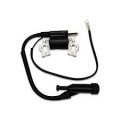
The ignition i refer to is for single cylinder generators, it does not require voltage to produce a spark - a magneto ignition i think they call it - magnet on a flywheel passes the coil.
That magnet is producing the primary voltage, somewhere around 6V. But it is still putting a much higher voltage on the primary as the secondary collapses when the plug sparks. again around 300 to 400 volts.

What is it you are really wanting this project to do? Stating your goal may get you some better ways of doing it. Or if there was another thread sating your goal give a link to it. Both of you partial schematics here show BJTs when the thread title says mosfet. And showing a more complete schematic would help.
 

Thread Starter

dandy1

Joined Sep 30, 2017
178
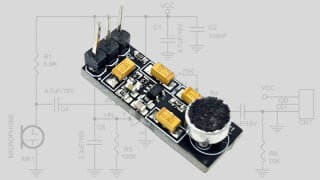
OK here's the full schematic, sorry its a bit untidy but you should find your way round. NB hc-12 not in use(n/c). ANT not in use. RHS of sim800 n/c

Its quite very simple but its the only part of the circuit now thats giving me some problems,
I made this engine starter for small generators 6&7hp. (with electric start)

it first detects battery voltage then goes into starting routine>
checks the temperature and adjusts the choke accordingly>
checks RPM; if NO RPM then engage the starter motor> else engine already running
for 3.5 seconds check for pulses (pulseIn()) and when above stated RPM(1500); disengage starter>
adjust choke according to temp>
send engine running signal.

It works fine and starts the engine every time, but reading the rpm is a little cumbersome due to the components used (i think). It seems to miss some readings along the way although ive adjusted the potentiometer up and down etc and other times it reads a 4200 RPM signal instead of 3000 RPM. Now this matters not as the program knows that its higher than the crank speed (600-850rpm) but would be nice to give a true reading just for kicks.

Probably some better advised components may help, or is there a better circuit to do this task?
I dont have anything that can reliably read the voltage from the coil? My understanding is (correct me if wrong) that there is a small voltage (5ish v) that triggers a transistor (known as the trigger coil) which allows the primary to flow to secondary. So 3 coils total

this 5ish v signal is picked up on the narrow long wire:

upload_2019-6-4_17-0-1.jpeg
which is also the kill switch wire.

Shortbus if you have any links on the specs of these types of coil and you don't mind....I would love to know if there are any differences between the small HP engine coils and the larger HP engine coils. Thanks
 

Attachments

Last edited:

shortbus

Joined Sep 30, 2009
10,050
My understanding is (correct me if wrong) that there is a small voltage (5ish v) that triggers a transistor (known as the trigger coil) which allows the primary to flow to secondary. So 3 coils total
Never heard that they had a third "coil" but just a cap and transistor that turned on at a certain voltage. While this is for Briggs&Stratton they all work similarly - https://www.briggsandstratton.com/e...rowse/ignition-system-theory-and-testing.html

And they all work like the Atom module that started it all. A member Debe has posted some circuits over at ETO on how the Atom modules work and how he recreates them. So Googling for Atom module should get you more info. https://pickersyard.weebly.com/atom-universal-electronic-ignition-module.html

I'm really surprised it runs at all using the kill switch lead to supply another circuit.
 

shortbus

Joined Sep 30, 2009
10,050
If you are wanting to use your coil signal as a tachometer or even a signal to tell if it is running. why not get away from the coil altogether? You have a moving magnet on the fly wheel, so by positioning a Hall effect sensor or even a reed switch near that fly wheel you can get a signal, one that doesn't concern the ignition and the problems that can cause.
Both of them can give a "count" when the magnet goes past, that "count" can then be used to do what you want.
 

Thread Starter

dandy1

Joined Sep 30, 2017
178
If you are wanting to use your coil signal as a tachometer or even a signal to tell if it is running. why not get away from the coil altogether? You have a moving magnet on the fly wheel, so by positioning a Hall effect sensor or even a reed switch near that fly wheel you can get a signal, one that doesn't concern the ignition and the problems that can cause.
Both of them can give a "count" when the magnet goes past, that "count" can then be used to do what you want.
I've done that - but my aim is to keep the system as non intrusive as possible. But the way things are looking its the only reliable alternative. At the moment it only requires adding stuff even the choke motor just sits on top of the choke lever, plug in a few wires and its off. I really didnt want to go drilling holes in chassis or cowls. The original idea kills two birds with one wire - but the advice im getting seems to be this is not the way it should be done..
 

Thread Starter

dandy1

Joined Sep 30, 2017
178
BTW is there any difference?

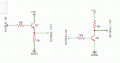
analogswitch.GIF

other than left is low without signal and right is high
 
Last edited:

cmartinez

Joined Jan 17, 2007
8,766
BTW is there any difference?

View attachment 179073
yes there is ... remember that a bjt transistor works when current flows between the collector and the emitter. So in the example on the left, the signal current is flowing through the 50k, then through the transistor, and finally through the 10k resistor and then to ground. In the example on the right current will flow from the signal, through the 50k resistor, and then to ground as it goes through the transistor. The example on the right is the best way to configure the circuit.
 

Thread Starter

dandy1

Joined Sep 30, 2017
178
yes there is ... remember that a bjt transistor works when current flows between the collector and the emitter. So in the example on the left, the signal current is flowing through the 50k, then through the transistor, and finally through the 10k resistor and then to ground. In the example on the right current will flow from the signal, through the 50k resistor, and then to ground as it goes through the transistor. The example on the right is the best way to configure the circuit.
HMM the plot thickens, i imagine it'll not make much difference to what im trying to achieve but its worth a try.

Also being transistors are essentially diodes, there must be v drop right?
thanks
 
Last edited:

Thread Starter

dandy1

Joined Sep 30, 2017
178
And btw, the circuit on the left is normally used with pnp transistors, and not npn as it's currently shown.
So that would be the same configuration but the arrow pointing in from 5v?
And as such is that useful as a swich at 60 times ps
 
Last edited:

cmartinez

Joined Jan 17, 2007
8,766
Active-low meaning the circuit is active when base is low?? Sorry for my mass ignorance
Exactly that... and go easy on yourself, I was born not knowing do-do about electronics too, you know... ;)

Google "transistor current sim animation" ... that might help you understand things a bit better.
 
Last edited:

Thread Starter

dandy1

Joined Sep 30, 2017
178
If that's the case I will be really pissed. I was thinking I designed the circuit with npn but got the collector and emitter mixed up. What got me confused is the schematic shows the correct transistor - pnp, but says its a mmbt3904, which is npn.
As I designed it a while ago, I must have forgot about it, and made the assumption that it was npn, because it is too much coincidence that the 10k resistor is on the correct side for a pnp configuration.

Anyways gracias mucho cmartinez
 

cmartinez

Joined Jan 17, 2007
8,766
If that's the case I will be really pissed. I was thinking I designed the circuit with npn but got the collector and emitter mixed up. What got me confused is the schematic shows the correct transistor - pnp, but says its a mmbt3904, which is npn.
As I designed it a while ago, I must have forgot about it, and made the assumption that it was npn, because it is too much coincidence that the 10k resistor is on the correct side for a pnp configuration.

Anyways gracias mucho cmartinez
Remember this mnemonic:

npn = Never Points iN
pnp = Points iN Permanently
 

cmartinez

Joined Jan 17, 2007
8,766
At the level you're currently learning, it's a perfect time for you to download LTSpice and start playing with it ... then you will have a crystal clear idea of what's going on in circuits such as this, and many more.

After you download and install it, just tag me and I'll be more than happy to help you walk through it ... you will learn tons of things in very little time, I assure you

Plus, LTSpice has the perfect price: it's free!
 

Thread Starter

dandy1

Joined Sep 30, 2017
178
At the level you're currently learning, it's a perfect time for you to download LTSpice and start playing with it ... then you will have a crystal clear idea of what's going on in circuits such as this, and many more.

After you download and install it, just tag me and I'll be more than happy to help you walk through it ... you will learn tons of things in very little time, I assure you

Plus, LTSpice has the perfect price: it's free!
OK thanks for the offer, I've seen it mentioned many times but never had the time(afraid really) to get into it.
Very kind gesture. Thank you
 
Top