High-Power LED Flasher

Wendy

Joined Mar 24, 2008
23,798
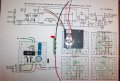
I've been doing this a while. This is a definite kludge, the next ones will be a bit prettier. The layout I drew helps a lot, which is why I do it. For me drawing plans like this is recent, but I like the results.

If by chance other people like it, and it works as expected, we'll come up with a PC board for it. But first things first.

You'll need at least a ¼" inches under this board, since some of the jumpers are not flexible and pretty tall, so you need to plan the standoffs accordingly. I'm going to use wire nuts for the test out, but for smallest size footprint I'd recommend twisting your wires together and taping them.

I currently plan on making two (this being the first of two). I'll make more if needed. If you only want to make one you can keep the other as a spare part.

To Wookie,

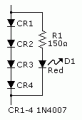
I'm going to use the following as my power LED simulator, see any problems with it?


Attachments

SgtWookie

Joined Jul 17, 2007
22,230
Looks OK to me.
You should see about 3.6v across the four 1N400x diodes with 700mA going through 'em.
If your red LED has a Vf of 2v, you'll get around 10.7mA through it.

Watch to see if you get voltage spikes when the MOSFETs switch. I'll be interested to know about that.
 

SgtWookie

Joined Jul 17, 2007
22,230
Well, you'd see the voltage at the LED+ of the BuckPuck jump when the MOSFETs switched. That's if both MOSFETs are off simultaneously. We don't want that.

What we're hoping to see is the LED+ either stay pretty steady when they switch, or better yet, dip a bit. If the LED+ stays steady, the MOSFETs are alternating on/off at the same time. This isn't too likely to be happening at this point. If the LED+ dips a bit, that means the MOSFETs are both ON for a brief amount of time. This is OK; it won't hurt a thing. It means that the MOSFETs are switching with minimal voltage across them, which means they'll dissipate very little power.

Trigger off either of the 7556 timer outputs. You might have to run the timer at a fairly high frequency to get enough paints on the 'scope to see it.
 

Wendy

Joined Mar 24, 2008
23,798
Not really stuck, just need to drill some holes in a heatsink for the LED. Generally I take the drill press outside and do it, but the weather and family have had other ideas.

One I have it done it will be the test bed for others.
 

Wendy

Joined Mar 24, 2008
23,798
OK, I'll try it tomorrow. Amazing how many tool boxes I had to break out just to drill and tap on heat sink. Not very good, but it will work. I had one problem, I could not solder it on the heat sink, I had to take it off to attach the wires.


Attachments

SgtWookie

Joined Jul 17, 2007
22,230
Bill, are you kidding us?

LOL!

The very definition of a heat sink means that it will carry the heat away from the semiconductor. You have to solder the leads on before attaching the semiconductor to the heat sink, or else you will have to heat the heat sink up to the solder melting point.

I'm surprised that you expected something different - or am I missing something here?

BTW - Happy New Year! :D
 

Wendy

Joined Mar 24, 2008
23,798
Hope springs eternal? I have managed to solder to parts on a heat sink, but not with this iron. Actually it was some strain gauges I was making.
 

Thread Starter

turnertj

Joined Nov 4, 2009
78
Holy cow...no wonder I have been having a hard time soldering all my LEDs...I've been sticking them on the heat sink first! I'm such an electronics nob.
 

Thread Starter

turnertj

Joined Nov 4, 2009
78
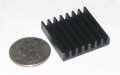
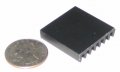
Attached are a few pictures of heat sinks...these are the ones I'm going to use.

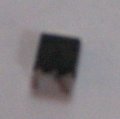
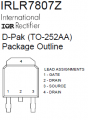
Also...I got some of those transistors from Digikey, the ones that Wookie spec'd out. They just arrived, but they don't have a middle lead. Did I get the right ones? I'm thinking not. In fact, they have the lead, but it looks like they were snipped off, or short. Any ideas? I tried posting a photo...

Tj
 

Attachments

SgtWookie

Joined Jul 17, 2007
22,230
Dang ... why would they do that?
Please keep in mind that this forum is strictly G-rated.

They're SMT/SMD parts. They can handle a LOT of current for their size. The board designer would use very wide traces to handle the current, and dissipate heat.

Can I use the one I have somehow? Solder to that little stub?
I'd solder to the tab; it'll be easier than the snipped-off lead.
 
Top