Help with switching? circuit on car bass amplifier...

Thread Starter

Tom1970

Joined Feb 28, 2026
10
Hi everyone,
This is my first post on this website.
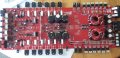
I am trying to fix a powerful car bass amp (Cerwin Vega CVP Series 1-Channel Class AB Monoblock Amplifier - CVP3000.1D) for my brother atm. The thing was switching on and off for a while and now doesn't seem to be switching on at all. There is 12V supply going in and I have put a jumper across to the REMote to switch it on (in theory!).

I seem to have whittled down the problem to no power coming into the Pulse Width modulator chip (a TL494CN). This should have Vcc (prob 12V) on pin 12 and atm there is 0V so I imagine there is no pulse signal going into the transformers for step up. (Please excuse me if my terminology is wrong - this is not really my area!).

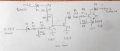
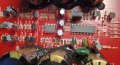
Unfortunately there seems to be no schematic for this device (very little for Cerwin Vega generally it seems). I have drawn out the area where I think the problem is (see photos) and would like to understand how this is supposed to work if anyone can help - so that we might be able to work out what has gone wrong. I have checked the resistor measurements and done diode tests on the transistors and diodes in situ and they seem to be fine.
 

Attachments

Thread Starter

Tom1970

Joined Feb 28, 2026
10
UPDATE: I was getting what I thought were odd readings from D1 so I took it out. Difficult to see the markings on it but it seems to have C15 printed on it and on the circuit board it says V15 next to it. With the a resistance test it is reading 1.85k in both directions. The diode test has positive on the anode showing 0.72. With the positive on the cathode we have 1.13.
Looks like this might be blown. If this is a 15V zener, how would this work in the position that it is in if there is only 12V on the cathode side? Wouldn't that mean that T1 would never switch on?
 

Rian11

Joined Feb 28, 2026
3
Hi Tom, I'm afraid I haven't quite understood your problem yet, so please excuse me if I'm completely wrong! I don't understand the function of D1 and D2. It would make sense to connect the anode of the Zener diodes to ground and the cathode to the input: then they would act as overvoltage protection, and a value of 15V would also be appropriate. If I'm interpreting your transistors correctly (PNP emitter at +12V), it can't switch because D3 is always reverse-biased. Is that the problem?
As T3 is drawn (C at +12V), the transistor operates in analog mode and always outputs just under 11V at pin 12.
 

Rian11

Joined Feb 28, 2026
3
A little tip: If you download the free LTspice software, you'll have the best circuit editor and can even have it calculate the circuit. But it's worth it even just for drawing circuits!
 

Thread Starter

Tom1970

Joined Feb 28, 2026
10
Thanks for the tip on ltspice - it looks great. Yes, the circuit as I've drawn it doesn't seem to make sense to me either! I'm pretty sure I did represent it correctly but I will double check it later as I have to head out now!
 

MisterBill2

Joined Jan 23, 2018
27,160
Consider that most automotive music power amplifiers also use an inverter circuit to produce the higher voltages for the amplifier, there is a lot of circuitry that can fail and prevent it from working. So the disgnostic part is probably not so very simple.
 

gaber2611

Joined Mar 14, 2013
321
Hi everyone,
This is my first post on this website.
I am trying to fix a powerful car bass amp (Cerwin Vega CVP Series 1-Channel Class AB Monoblock Amplifier - CVP3000.1D) for my brother atm. The thing was switching on and off for a while and now doesn't seem to be switching on at all. There is 12V supply going in and I have put a jumper across to the REMote to switch it on (in theory!).

I seem to have whittled down the problem to no power coming into the Pulse Width modulator chip (a TL494CN). This should have Vcc (prob 12V) on pin 12 and atm there is 0V so I imagine there is no pulse signal going into the transformers for step up. (Please excuse me if my terminology is wrong - this is not really my area!).

Unfortunately there seems to be no schematic for this device (very little for Cerwin Vega generally it seems). I have drawn out the area where I think the problem is (see photos) and would like to understand how this is supposed to work if anyone can help - so that we might be able to work out what has gone wrong. I have checked the resistor measurements and done diode tests on the transistors and diodes in situ and they seem to be fine.
If you think that circuit you have traced is where is the problem, then you can check every component,one by one, even on board, if there is any short or leak at these components
If you doubt any readings on board, you can desolder the component From board and desolder if ok
Do you have the skills for doing so?
Regards
 

gaber2611

Joined Mar 14, 2013
321
UPDATE: I was getting what I thought were odd readings from D1 so I took it out. Difficult to see the markings on it but it seems to have C15 printed on it and on the circuit board it says V15 next to it. With the a resistance test it is reading 1.85k in both directions. The diode test has positive on the anode showing 0.72. With the positive on the cathode we have 1.13.
Looks like this might be blown. If this is a 15V zener, how would this work in the position that it is in if there is only 12V on the cathode side? Wouldn't that mean that T1 would never switch on?
Can you make video for us how this zener readings on diode mode?, outside the circuit?
 

gaber2611

Joined Mar 14, 2013
321
Consider that most automotive music power amplifiers also use an inverter circuit to produce the higher voltages for the amplifier, there is a lot of circuitry that can fail and prevent it from working. So the disgnostic part is probably not so very simple.
You mean dc-dc converter?, or boost converter?
 

Thread Starter

Tom1970

Joined Feb 28, 2026
10
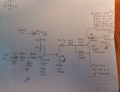
Hi. I've redrawn the schematic with the correct component labels that correspond as much as possible to those on the board (though some are not totally readable). I have taken a closer pic of this area - see attached as well. I took out the first zener (d21 on the new schematic). With a resistance test it is reading 1.85k in both directions. The diode test has positive on the anode showing 0.72. With the positive on the cathode we have 1.13.
I think this zener might be faulty (have reordered a new 15V zener) but probably not causing the issue of the TL494 not getting any power. Maybe the job of this 15V zener was more to protect at that side.
When redrawing and testing the circuit I noticed that the collector of v25 (B649 PNP trans) is also connected to lots of other things ( I have listed them on the new schematic below) including the Vcc for another chip. This is not reading a Vcc voltage (think it was zero when I tested it) so I think there should be a 12V DC coming in from one of these connections but not sure where.
 

Attachments

Thread Starter

Tom1970

Joined Feb 28, 2026
10
Hi. I've redrawn the schematic with the correct component labels that correspond as much as possible to those on the board (though some are not totally readable). I have taken a closer pic of this area - see attached as well. I took out the first zener (d21 on the new schematic). With a resistance test it is reading 1.85k in both directions. The diode test has positive on the anode showing 0.72. With the positive on the cathode we have 1.13.
I think this zener might be faulty (have reordered a new 15V zener) but probably not causing the issue of the TL494 not getting any power. Maybe the job of this 15V zener was more to protect at that side.
When redrawing and testing the circuit I noticed that the collector of v25 (B649 PNP trans) is also connected to lots of other things ( I have listed them on the new schematic below) including the Vcc for another chip. This is not reading a Vcc voltage (think it was zero when I tested it) so I think there should be a 12V DC coming in from one of these connections but not sure where.
Note that the "7V" I have written next to d20 is what is printed on the board. It is not what I was reading there (not really getting anything there). I WAS getting a 7V reading on d22-R152 but weirdly not 3.5V at the other end of R152 - the collector of V27 (instead it was close to zero).
 

MisterBill2

Joined Jan 23, 2018
27,160
You mean dc-dc converter?, or boost converter?
In the case of mobile audio power amplifiers in general, "INVERTER" means a self-excited power oscillator circuit used to provide one or more higher DC voltages from a lower voltage source, for the audio power amplifier portion of the system. So it does fit the description of a "dc-dc converter". THAT is such a broad category that I do not use it very often. My apology for not being more descriptive.
 

eetech00

Joined Jun 8, 2013
4,704
I once troubleshot a similar car audio unit circuit board.
The problem was a bad mosfet. It was a complex design and I had no schematic. At first I thought it might be the zener, but I did a simple "in circuit" check of each mosfet, by checking the resistance between the pins of each and determined there was a shorted mosfet. I removed the suspect mosfet and, yes, it was shorted. I replaced them all (8 mosfets). Problem solved.
 

Thread Starter

Tom1970

Joined Feb 28, 2026
10
Hi everyone. Bit of a development. I tried powering up with the 15V zener diode removed (D1 or D21 on the redrawn schematic) and amazingly i got power flowing into the PWM chip (the TL494) (pin 12 finally showed a Vcc voltage). As a result I seemed to be getting power to the + and - rails because I had the power LED switching on at the front (for the first time). DOn't know whether the audio was functioning as I didn't have it wired to speakers or any audio input. I decided not to leave it on as not comfortable with running more tests until I have the replacement zener installed. But this is looking hopeful!
That said, I still don't know why it should work with this thing removed!
 

Thread Starter

Tom1970

Joined Feb 28, 2026
10
I once troubleshot a similar car audio unit circuit board.
The problem was a bad mosfet. It was a complex design and I had no schematic. At first I thought it might be the zener, but I did a simple "in circuit" check of each mosfet, by checking the resistance between the pins of each and determined there was a shorted mosfet. I removed the suspect mosfet and, yes, it was shorted. I replaced them all (8 mosfets). Problem solved.
Thanks. I checked the mosfet quite early on and they seemed to be reading ok in situ. The zener thing might actually be something in my case (see above).
 

eetech00

Joined Jun 8, 2013
4,704
Thanks. I checked the mosfet quite early on and they seemed to be reading ok in situ. The zener thing might actually be something in my case (see above).
Are you sure?
It could be that by removing the zener, you've disconnected the bad portion of the circuit from the power supply.
I'd go back and check the mosfets now.
 

Thread Starter

Tom1970

Joined Feb 28, 2026
10
Are you sure?
It could be that by removing the zener, you've disconnected the bad portion of the circuit from the power supply.
I'd go back and check the mosfets now.
Thanks. Good call. I will do that! Give me a few hours. Have to feed family first!
 

MisterBill2

Joined Jan 23, 2018
27,160
If you have the questioned zener out of the circuit, you should be able to checkit at least for an open or shorted condition. Checking for the correct voltage is more complicated. Possibly somebody has an easy zener check scheme.
 

Thread Starter

Tom1970

Joined Feb 28, 2026
10
Well I did this test on it already....
"With the a resistance test it is reading 1.85k in both directions. The diode test has positive on the anode showing 0.72. With the positive on the cathode we have 1.13." (From my earlier post).
Is that correct for a zener?
I haven't done anything to test the voltage drop as yet.

I figure I'll just put the replacement zener in once I get it and see if it works ok. I'll probably do a similar resistance and diode check on the replacement zener before I install it to see if the readings are different from the one I've removed.
 

Thread Starter

Tom1970

Joined Feb 28, 2026
10
Further update: I installed a replacement 15V zener and everything seems to be working ok so far. It stays on. We have +55V and -55V on the rails so the step up is working ok. Basic audio test and it works. Going to give it back to my brother and he'll give it a proper work out and I'll update further here if anything goes wrong again!
Thanks again everyone for your help!
 
Top