Facebook
 Google
 GitHub
 Linkedin

Help Needed: SPI Clock Signal Stuck High on Custom PCB with 48 MLX90393 Sensors (Hall Effect Device for Palm Rehabilitation)
Hello everyone,
I am currently working on my master's thesis, where I am developing a hall effect-based device for palm rehabilitation. The device is designed to assess and assist with rehabilitation exercises by measuring force applied through the palm. Here’s a brief overview of the project:
Project Overview:
Hardware Setup: I’ve designed a custom PCB that incorporates 48 MLX90393 sensors, which are hall effect-based magnetometers. These sensors measure the magnetic field and, using calibration, I convert those readings into force data.
Communication: The sensors communicate with a Raspberry Pi 5 using the SPI protocol. I use a single SPI channel for all 48 sensors.
Software: I’ve written the code for sensor communication, data calibration, and visualization of the readings. The code works perfectly, and everything was functioning smoothly until 2 days ago.
Problem:
Recently, I encountered a hardware-related issue that is preventing communication between the Raspberry Pi and the sensors. The SPI clock signal (SCLK) is always high, meaning there is no clock toggling, and as a result, the communication between the Raspberry Pi and the sensors is not happening.
This problem appeared unexpectedly, and up until 2 days ago, everything was working fine. I have double-checked my software and confirmed that the issue seems to be hardware-related.
What I’ve Tried:
Rechecked all connections and wiring on the PCB.
Verified the software, which hasn’t changed and was functioning properly before.
Attempted various SPI clock speed configurations and SPI modes, but the clock line remains high.
Inspected the Raspberry Pi configuration, ensuring that SPI is enabled and properly set up in /boot/firmware/config.txt.
What I’m Seeking:
I’d appreciate any insights or suggestions from experienced engineers or anyone who has faced a similar issue. Specifically:
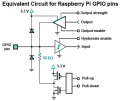
Could this be a hardware failure, such as a damaged SPI pin on the Raspberry Pi or on the custom PCB?
Are there any tests I could run to further isolate the issue (e.g., specific pins to test with an oscilloscope or voltmeter)?
Any advice on troubleshooting SPI-related hardware issues would be greatly appreciated.
Thank you in advance for your help! I’m open to any suggestions or ideas that might help resolve this.
---
Additional Info:
Raspberry Pi: Model 5
Sensors: MLX90393 (48 sensors)
SPI Configuration: Single channel
Issue: SPI clock signal stuck high, preventing communication
Feel free to reach out if you need more information. I’m really hoping to get the device back up and running so I can continue with my thesis work. Thanks!
---
Hello everyone,
I am currently working on my master's thesis, where I am developing a hall effect-based device for palm rehabilitation. The device is designed to assess and assist with rehabilitation exercises by measuring force applied through the palm. Here’s a brief overview of the project:
Project Overview:
Hardware Setup: I’ve designed a custom PCB that incorporates 48 MLX90393 sensors, which are hall effect-based magnetometers. These sensors measure the magnetic field and, using calibration, I convert those readings into force data.
Communication: The sensors communicate with a Raspberry Pi 5 using the SPI protocol. I use a single SPI channel for all 48 sensors.
Software: I’ve written the code for sensor communication, data calibration, and visualization of the readings. The code works perfectly, and everything was functioning smoothly until 2 days ago.
Problem:
Recently, I encountered a hardware-related issue that is preventing communication between the Raspberry Pi and the sensors. The SPI clock signal (SCLK) is always high, meaning there is no clock toggling, and as a result, the communication between the Raspberry Pi and the sensors is not happening.
This problem appeared unexpectedly, and up until 2 days ago, everything was working fine. I have double-checked my software and confirmed that the issue seems to be hardware-related.
What I’ve Tried:
Rechecked all connections and wiring on the PCB.
Verified the software, which hasn’t changed and was functioning properly before.
Attempted various SPI clock speed configurations and SPI modes, but the clock line remains high.
Inspected the Raspberry Pi configuration, ensuring that SPI is enabled and properly set up in /boot/firmware/config.txt.
What I’m Seeking:
I’d appreciate any insights or suggestions from experienced engineers or anyone who has faced a similar issue. Specifically:
Could this be a hardware failure, such as a damaged SPI pin on the Raspberry Pi or on the custom PCB?
Are there any tests I could run to further isolate the issue (e.g., specific pins to test with an oscilloscope or voltmeter)?
Any advice on troubleshooting SPI-related hardware issues would be greatly appreciated.
Thank you in advance for your help! I’m open to any suggestions or ideas that might help resolve this.
---
Additional Info:
Raspberry Pi: Model 5
Sensors: MLX90393 (48 sensors)
SPI Configuration: Single channel
Issue: SPI clock signal stuck high, preventing communication
Feel free to reach out if you need more information. I’m really hoping to get the device back up and running so I can continue with my thesis work. Thanks!
---