help needed, i am trying to wire up 2 linear actuators to lift a small load

Thread Starter

john.p.haggar

Joined Nov 2, 2024
3
hi all, i am in desperate need of some help i am trying to wire up 2 linear actuators to lift a small load
the linear actuators are a pair of zbx80 ball screw linear guide rails, i have 2 dm556 motor drivers i need to get the motors to run together and go up and down ideally with a remote control as the motors will be lifting a panel that drops into a bench and raises to create a barrier and the access will not be very good to run switch cables etc.
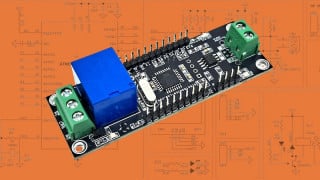
i have tried also purchased a tb6600 mach 3 driver but have not been able to get this to work, i then purchased a 5V - 24V Motor Forward/Reverse Controller Timing Delay Time Cycles Relay Motor Controller board which i have now blown while trying to get it to activate the enable function on the drivers, please can someone help as i am now lost and have limited time to get this thing to work
 

MaxHeadRoom

Joined Jul 18, 2013
30,557
So these are stepper motors and drives?
The system you describe does not use feedback of any kind, so you are relying on the DM556's and open loop steppers.
Using Mach3 should enable you to use a synchronized system, have you downloaded and installed the Mach S/W?
 

MisterBill2

Joined Jan 23, 2018
27,159
First I need to know about the motors: Are they stepper motors, or universal motors with brushes? or induction motors, or synchronous motors. Then, how accurately do they need to operate? The most solid approach suggestion is a bit late now, which is ONE MOTOR ONLY, driving both actuators. either with a solid shaft or with two flex shafts.
Is the load on each motor the same??
One scheme will be to have an encoder on each motor and then a bit of logic adjusting the motor speeds to keep the two pulse counts the same, or at least very close.
 

LowQCab

Joined Nov 6, 2012
5,101
If you're not totally sure about what You are doing,
it's usually best to ask for advice before spending huge chunks of Money
on a project that may turn-out to be a nightmare before you're finished.

Start-out with outlining all of the descriptions and specifications that must be met.

A picture, and/or, drawing would be extremely helpful in communicating the problem You are trying to solve.

We still don't know what your "Panel" is made of, and why this material must be used,
or what it's purpose is,
or how much it weighs,
or what types of loads it will be subjected to,
and from what directions these loads will be coming from,
how much space is available below the surface it will hide under when retracted, etc., etc..

When You buy stuff from China, it generally only comes with very
sketchy specifications or none at all.
You might be able to get away with this, but we can only guess.

Stepper-Motors are generally not "Plug-&-Play",
and there are apparently no specifications given for the Stepper-Motors.

Stepper-Motors are generally designed for precise positioning,
which, as far as we know, You don't need for this project.

A small AC-Gear-Motor and a chunk of 1/2" "All-Thread",
and 2 to 4 heavy-duty ball-bearing Drawer-Slides, and 2 Limit-Switches,
is almost everything You need.

More information is required.
.
.
.
 

MisterBill2

Joined Jan 23, 2018
27,159
That "All Thread" rod material is, first, not a very wear resistant grade of steel, and second, it has a bolt type thread rather than a lead-screw thread, which as a result is much less efficient. Certainly,if it is well lubricated it will work for a while, and certainly it has been used in quite a few published projects. Read the specifications for actual lead screws and see that there is no similarity., except that both are ferrous materials.
And certainly, for anyone to produce a good scheme a lot more details will be required.
 

Thread Starter

john.p.haggar

Joined Nov 2, 2024
3
If you're not totally sure about what You are doing,
it's usually best to ask for advice before spending huge chunks of Money
on a project that may turn-out to be a nightmare before you're finished.

Start-out with outlining all of the descriptions and specifications that must be met.

A picture, and/or, drawing would be extremely helpful in communicating the problem You are trying to solve.

We still don't know what your "Panel" is made of, and why this material must be used,
or what it's purpose is,
or how much it weighs,
or what types of loads it will be subjected to,
and from what directions these loads will be coming from,
how much space is available below the surface it will hide under when retracted, etc., etc..

When You buy stuff from China, it generally only comes with very
sketchy specifications or none at all.
You might be able to get away with this, but we can only guess.

Stepper-Motors are generally not "Plug-&-Play",
and there are apparently no specifications given for the Stepper-Motors.

Stepper-Motors are generally designed for precise positioning,
which, as far as we know, You don't need for this project.

A small AC-Gear-Motor and a chunk of 1/2" "All-Thread",
and 2 to 4 heavy-duty ball-bearing Drawer-Slides, and 2 Limit-Switches,
is almost everything You need.

More information is required.
.
.
.
Thank you for your feedback. The panel is a piece of glass that needs to raise about 500 from the bottom of the guides to the top it weighs about 25kg and is only going up and down. The length of the glass Panel is 1550mm long by 610mm height hence the requirement for 2 slides/guid rails.
The purpose of this panel is to create a barrier that can be lifted and dropped into a bench seat via a remote preferably or switch.
The linear ball screws came with steppa motors on them and the powerfully, drivers and controler card came as a pack. The problem I have with the mach 3 card is it needs a PC to run which is not an option for this project any advise is certainly welcome
 

MisterBill2

Joined Jan 23, 2018
27,159
OK, Now we are told that the motors are steppers. I did not research the model numbers to seewhat they were. One option might be to drive the two motors directly in parallel. That would assure unity IFF (If and only if) neither one lost a step because of overload. So now the serious question is: Do the two motors have adequate torque to lift the plate without missing steps at all. Does the driver have enough current capability to drive both motors at once??
Certainly this is a very unorthodox approach, and it is not done very much. Or maybe not hardly ever.
The alternative is to have incremental encoders on each motor and logic to compare the counts to know if any steps have slipped.
 

Thread Starter

john.p.haggar

Joined Nov 2, 2024
3
OK, Now we are told that the motors are steppers. I did not research the model numbers to seewhat they were. One option might be to drive the two motors directly in parallel. That would assure unity IFF (If and only if) neither one lost a step because of overload. So now the serious question is: Do the two motors have adequate torque to lift the plate without missing steps at all. Does the driver have enough current capability to drive both motors at once??
Certainly this is a very unorthodox approach, and it is not done very much. Or maybe not hardly ever.
The alternative is to have incremental encoders on each motor and logic to compare the counts to know if any steps have slipped.
From what I understand the motors have enough torq and the drivers have enough current to lift 20kg each on their own by doubling up the load in theory the load is shared and is well within the capabilities of the motors and drivers.
My challange is with controlling the the motors I need to have upper and lower limit switchs and be able to reverse the direction of the motors as I said before I also need to include a remote control to operate the up and down function As this is being used in a house and big clunky box's and buttons won't be suitable
 

MisterBill2

Joined Jan 23, 2018
27,159
There are two main control schemes for stepper motors, one being two commands, " step forward" and "step reverse", the other control signal scheme being "forward /reverse" and "step" (or run steps").
Both schemes may have an additional command of "Enable/Disable"included.
 

MisterBill2

Joined Jan 23, 2018
27,159
So has the TS tried wiring the two stepper driver controls in parallel, with a source of pulses from one point, so that step and direction were always the same for both machines??
OR is there some automated control scheme that we do not know about yet???
 
Top