Facebook
 Google
 GitHub
 Linkedin
I have two main concerns right now:
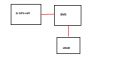
1) Load detection circuit to keep pack power outputs disconnected until the battery is plugged into the device:
I have limited pins out of my battery pack. I need to design a circuit that can determine that the battery pack has been plugged into the device and only then will it turn on it's output.
Main request: I really need to make this work with the power output pins themselves. The only other pins I have available are I2C pins going to the device.
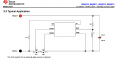
So on the BMS I am using the BQ29700 to protect the cell. I was wondering if I could trick an OVP or UVP on that chip depending on a resistor divider that is on the device so when the battery plugs in, the resistor divider on the device comes into circuit and helps satisfy OVP or UVP and then the BQ29700 turns on the pack output.
But ideally this is done through one of the pack output pins (+ or -).
2) I2C of the coulomb counter gas gauge BQ27Z558YPHR:
The gas gauge will always be on, always connected to the cell. But some of my pack output pins will be i2c.
When I connect the battery to the device, the battery will power on the device and the microprocessor on the device will come alive and then start to ping the gas gauge via i2c. How do i keep the bus from being glitched and not able to reset the gas gauge?
Can I keep the pull up resistors on the device so the gas gauge i2c bus isn't pulled high until it's connected? Can I use a i2c mux/switch and maybe that can reset the bus? Maybe I Can reset that via i2c?
Also, I will probably be using an i2c differential driver on the device to the battery. Maybe that can help keep the bus from getting glitched?
Thanks !
1) Load detection circuit to keep pack power outputs disconnected until the battery is plugged into the device:
I have limited pins out of my battery pack. I need to design a circuit that can determine that the battery pack has been plugged into the device and only then will it turn on it's output.
Main request: I really need to make this work with the power output pins themselves. The only other pins I have available are I2C pins going to the device.
So on the BMS I am using the BQ29700 to protect the cell. I was wondering if I could trick an OVP or UVP on that chip depending on a resistor divider that is on the device so when the battery plugs in, the resistor divider on the device comes into circuit and helps satisfy OVP or UVP and then the BQ29700 turns on the pack output.
But ideally this is done through one of the pack output pins (+ or -).
2) I2C of the coulomb counter gas gauge BQ27Z558YPHR:
The gas gauge will always be on, always connected to the cell. But some of my pack output pins will be i2c.
When I connect the battery to the device, the battery will power on the device and the microprocessor on the device will come alive and then start to ping the gas gauge via i2c. How do i keep the bus from being glitched and not able to reset the gas gauge?
Can I keep the pull up resistors on the device so the gas gauge i2c bus isn't pulled high until it's connected? Can I use a i2c mux/switch and maybe that can reset the bus? Maybe I Can reset that via i2c?
Also, I will probably be using an i2c differential driver on the device to the battery. Maybe that can help keep the bus from getting glitched?
Thanks !