help about this diode

ian field

Joined Oct 27, 2012
6,536
hi everybody
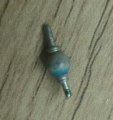
a have problem with knowing this diode (in attached). what kind of diodes? schottky? printed code in its body is j 8j i cant understand this.
thank u for your help
Most manufacturers use that case style for various types of diode so you can't just assume what type it is.

A fried diode will be predominantly resistive at a very low value, otherwise Shottky barrier will have lower forward volt drop of usually not more than 0.2V. With normal silicon diodes, any leakage at all is a fail. Shottky barrier diodes tend to be a little leaky and that's normal.

Take a look at the application and what voltages are present, Shottky diodes start at around 20V and start getting expensive for anything over 40V. For higher voltage its probably going to be silicon - common or garden diodes will do for mains frequency, anything SMPSU will need fast reverse recovery time.
 

Thread Starter

ET200

Joined Oct 20, 2017
4
Most manufacturers use that case style for various types of diode so you can't just assume what type it is.

A fried diode will be predominantly resistive at a very low value, otherwise Shottky barrier will have lower forward volt drop of usually not more than 0.2V. With normal silicon diodes, any leakage at all is a fail. Shottky barrier diodes tend to be a little leaky and that's normal.

Take a look at the application and what voltages are present, Shottky diodes start at around 20V and start getting expensive for anything over 40V. For higher voltage its probably going to be silicon - common or garden diodes will do for mains frequency, anything SMPSU will need fast reverse recovery time.
thank you for your reply.
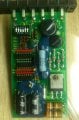
i don't sure it's schottky diode (D5 in attached). it used in power supply 110 v ac to DC(measured 150 v dc) for energize an air circuit breaker. this diode use inverse in output to damp spike voltage that create when voltage will be falling (off breaker command). now this diode was damage and i want to replace another diode.now i can't identify this diode for find same type. sorry for my Sentences, English is not my first language.
 

Attachments

ian field

Joined Oct 27, 2012
6,536
thank you for your reply.
i don't sure it's schottky diode (D5 in attached). it used in power supply 110 v ac to DC(measured 150 v dc) for energize an air circuit breaker. this diode use inverse in output to damp spike voltage that create when voltage will be falling (off breaker command). now this diode was damage and i want to replace another diode.now i can't identify this diode for find same type. sorry for my Sentences, English is not my first language.
Sounds like it isn't anything special - hard to be 100% certain from the photo what the current rating might be, some manufacturers claim a 1.25A rating for the most common size of that case style.

I'd be tempted to shoehorn a 3A diode in there - my bodges have a habit of being more reliable than the original equipment.
 

Thread Starter

ET200

Joined Oct 20, 2017
4
thank u every one, i found similar type diode its ultra-fast avalanche sinterglass diode , i can't replace 1n4007 because : 1-Vr=1.6 kv 2-Trr=75ns VS 1kv and 8.3 ms in 1n4007
my reverse voltage is 150 vdc (not 350 v) but Trr is important.my forward voltage depended di/dt. i think UF4007 is my ideal. Though i can't understand what means green in Cathode sign?
 

ian field

Joined Oct 27, 2012
6,536
thank u every one, i found similar type diode its ultra-fast avalanche sinterglass diode , i can't replace 1n4007 because : 1-Vr=1.6 kv 2-Trr=75ns VS 1kv and 8.3 ms in 1n4007
my reverse voltage is 150 vdc (not 350 v) but Trr is important.my forward voltage depended di/dt. i think UF4007 is my ideal. Though i can't understand what means green in Cathode sign?
A back emf clamp only needs to withstand the normal forward voltage - the whole point of it is to kill that nasty spike.

A back emf clamp probably isn't going to be SB most of the time.

Consider a silicon carbide rectifier. Good selection of high voltage ratings and they're seriously fast - but the forward volt drop is not so good.

If you're just switching a solenoid, Trr isn't very important. A back emf will make the clamp diode conduct hard and take a while to clear carriers out of the junction after its gone. Recovery time only matters if the solenoid is powered again real soon.
 

Thread Starter

ET200

Joined Oct 20, 2017
4
A back emf clamp only needs to withstand the normal forward voltage - the whole point of it is to kill that nasty spike.

A back emf clamp probably isn't going to be SB most of the time.

Consider a silicon carbide rectifier. Good selection of high voltage ratings and they're seriously fast - but the forward volt drop is not so good.

If you're just switching a solenoid, Trr isn't very important. A back emf will make the clamp diode conduct hard and take a while to clear carriers out of the junction after its gone. Recovery time only matters if the solenoid is powered again real soon.
i think you're right, so what can i do? what's the best choice for replace?
 

ian field

Joined Oct 27, 2012
6,536
i think you're right, so what can i do? what's the best choice for replace?
A UF5404 would do it, but its an; "atom bomb to kill an ants nest" solution. The leads may not fit the holes and if they're trough plated, that would be a problem.

The photo "gives the impression" of a 1A part, but it could be the larger 3A. Some manufacturers do slightly chunkier versions with odd values like 1.25A.

AFAICR: GI do selections of these high spec glass passivated diodes.
 
Top