HCF4017BE instead CD4017

ScottWang

Joined Aug 23, 2012
7,501
Leave the component values exactly as you had them in post #8.

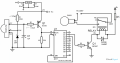
With the Zener diode added, supply voltage for the TSOP1738 is 5.1 volts.
The current through R5 is (9V - 5.1V) / 820Ω = 4.75 mA.
The current drawn by the TSOP1738 is 0.8 mA maximum.
With the TSOP1738 output low, the current drawn by R1 and R2 together is approx. 0.5 mA.
The minimum current available for the Zener diode, therefore, is (4.75 mA - 0.8 mA - 0.5 mA) = 3.45 mA, which is quite sufficient.
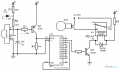
The circuit that I posted before added in series with a resistor could be have some problems, the one is for TSOP1738 and the other is for CD4017, although I can't make sure that treating the load as current load will damaged or not, since you pointed out the voltage and current limitation problems, if I try to match that limitation issues maybe is a good idea, the new circuit had considering more weakness, if you still find out any problems, just point out.

upload_2018-3-15_11-16-6_Youssef Lakhlifi_ScottWang_OBW0549-03.png
 

ebeowulf17

Joined Aug 12, 2014
3,307
The circuit that I posted before added in series with a resistor could be have some problems, the one is for TSOP1738 and the other is for CD4017, although I can't make sure that treating the load as current load will damaged or not, since you pointed out the voltage and current limitation problems, if I try to match that limitation issues maybe is a good idea, the new circuit had considering more weakness, if you still find out any problems, just point out.

View attachment 148446
The output pin on the 1738 also has a maximum voltage of 6V. I believe this means that the Q1 collector must also be fed from the zener-regulated voltage, not directly from the 9V supply.

Also, why have you reduced R1 and added a new resistor at R2? There's no need to limit current for the 1738, just clamp the voltage to a safe level.
 

ScottWang

Joined Aug 23, 2012
7,501
The output pin on the 1738 also has a maximum voltage of 6V. I believe this means that the Q1 collector must also be fed from the zener-regulated voltage, not directly from the 9V supply.

Also, why have you reduced R1 and added a new resistor at R2? There's no need to limit current for the 1738, just clamp the voltage to a safe level.
upload_2018-3-15_11-16-6_Youssef Lakhlifi_ScottWang_OBW0549-ebeowulf17-04.png
 

ebp

Joined Feb 8, 2018
2,332
Use one resistor between 9V and 1738 Vs
Use zener as instructed
Connect emitter of Q1 to Vs of receiver

If you limit the clock positive swing to 5V it won't meet minimum HIGH threshold for counter running on 9V.
If you reg Vs to 3.9 V are still going to force the receiver output above its supply rail by more than 0.7V through the collector-base junction of the transistor if the emitter is at 5 V. There is no diode between the output pin and Vs shown in the datasheet, but odds are that it is there. If the diode exists, the transistor will not turn off.
Ignoring the voltage level issue, the transistor will provide high voltage gain and therefore may not provide a reliably clean clock to the counter, defeating the benefit of hysteresis on the counter's clock input.

Reg the supply to the counter to 5V
If the objective is to run from a 9V battery a linear regulator is better than a zener. Choose a low quiescent current type.

+++
"I'm done with this thread; I have no further comment to make here."
gettin' a flat spot on the side of your head from the wall bangin'?
 

OBW0549

Joined Mar 2, 2015
3,566
+++
"I'm done with this thread; I have no further comment to make here."
gettin' a flat spot on the side of your head from the wall bangin'?
Yep. And it was starting to hurt, too, so I decided to stop.

I class this as a really, REALLY trivial design problem yet the farther along we got with it, the more complicated it became-- and the elaboration showed no sign of letting up. So it came time to bow out. :D
 

MisterBill2

Joined Jan 23, 2018
27,514
Far better than attempting to sort of regulate the voltage with a zener diode, and waste a fair amount of power doing it, instead use a 5 volt regulator IC, perhaps a 78L05, and know that you have 5 volts. In addition, it looks like the circuit is intended to provide alternate action of the relay with each trigger of the sensor device. Using an actual flipflop, such as a CD4013 would be simpler and cheaper. And you could use an MPSA13 darlington transistor to drive the relay very well. But the very first thing, after you have a reliable 5 volt supply, is to verify the output of that sensor, and then the output of the transistor. If the voltage does not cross the logic threshold levels then nothing will happen.
 

Thread Starter

Youssef Lakhlifi

Joined Mar 13, 2018
3
thank you very well ,,,, I bought new circuit hcf4011BE and it works well:), the precedent hcf4011BE appears clean and new but you must have two for the test ,,,,, a problem persists the immense heating of the 7805 ???:eek:
 

MisterBill2

Joined Jan 23, 2018
27,514
NONE of the circuits shown include power or ground connections to the 4017 IC, and I can verify that it will not function correctly without V+ on pin16 and the common on pin 8. It may be that is a problem, or that it was just presumed to be there. BUT those are needed no matter what.
One check to see if the IC is active would be to probe the "0" output pin after the circuit is powered up. Sort of obvious but it has not been suggested yet.
 

MisterBill2

Joined Jan 23, 2018
27,514
If the 7805 regulator is getting hot then something is causing an excessive current to flow. That would be either the zener diode or the TSOP device, or perhaps a failed component such as the IC. And did you really put in a 4011, quad nand gate instead of a 4017, decoded decade counter? There is evidently a whole lot missing in many aspects of this project, such as why the intended function is, was, and how the displayed circuit was supposed to make it happen. Even worse, the fundamental process of diagnostics seems to have been totally abandoned starting at post #1. The first step in diagnostics is usually to start at the beginning, and proceed to the point where the system is no longer functioning as it is supposed to be functioning. I don't think that I have seen a statement of what the output voltage of that sensor was, both high and low values. Those would then be compared with the required values for the clock signal. All of that could have been discovered without even having a 4017 IC.
 
Top