Half_burned triac

Thread Starter

mahdi_abedi

Joined Oct 30, 2024
8
Hi,
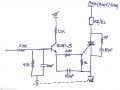
In a dishwasher machine main board we have used 107NN0 triac for controlling ac loads such as valves, pumps, dispenser, etc. In about 2 to 3 percent of products sold to customers, one of triacs that has a parallel RC equivalent load is half-burned (triac is short-circuited in one direction) when the machine gets plugged in. Here's the schematic of a single triac on mainboard. All 8 triacs have the same configuration. One triac has RC load and others have inductive load. Surprising point is that we couldn't reproduce the fault in lab under different test conditions such as Surge or EFT noise, input voltage connection in different angles of sine wave. We're glad if anyone can help us about this problem.
 

Attachments

schmitt trigger

Joined Jul 12, 2010
2,087
Short circuited in a single direction?
Meaning that WITHOUT any trigger current, the Triac behaves like a diode?

What happens if you trigger the Triac? Wil it now conduct in both directions?
 

Pyrex

Joined Feb 16, 2022
502
Hi,
In a dishwasher machine main board we have used 107NN0 triac for controlling ac loads such as valves, pumps, dispenser, etc. In about 2 to 3 percent of products sold to customers, one of triacs that has a parallel RC equivalent load is half-burned (triac is short-circuited in one direction) when the machine gets plugged in. Here's the schematic of a single triac on mainboard. All 8 triacs have the same configuration. One triac has RC load and others have inductive load. Surprising point is that we couldn't reproduce the fault in lab under different test conditions such as Surge or EFT noise, input voltage connection in different angles of sine wave. We're glad if anyone can help us about this problem.
Do you mean the triac is controlling current thru resistor and capacitor? This is not a good idea. A discharged capacitor behaves as a short circuit.
Are you sure the triac is fired at right moment to limit the surge? If not, add resistor in series with capacitor
 

Ian0

Joined Aug 7, 2020
13,131
Note that the trigger current requirement in the fourth quadrant is higher than the other three.
Four-quadrant triacs tend to be less robust than the types that only trigger in three quadrants. I would never recommend triggering a triac with positive gate voltage.
Slow gate pulses cause slow turn on which creates high dissipation during turn on. Don't slow down the gate pulses with capacitors @schmitt trigger is right.
 

Thread Starter

mahdi_abedi

Joined Oct 30, 2024
8
Short circuited in a single direction?
Meaning that WITHOUT any trigger current, the Triac behaves like a diode?

What happens if you trigger the Triac? Wil it now conduct in both directions?
yeah, the TRIAC behaves like a diode and if triggered through microcontroller, it will conduct in both derections
 

Thread Starter

mahdi_abedi

Joined Oct 30, 2024
8
Do you mean the triac is controlling current thru resistor and capacitor? This is not a good idea. A discharged capacitor behaves as a short circuit.
Are you sure the triac is fired at right moment to limit the surge? If not, add resistor in series with capacitor
AC input voltage is monitored by microcontroller and all TRIACs are triggered slightly after zero-crossing moment (checked by oscilloscope measuring TRIACs main terminals voltage). It seems that TRIAC burning happens when it is triggered in an unwanted situation but as I said before we couldn't reproduce the fault.
 

Ian0

Joined Aug 7, 2020
13,131
The RC network at TRIAC's gate is used to prevent noises on NULL triggering the TRIAC.
I've never known it happen.
If you really want to make sure it doesn't happen, save the money on the capacitors and use it to buy a bigger standard gate triac, which takes 50mA gate current to trigger.
 

Pyrex

Joined Feb 16, 2022
502
AC input voltage is monitored by microcontroller and all TRIACs are triggered slightly after zero-crossing moment (checked by oscilloscope measuring TRIACs main terminals voltage). It seems that TRIAC burning happens when it is triggered in an unwanted situation but as I said before we couldn't reproduce the fault.
This is not surprising. There are various distortions of the mains. Sags , dips, swels, transients, etc. And these distortions are almost unpredictable. The triac can easily be fired on at a wrong moment


Ian0

Joined Aug 7, 2020
13,131
Because you operate the triac with a positive gate voltage, the trigger currents are different depending on whether the mains is on a positive or a negative half cycle.
If there is just sufficient current to trigger the triac, it will trigger in the positive half-cycle only, which will supply half-wave rectified mains to the load. If the load is a synchronous or induction motor, it will take a lot of current and blow the triac.
The moral of the story: Don't trigger triacs with positive voltage.
 

Janis59

Joined Aug 21, 2017
1,894
How that was detected that triac is half burnt? 99.99999% of life cases it is or burned completely, or completely healthy. Why I tell it.... just week ago I tsted one half-bridge controller and instead of clean nice meander of 15 V it gave out a 2 Volts badly shaped triangle with hedgehog style needles. Okay, I bought another IC, result the same. Bought one more and in another shop, the result was the same. Then I changed the oscillo probe.... all IC was right, signal was beautiful etc etc etc. Just the mistic defect of probe.... Buy more those cheap Chinease garbages.... However no, that probe was genuine Siglent. Even good firms sometimes produce whoeverknowswhat.
 

Thread Starter

mahdi_abedi

Joined Oct 30, 2024
8
How that was detected that triac is half burnt? 99.99999% of life cases it is or burned completely, or completely healthy. Why I tell it.... just week ago I tsted one half-bridge controller and instead of clean nice meander of 15 V it gave out a 2 Volts badly shaped triangle with hedgehog style needles. Okay, I bought another IC, result the same. Bought one more and in another shop, the result was the same. Then I changed the oscillo probe.... all IC was right, signal was beautiful etc etc etc. Just the mistic defect of probe.... Buy more those cheap Chinease garbages.... However no, that probe was genuine Siglent. Even good firms sometimes produce whoeverknowswhat.
We have tested multiple probes and all of them have shown the same result. Also a few of failed TRIACs are tested out of circuit with multimeter and all of them are short circuit in one direction and open circuit in the other one.
We have more than 50 cases of failed TRIACs per month and they all are half burned.
 

Thread Starter

mahdi_abedi

Joined Oct 30, 2024
8
Giving full details of the nature of the "RC" load could be helpful as something related to that may be the cause.

Les.
The load is a THERMOACTUATOR containing a PTC and a wax motor. When connected to AC supply, PTC warms up and the heat is transferred to the wax motor. Subsequently the heat sensitive substance expands and pushes out a plunger. The equivalent circuit for this actuator is a parallel RC with 2.2nF capacitor and 2.2K resistor. Datasheet is attached.
 

Attachments

Thread Starter

mahdi_abedi

Joined Oct 30, 2024
8
Da
So you have a 1A triac and a 1.5A load and you are surprised that it fails?
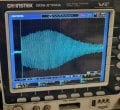
Datasheet is a bit confusing. I think there are 2 types of thermoactuators called "Long ON time" and "Short ON time". The sample we are using is of type "Short ON time" with starting current less than 1A. A photo of thermoactuator current measured via oscilloscope is attached that shows peak current is about 0.6A.
 

Attachments

Top