Based on the very limited amount of information available so far, this isn't sounding like it is the case. The helicopter pilot was advised of the traffic (the RJ) and reported that he had the traffic in sight and stated his intentions to steer clear of the RJ visually, which is the usual procedure. The responsibility then shifts to the pilot for collision avoidance and the controller's attention shifts to the rest of the traffic. Furthermore, under VMC (Visual Meteorological Conditions), it is ultimately always the pilot's responsibility to see-and-avoid and to maintain the required separations. The controllers are there to assist them in achieving that. It was less that twenty seconds from the time that the pilot stated that they had the traffic in sight to the collision.Maybe the air traffic controllers made a mistake?
This may be a major factor*.It was less that twenty seconds from the time that the pilot stated that they had the traffic in sight to the collision.
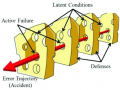
OMG, Heartbreaking!! Where those helo (“Priority Air Travel” PAT25) guys wearing night-vision goggles (seems unlikely over a bright city)? There have been horrible accidents in the past where restricted vision (with poor field of depth) was a factor. The swiss-cheese really lined up for that crash.
I think my WAG was correct:
My impression is that the helo possibly thought the CRJ being referred to was the one ahead of the incident aircraft. (i.e., they saw JIA5307 but the controller was talking about JIA5342).

I think the bottom line is: just too much damn traffic for such a small operating area.My impression is that the helo possibly thought the CRJ being referred to was the one ahead of the incident aircraft. (i.e., they saw JIA5307 but the controller was talking about JIA5342).
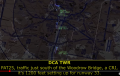
This is the trace at the time that the tower advised the helicopter that they had traffic a CRJ just south of a bridge. Notice that both aircraft are CRJs and each is just south of a bridge. At night it can be very difficult to distinguish one bridge from another -- you just see traffic head/tail lights crossing a line of blackness (the river). Given that the helo immediately requested visual separation, they probably already had the lead CRJ in sight and assumed that that was the aircraft being called out. They were told to pass behind it, which they proceeded to do. When the controller called out again, they knew they were well past the CRJ (which had actually already landed, but they probably didn't know that because it was no longer a factor and they knew they would pass easily behind it). When the controller asked again if they had the CRJ in sight, they might have still thought it was the plane they had already passed that was being asked about. At this point, the pilot probably should have realized that the controller wouldn't be asking about an aircraft that was no longer a factor and, to be on the safe side, declared that they did not have them in sight. The controller possibly could have then given them instructions that would have avoided the collision. Maybe. At that point, time had almost run out.
View attachment 341595
Damn, the swiss cheese does sometimes align at the worst possible moment in time.My impression is that the helo possibly thought the CRJ being referred to was the one ahead of the incident aircraft. (i.e., they saw JIA5307 but the controller was talking about JIA5342).
This is the trace at the time that the tower advised the helicopter that they had traffic a CRJ just south of a bridge. Notice that both aircraft are CRJs and each is just south of a bridge. At night it can be very difficult to distinguish one bridge from another -- you just see traffic head/tail lights crossing a line of blackness (the river). Given that the helo immediately requested visual separation, they probably already had the lead CRJ in sight and assumed that that was the aircraft being called out. They were told to pass behind it, which they proceeded to do. When the controller called out again, they knew they were well past the CRJ (which had actually already landed, but they probably didn't know that because it was no longer a factor and they knew they would pass easily behind it). When the controller asked again if they had the CRJ in sight, they might have still thought it was the plane they had already passed that was being asked about. At this point, the pilot probably should have realized that the controller wouldn't be asking about an aircraft that was no longer a factor and, to be on the safe side, declared that they did not have them in sight. The controller possibly could have then given them instructions that would have avoided the collision. Maybe. At that point, time had almost run out.
View attachment 341595

All JIA5342 had to do was not change its initial approach, and it'd just be another uneventful flight.Damn, the swiss cheese does sometimes align at the worst possible moment in time.
View attachment 341597
For sure ...All JIA5342 had to do was not change its initial approach, and it'd just be another uneventful flight.
Final Destination vibes.
It doesn't look like there was that much traffic at all at the time of the incident -- which is to be expected at that time in the evening. Small, uncontrolled airports often have more traffic than what was shown on the track and relying on pilot self-announcements to deconflict traffic. If flown into such airports with eight to ten aircraft in the pattern doing touch-and-go landings intermixed with full-stops in addition to transiting aircraft.I think the bottom line is: just too much damn traffic for such a small operating area.
IMO If they had stayed below the 200ft limit it shouldn't matter what aircraft they saw or even flew above them. Military helo's have been flying this exact same route for decades.My strong suspicion is still that the helo crew was watching the wrong aircraft without realizing it. The CVR might give enough hints for the NTSB to determine if that was the case and perhaps which aircraft they were actually looking at.
I don't think it was the plane that was taking off. My bet, currently, is on it being the CRJ that was ahead of them.
Agreed. Though, again, this assumes that the information on the flight tracking sites reflects actual altitudes. If the data is derived off the aircraft's transponder, then it is probably pressure altitude. If the helo was just below 200', the pressure altitude would only have needed to be a little over 50' higher to register as 300' on the display. Roughly, a one inch change in barometric pressure translates to a one thousand foot change in pressure altitude (near the surface). So that would have only required a difference of 0.05". To show as a higher altitude, the surface pressure would have to be lower, so instead of 29.92" Hg, a pressure of 29.87" Hg could account for it.IMO If they had stayed below the 200ft limit it shouldn't matter what aircraft they saw or even flew above them. Military helo's have been flying this exact same route for decades.

| Thread starter | Similar threads | Forum | Replies | Date |
|---|---|---|---|---|
| S | Hello Everyone! Glad to Join the All About Circuits Community | General Electronics Chat | 4 | |
| J | About Parasitic Amp Draw (Battery Drain) in a passenger car. | General Electronics Chat | 22 | |
| J | Drone Hits Passenger Jet | Off-Topic | 10 | |
|
|
I am so glad I am not one minute faster | Off-Topic | 14 | |
| W | Glad I found Ya'll!! | General Electronics Chat | 15 |