Glad I'm not a passenger

nsaspook

Joined Aug 27, 2009
16,405
https://www.thesun.co.uk/news/39663778/cable-car-breakdown-leaves-families-dangling-200-ft/

1783471936766.png

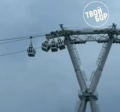
Sixteen people, including four children, said they faced “the greatest fear of their lives” while stranded in the sky.

The gondolas had been travelling across the Volga river in Russia when the cableway system unexpectedly broke down.

Two cable cars had already been left stranded on the ride when a third gondola glided towards them, followed by a fourth one a short while later.

Dramatic footage shows the hangers of the cabins grinding against one another on the overhead wire, sparking fears one of the cabins could plummet to the ground.
 

Thread Starter

cmartinez

Joined Jan 17, 2007
8,814

Thread Starter

cmartinez

Joined Jan 17, 2007
8,814

A helicopter accident does not always result from a major mechanical failure. Sometimes, it comes down to a single missing component. In this case, the cause was the failure to reinstall a cotter pin after maintenance. Cotter pin is a simple locking device that prevents the retaining nut on the pitch linkage bolt from loosening due to vibration. Without the cotter pin, nut gradually backed off during operation until the bolt fell out, disconnecting the pitch linkage and resulting in loss of control.
 

joeyd999

Joined Jun 6, 2011
6,390

A helicopter accident does not always result from a major mechanical failure. Sometimes, it comes down to a single missing component. In this case, the cause was the failure to reinstall a cotter pin after maintenance. Cotter pin is a simple locking device that prevents the retaining nut on the pitch linkage bolt from loosening due to vibration. Without the cotter pin, nut gradually backed off during operation until the bolt fell out, disconnecting the pitch linkage and resulting in loss of control.
Same reason why my front left wheel almost fell off weeks after a front-end repair job.

I was livid!
 

Thread Starter

cmartinez

Joined Jan 17, 2007
8,814
A seemingly small oversight can be the difference between life and death ... that is why checklists where created in the first place.


WBahn

Joined Mar 31, 2012
33,044

A helicopter accident does not always result from a major mechanical failure. Sometimes, it comes down to a single missing component. In this case, the cause was the failure to reinstall a cotter pin after maintenance. Cotter pin is a simple locking device that prevents the retaining nut on the pitch linkage bolt from loosening due to vibration. Without the cotter pin, nut gradually backed off during operation until the bolt fell out, disconnecting the pitch linkage and resulting in loss of control.
Accidents due to small, simple factors is the norm, not the exception. Figure that if that cotter pin didn't serve an important purpose, it probably wouldn't have been there to begin with. So it's not too surprising that it being missing has the potential to cause serious problems. We had an F-15 ingest a nut from a broken bolt holding the nose gear wheel halves together. The maintenance folks didn't have the specified anti-seize compound, so they used what they did have. But it turned out to be much lower friction, so more of the torque was taken up by the bolt's tension. On take-off, when the nose came off the ground and the gear snapped out to full extension, the bolt snapped. The top part of the bolt went out into the field between the runways, while the nut and lower part of the bolt came up and down the No 1 engine, exiting the other end about $6.5 million later.

The pilot had big brass ones. Here he is going about 200 mph in a 50,000 vehicle loaded with full fuel, in full afterburner, that hasn't firmly decided whether it wants to be a plane or a car. His port engine has just grenaded, sending pieces of fan blades through the aircraft and punching holes in both his wing and fuselage tanks, not to mention cutting wires and other things. He's committed to take off (insufficient distance remaining to even attempt to reject the takeoff), he's got alarms and lights going off all around him. He's got asymmetric thrust with one engine in full afterburner and the other spooling down (and coming apart), he's lost all flight controls on the right side of the aircraft while the wing-root switching valves assess the condition of the hydraulic lines in the wings and transfer backup hydraulics out there, a process that takes about two-and-a-half seconds which seems like an eternity when you are pitch up and just a few feet off the ground. No one could have blamed him for punching out, but he fought it and got it into the air, assessed the situation, declared an emergency, and managed to get the aircraft back to the field and take the barricade. That was one seriously messed up bird, but we had her back in the air, with the same pilot, in just a few weeks.
 
Top