Fourier series

WBahn

Joined Mar 31, 2012
32,704
So... what's your question?

A beautiful thing about most math and engineering problems is that the validity of the answer can usually be determined from the answer itself.

Plot the sum of the first n terms of your answer and see if they converge to the waveform given.
 

Thread Starter

linhvn

Joined Nov 6, 2024
297
So... what's your question?

A beautiful thing about most math and engineering problems is that the validity of the answer can usually be determined from the answer itself.

Plot the sum of the first n terms of your answer and see if they converge to the waveform given.
bn I found is different from the answer in the book??? st wrong.
 

WBahn

Joined Mar 31, 2012
32,704
I have no idea what "st wrong" means. Looks like a sloppy typo to me.

Have you plotted the sum of the first several terms and compared them to the original waveform?

If not, why not?

It took me less than five minutes to set up a spreadsheet that displayed the sum up through n=101.

If you are incapable and/or unwilling to check your own work, then you will continue to flounder and no employer will want anything to do with you because you will be a liability to them.
 

Thread Starter

linhvn

Joined Nov 6, 2024
297
I have no idea what "st wrong" means. Looks like a sloppy typo to me.

Have you plotted the sum of the first several terms and compared them to the original waveform?

If not, why not?

It took me less than five minutes to set up a spreadsheet that displayed the sum up through n=101.

If you are incapable and/or unwilling to check your own work, then you will continue to flounder and no employer will want anything to do with you because you will be a liability to them.
St means something wrong in my work probably then it is not the same with the answer in the book, I did check my own work but cannot find the wrong spot, so I post here, are you too daft to understand that?
 

Thread Starter

linhvn

Joined Nov 6, 2024
297
I have no idea what "st wrong" means. Looks like a sloppy typo to me.

Have you plotted the sum of the first several terms and compared them to the original waveform?

If not, why not?

It took me less than five minutes to set up a spreadsheet that displayed the sum up through n=101.

If you are incapable and/or unwilling to check your own work, then you will continue to flounder and no employer will want anything to do with you because you will be a liability to them.
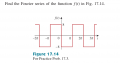
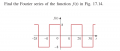
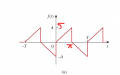
the waveform gives odd function, with T=2*pi,
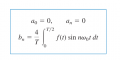
1740448268916.png, and the bn coefficient of odd function as the equation below:
1740447989368.png
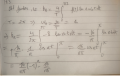
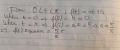
here is my done work
1740448088915.png
and here is the answer in the book:
1740448147359.png
You see bn coefficient is different even though I apply correct equation form of bn to calculate???
 

WBahn

Joined Mar 31, 2012
32,704
St means something wrong in my work probably then it is not the same with the answer in the book, I did check my own work but cannot find the wrong spot, so I post here, are you too daft to understand that?
HOW did you check your own work? You've given no indication that you did check it, let alone how you did so.

I am trying to help you develop the critical ability of checking your own work.

You were asked to determine the coefficients for the Fourier series for a particular waveform. You've done that. But now you need to verify whether or not your solution is actually correct. It really doesn't matter whether or not you have access to some book's "solution" -- in the real world you won't have such solutions. Someone will be paying you to solve their problems because they don't already have a solution at hand -- that is why they are willing to pay you. The ability to not only solve the problem, but verify that it IS a solution to the problem, and convince them that it is a solution to their problem, will be the value that you bring to the table. No value, no pay.

Checking your work involves verifying whether it does, or does not, solve the problem.

In this case, that means determining if the coefficients that you determined actually result in a Fourier series that reproduces the desired waveform, within the limits of what a Fourier series approximation can do.

Why won't you just simply use the coefficients that you determined to see if they actually reproduce the desired waveform?

If they do not reproduce it (within the constraints that you will only be using a finite number of terms), then your answer is wrong.

If they do reproduce it, then either the book's answer is wrong, or you are not properly comparing your answer to the book's answer, in which case making the distinction between these two is a simple matter of seeing if the book's answer reproduces the desired waveform. If it doesn't, the book's answer is wrong. If it does, then the problem lies with how you are comparing your solution to the book's solution.

Don't you think it might be helpful to be able to determine which, if either, of the solutions is correct so that you don't waste a bunch of your time trying to find an error that doesn't exist because either the error is with the book's solution or with your ability to show that your solution and the book's solutions are, in fact, the same?

But, you are probably right. I am apparently too daft to understand that you don't want to learn how to verify your work, but only to have strangers on the Internet spoon feed you answers. So I won't clutter up your threads any further with my ill-informed attempts to help you.

Good bye and have a good day.
 

MrAl

Joined Jun 17, 2014
13,667
I have this problem,
View attachment 343136
My work below, in this case of odd function, only bn coefficient need to be found. bn I found is different from the answer in the book??? st wrong.
View attachment 343141
Again I cannot read your handwriting. You are going to have to learn to either write more neatly or type the stuff out with your keyboard.
This is an easy problem but if you do not show your work neatly it's impossible to help. I can't see where you went wrong, or if the text you read is actually wrong and your result is right.
 

Thread Starter

linhvn

Joined Nov 6, 2024
297
Again I cannot read your handwriting. You are going to have to learn to either write more neatly or type the stuff out with your keyboard.
This is an easy problem but if you do not show your work neatly it's impossible to help. I can't see where you went wrong, or if the text you read is actually wrong and your result is right.
is there any software can simulate Fourier series?
 

MrAl

Joined Jun 17, 2014
13,667
is there any software can simulate Fourier series?
Hi,

LT Spice can show you the amplitudes of each component if you have a circuit to investigate. If you just have a waveform to look at, even simper, just create a voltage source with that waveshape (this may require more than one source in some more complex cases). For a square wave, you would just create a square wave voltage source and then instruct it to do a Fourier analysis. It would show the spectrum numerically.
If you need help with this I am sure someone can help here.

I would bet that your math is going well, but I can't read it, so I cannot verify it. Why don't you just rewrite it but be a little more careful about the penmanship. We could finish this in 5 minutes :)
 

Thread Starter

linhvn

Joined Nov 6, 2024
297
Hi,

LT Spice can show you the amplitudes of each component if you have a circuit to investigate. If you just have a waveform to look at, even simper, just create a voltage source with that waveshape (this may require more than one source in some more complex cases). For a square wave, you would just create a square wave voltage source and then instruct it to do a Fourier analysis. It would show the spectrum numerically.
If you need help with this I am sure someone can help here.

I would bet that your math is going well, but I can't read it, so I cannot verify it. Why don't you just rewrite it but be a little more careful about the penmanship. We could finish this in 5 minutes :)
Can you show one sample of handwriting solution, maybe I will copy that character system.
 

Thread Starter

linhvn

Joined Nov 6, 2024
297
Hi,

LT Spice can show you the amplitudes of each component if you have a circuit to investigate. If you just have a waveform to look at, even simper, just create a voltage source with that waveshape (this may require more than one source in some more complex cases). For a square wave, you would just create a square wave voltage source and then instruct it to do a Fourier analysis. It would show the spectrum numerically.
If you need help with this I am sure someone can help here.

I would bet that your math is going well, but I can't read it, so I cannot verify it. Why don't you just rewrite it but be a little more careful about the penmanship. We could finish this in 5 minutes :)
In this figure, from 0<t<pi, f(t) equation below is determined correctly? I understand that the diagonal line has equation f(t)= at+b, what about the vertical line at pi point, does it has to be taken into account for f(t) equation?
1740850972034.png
1740850999458.png
 

MrAl

Joined Jun 17, 2014
13,667
Can you show one sample of handwriting solution, maybe I will copy that character system.
Hi,

Your next question looks better though. Some of the characters are hard to make out though.
Ok I'll write something out so you can see it. I'll be back a little later.
It would also help if you were to show multiplication signs like a*pi instead of api.

Also, with regard to your last question, do you know how to reconstruct a signal from the Fourier components? That means you would end up with something like:
y(t)=A*sin(w*t)+B*sin(3*w*t)+C*sin(5*w*t)
and that would look almost like your original signal.
 

Thread Starter

linhvn

Joined Nov 6, 2024
297
Hi,

Your next question looks better though. Some of the characters are hard to make out though.
Ok I'll write something out so you can see it. I'll be back a little later.
It would also help if you were to show multiplication signs like a*pi instead of api.

Also, with regard to your last question, do you know how to reconstruct a signal from the Fourier components? That means you would end up with something like:
y(t)=A*sin(w*t)+B*sin(3*w*t)+C*sin(5*w*t)
and that would look almost like your original signal.
you mean draw waveform from y(t) equation, like this: y(t)=A*sin(w*t)+B*sin(3*w*t)+C*sin(5*w*t)?
 

MrAl

Joined Jun 17, 2014
13,667
you mean draw waveform from y(t) equation, like this: y(t)=A*sin(w*t)+B*sin(3*w*t)+C*sin(5*w*t)?
Hi,

Yes, and you would have found the coefficients A, B, and C from finding the Fourier series. You may need phase shifts too:
y(t)=A*sin(w*t+phA)+B*sin(w*t+phB)+C*sin(w*t+phC)+...+N*sin(w*t+phN)
You may also need to use the cos(w*t+ph) functions too depending on what class of waveform it is.

You would start with a signal like:
Vout=Y(t)
and you find the Fourier coefficients for Y(t) using the Fourier Series method, and then you can use those coefficients to approximate the original function. The coefficients would be a list. Note in most cases the reconstruction is only an approximation with some artifacts but it looks almost like the original.
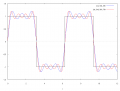
An example often given is the Fourier coefficients for a square wave with positive excursions equal to the negative excursions. The reconstruction is then something like:
Y(t)=(4/pi)*(sin(w*t)+(1/3)*sin(3*w*t)+(1/5)*sin(5*w*t)

The attachment shows the original square wave (black) plus a reconstruction using 3 harmonics (blue) and another reconstruction using 4 harmonics (red).
Note the more coefficients we use the better the approximation.
 

Attachments

MrAl

Joined Jun 17, 2014
13,667
In addition to that previous post, here are a couple handwriting examples.
You don't have to use the cursive through, and you don't have to be that super neat, but you can see how easy that top part is to read. If you get close to that you'd be doing really well.
 

Attachments

Thread Starter

linhvn

Joined Nov 6, 2024
297
In addition to that previous post, here are a couple handwriting examples.
You don't have to use the cursive through, and you don't have to be that super neat, but you can see how easy that top part is to read. If you get close to that you'd be doing really well.
how about, number characters, they might be different?
 

MrAl

Joined Jun 17, 2014
13,667
how about, number characters, they might be different?
Oh yes. You can look at typed characters using the Courier New font and get close to that if you like.

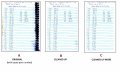
Here is an interesting example. This is an image of three pages from a notebook.

The first page A is the original, but note at the top the catalog number is not easy to read because the top part is cut off due to the scanning procedure. To make up for that, the cat number was typed below that and that makes it perfectly clear. That's the beauty of typing the text and note how neat that comes out. Also note how distracting the curly binder is and the left side is discolored. You might also notice that the ones '1' are just a single straight line which does not match the Courier New font. That's because it is obvious that it is a '1'. If there was any doubt it would be made with a top part and bottom part like the Courier New font for the number '1'. The number '1' font used here looks like it only has a top part with no bottom part, and unfortunately when handwritten that way it may end up looking indistinguishable from the number seven '7'.

The second page B is cleaned up by erasing the curly binder and the left side. That makes it easier to read because of less distractions. The lines on the right side are a little blurred but not that bad.

The third page C is cleaned up a little more by removing more of the lines on the right side. This might not be necessary, but it does make the presentation look just a little better.

SIDE NOTE:
Just to note, one of the values in that data set may be slightly off. It was found that on the original text from Radio Shack one of the values was a little off. It may have been corrected for this image though I can't remember it was a long time ago. This can be checked by doing a Sum of Squares curve fit and noticing that one value is an outlier, or possibly using a general thermistor formula to check the values. It's only one of the values though.
 

Attachments

Thread Starter

linhvn

Joined Nov 6, 2024
297
Oh yes. You can look at typed characters using the Courier New font and get close to that if you like.

Here is an interesting example. This is an image of three pages from a notebook.

The first page A is the original, but note at the top the catalog number is not easy to read because the top part is cut off due to the scanning procedure. To make up for that, the cat number was typed below that and that makes it perfectly clear. That's the beauty of typing the text and note how neat that comes out. Also note how distracting the curly binder is and the left side is discolored. You might also notice that the ones '1' are just a single straight line which does not match the Courier New font. That's because it is obvious that it is a '1'. If there was any doubt it would be made with a top part and bottom part like the Courier New font for the number '1'. The number '1' font used here looks like it only has a top part with no bottom part, and unfortunately when handwritten that way it may end up looking indistinguishable from the number seven '7'.

The second page B is cleaned up by erasing the curly binder and the left side. That makes it easier to read because of less distractions. The lines on the right side are a little blurred but not that bad.

The third page C is cleaned up a little more by removing more of the lines on the right side. This might not be necessary, but it does make the presentation look just a little better.

SIDE NOTE:
Just to note, one of the values in that data set may be slightly off. It was found that on the original text from Radio Shack one of the values was a little off. It may have been corrected for this image though I can't remember it was a long time ago. This can be checked by doing a Sum of Squares curve fit and noticing that one value is an outlier, or possibly using a general thermistor formula to check the values. It's only one of the values though.
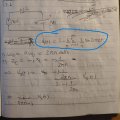
Can you read this? the Problem is find V0(t) across capacitor Vs(t) already given.
1741490019411.jpeg
View attachment 1741490149455.jpeg
 

Thread Starter

linhvn

Joined Nov 6, 2024
297
Oh yes. You can look at typed characters using the Courier New font and get close to that if you like.

Here is an interesting example. This is an image of three pages from a notebook.

The first page A is the original, but note at the top the catalog number is not easy to read because the top part is cut off due to the scanning procedure. To make up for that, the cat number was typed below that and that makes it perfectly clear. That's the beauty of typing the text and note how neat that comes out. Also note how distracting the curly binder is and the left side is discolored. You might also notice that the ones '1' are just a single straight line which does not match the Courier New font. That's because it is obvious that it is a '1'. If there was any doubt it would be made with a top part and bottom part like the Courier New font for the number '1'. The number '1' font used here looks like it only has a top part with no bottom part, and unfortunately when handwritten that way it may end up looking indistinguishable from the number seven '7'.

The second page B is cleaned up by erasing the curly binder and the left side. That makes it easier to read because of less distractions. The lines on the right side are a little blurred but not that bad.

The third page C is cleaned up a little more by removing more of the lines on the right side. This might not be necessary, but it does make the presentation look just a little better.

SIDE NOTE:
Just to note, one of the values in that data set may be slightly off. It was found that on the original text from Radio Shack one of the values was a little off. It may have been corrected for this image though I can't remember it was a long time ago. This can be checked by doing a Sum of Squares curve fit and noticing that one value is an outlier, or possibly using a general thermistor formula to check the values. It's only one of the values though.
Btw, why are there some pictures I cannot post to see directly but I have to click on
'''View attachment...'''
 
Top