Facebook
 Google
 GitHub
 Linkedin
Fourier series - circuit application
- Thread starter linhvn
- Start date

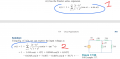

 The original equation appears to be describing a sawtooth-like pulse, though its not clear if that's the stimulus or the result...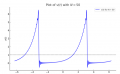
| Thread starter | Similar threads | Forum | Replies | Date |
|---|---|---|---|---|

|
Fourier series | Homework Help | 38 | |
|
|
Find y(t) form - in Fourier series | Homework Help | 8 | |
|
|
Phase spectra - Fourier series | Homework Help | 3 | |
| H | Fourier series and op amp circuit analysis help | Homework Help | 1 | |
| H | Fourier Series in Circuit analysis | Homework Help | 1 |