The falling clock edge is the point Q changes to be what D is at that point, yes - Q doesn't change at any other time.Okay, so I know that D=Q. So at the falling edge of the clock, that's where Q will be whatever D is, right?
Okay, awesome! I'm going to put my results in paint, and upload it here for you to look at if that' alright. Thank you tshuckThe falling clock edge is the point Q changes to be what D is at that point, yes - Q doesn't change at any other time.
So, Q gets the value of D at the falling edge and holds its value until the next falling clock edge.
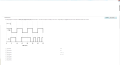
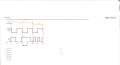
That looks right to me, though your question is also asking for the value at t=35ms, which your diagram doesn't seem to account for...View attachment 85156
I came up with this...
That looks right to me, though your question is also asking for the value at t=35ms, which your diagram doesn't seem to account for...
I would suggest you examine the value of Q at t=35ms...I just submitted the answers and it says they were partially correct. (It doesn't give information on which were correct/incorrect)
I'm going to try this again when I come back from work. I'll let you know. Thank you for your help so far tshuck.
Thats it!Ah okay, so that would be 0-->1 for the 35ms.