Explaining the basics to a 15 yo. How?

Thread Starter

atferrari

Joined Jan 6, 2004
5,001
I am about to start building a panel with LEDs helped by one of my granddaughters. She is 15 yo and had no exposition to the subject in any way up to now.

How could I explain the basics to her? Voltage, current, Ohms law, diodes (including LEDs) and resistors are what I have in mind.

Let’s be honest: I hardly could explain them to adults because my own doubts on the right principles it is all this based.

As long as member @nsaspook does not suggest starting with electromagnetic fields… :eek: :)
 

schmitt trigger

Joined Jul 12, 2010
2,027
Use analogies:
Electricity is like water.
The pressure in a hose is the voltage.
The current, this one is obvious.
The total amount of water flowing is the power.
You can store water In a tank, like a battery.

Or is this too simplistic?
 

MrSalts

Joined Apr 2, 2020
2,767
Give her some batteries, wires and brushed motors, incandescent bulbs, LED that you've soldered a resistor to one lead. Ask her to get the motor to turn both ways, light the bulb and the LED.
Then let her pop an LED or two (without LED - wear safety glasses because they really pop sometimes) to show her why the resistor is there. Then connect a 330, 100, 33, 10 ohm resistor (starting with highest value) and let her understand heat and power. She can repeat heat and power with incandescent bulb.
just make her understand that a "circuit" requires a circle (at minimum).

next teach switches (ask her to figure it out, don't show her)
Next, how a transistor can be a switch
Next, how a potentiometer works to divide voltage or limit current.
then, how a transistor can be controlled with small currents to limit bigger currents.
Then build up from there...
 

crutschow

Joined Mar 14, 2008
38,322
I would start with Ohm's law for current and Joule's law for power.
Note that voltage is always measured between two points, and current flows through the device.

Describe what the devices (e.g. diodes, transistors, LEDs) do, not necessarily how they do it (that's for more advanced study).
 

djsfantasi

Joined Apr 11, 2010
9,237
I started with the basics, using a board I made for a science fair.

Battery holder for four batteries was at the top of the board. Positive and circuit ground brought down to a series / parallel circuit. There were two flashlight bulbs in series. Two of these series circuits were wired in parallel.

The batteries demonstrate voltage. You can demonstrate that you measure voltage between two points. You can measure current in the series parallel strings. You can demonstrate current being measured must go through the measuring device. Point out the difference when only one string is illuminated and when two strings are illuminated.

It was a simple device, but it’s where I got my basics.
 

Ya’akov

Joined Jan 27, 2019
10,226
I am about to start building a panel with LEDs helped by one of my granddaughters. She is 15 yo and had no exposition to the subject in any way up to now.

How could I explain the basics to her? Voltage, current, Ohms law, diodes (including LEDs) and resistors are what I have in mind.

Let’s be honest: I hardly could explain them to adults because my own doubts on the right principles it is all this based.

As long as member @nsaspook does not suggest starting with electromagnetic fields… :eek: :)
Is she fluent in English?
 

nsaspook

Joined Aug 27, 2009
16,251
NO, don't use water as a direct electro force analogy, it's useful mainly for a visual of current flow but current (movement of charged particle) flow is not the energy or the source of force in a electrical circuit.. Kids don't understand water physics any better than they understand electrical physics. Fields are not necessary either but can't hurt as explanation of the way forces are transmitted in a system with current flow as a guide-path for energy. The force/energy of Gravitation (water in dams flowing down) is a good fit to explain forces that are invisible but cause visible effects.

I started, after a proper instruction with atomic charge, with electromagnetic fields as a elemental part of the basics with EM taken as faith to exist. No, math, no physics, only that fields 'exist' with the properties of the electroforce, force over a distance.
 
Last edited:

crutschow

Joined Mar 14, 2008
38,322
Fields are not necessary either but can't hurt as explanation of the way forces are transmitted in a system with current flow as a guide-path for energy.
I think fields just muddy the waters for a beginner.
Don't see that fields are needed at all for a basic understanding of electricity and circuits.
You apply a voltage across an impedance and the causes the electrons to move through the impedance
Don't need fields for that.

I've designed circuits for 50 odd years and seldom needed to think much about (or use the knowledge) of the fields involved that are carrying the energy in the circuit.
 
Last edited:

djsfantasi

Joined Apr 11, 2010
9,237
Fields are definitely not the place to start with a beginner. They have no reference needed to understand the concepts.

Forget what you’ve learned! Seriously. Until you understand what it was like to NOT have the foundations upon which to build new concepts. Forget what you’ve learned until you remember how you came to have learned it.

To teach a newbie, you have to remember what it was like to be a newbie.

For that, forget what you’ve learned.
 

nsaspook

Joined Aug 27, 2009
16,251
I think fields just muddy the waters for a beginner.
Don't see that fields are needed at all for a basic understanding of electricity and circuits.
You apply a voltage across an impedance and the causes the electrons to move through the impedance
Don't need fields for that.

I've designed circuits for 50 odd years and seldom needed to think much about (or use the knowledge) of the fields involved that are carrying the energy in the circuit.
They do muddy the waters for a beginner but the simple explanation of electrical current (electrons) as a carrier for electrical energy is just wrong and must eventually be corrected to have a physically correct view of electrical circuits that can handle AC power and RF. Every electrical motor (or inductor, transformer, capacitor, etc...) is understood using fields so to say you don't think about in basic circuits it is not exactly true.
 
Last edited:

nsaspook

Joined Aug 27, 2009
16,251
Fields are definitely not the place to start with a beginner. They have no reference needed to understand the concepts.

Forget what you’ve learned! Seriously. Until you understand what it was like to NOT have the foundations upon which to build new concepts. Forget what you’ve learned until you remember how you came to have learned it.

To teach a newbie, you have to remember what it was like to be a newbie.

For that, forget what you’ve learned.
They also have no reference for any electrical properties or for most of them, water flow principles either. Don't mix the undergraduate requirements for fields equations that are totally unnecessary for circuit theory with the need to have physically correct fundamentals models of electricity with the correct interaction of current, voltage, fields (transformers, motors, LC circuits). I'm NOT saying a newbie needs to use field equations to blink a LED, I'm saying they need to know they exist as properties of the circuit to have a set of good foundations upon which to build new physically correct concepts that can give insights in to real-life problems beyond simple circuit theory test problems.
 
Last edited:

crutschow

Joined Mar 14, 2008
38,322
the simple explanation of electrical current (electrons) as a carrier for electrical energy is just wrong
So what.
It's the electrons that create the field so they are indirectly involved in carrying the energy.
That has no effect on the understanding of simple circuits, which is what we are talking about here.
Every electrical motor (or inductor, transformer, capacitor, etc...) is understood using fields
Very true.
When you use an electrical component that involves fields, the you need to involve fields.
But you don't need fields to understand basic circuits.

It's like insisting you need to know about molecular and atomic electrical fields to understand how water flows in a pipe.
 

schmitt trigger

Joined Jul 12, 2010
2,027
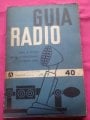
Back when I was a young kid in Mexico, the very best Spanish- language technical books were published by the Argentinean Editorial Arbo.
Many were translations from English or French editorials, but had several books from Argentinean authors as well.
I remember them as quite informative.

1627498225878.jpeg
 

MrSalts

Joined Apr 2, 2020
2,767
The less you explain and the more she "discovers" the more interested she will be. Direct the discovery but make sure she has a chance to experiment - connect wires, do something with her hands and mind. Only people with experience want to sit and read about a topic. The best way to learn any language is emersion in the culture. Electronics is just a language - common words with different definitions.
 
Top