Facebook
 Google
 GitHub
 Linkedin
Dear All,
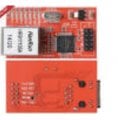
I am trying to set a local server on ESP32 MCU to be configured using Ethernet connection with Laptop. I attached the Ethernet module used. I tried the following Library . This library gives the ability to use SPIFFS which is need in my application. However, it seems that I am missing something in the code or defines. I would be very thankful if any one could help.
Regards
The code I use is the following :
The defines :
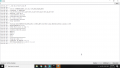
The following is shown on the serial :
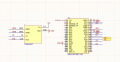
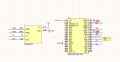
The following figure shows the connections from ESP32 to W5100 Module (schematic)
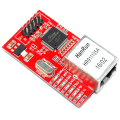
I am trying to set a local server on ESP32 MCU to be configured using Ethernet connection with Laptop. I attached the Ethernet module used. I tried the following Library . This library gives the ability to use SPIFFS which is need in my application. However, it seems that I am missing something in the code or defines. I would be very thankful if any one could help.
Regards
The code I use is the following :
C:
/****************************************************************************************************************************
  AdvancedWebServer_ESP32_SPI2.h - Dead simple web-server for Ethernet shields

  EthernetWebServer is a library for the Ethernet shields to run WebServer

  Based on and modified from ESP8266 https://github.com/esp8266/Arduino/releases
  Built by Khoi Hoang https://github.com/khoih-prog/EthernetWebServer
  Licensed under MIT license

  Copyright (c) 2015, Majenko Technologies
  All rights reserved.

  Redistribution and use in source and binary forms, with or without modification,
  are permitted provided that the following conditions are met:

  Redistributions of source code must retain the above copyright notice, this
  list of conditions and the following disclaimer.

  Redistributions in binary form must reproduce the above copyright notice, this
  list of conditions and the following disclaimer in the documentation and/or
  other materials provided with the distribution.

  Neither the name of Majenko Technologies nor the names of its
  contributors may be used to endorse or promote products derived from
  this software without specific prior written permission.

  THIS SOFTWARE IS PROVIDED BY THE COPYRIGHT HOLDERS AND CONTRIBUTORS "AS IS" AND
  ANY EXPRESS OR IMPLIED WARRANTIES, INCLUDING, BUT NOT LIMITED TO, THE IMPLIED
  WARRANTIES OF MERCHANTABILITY AND FITNESS FOR A PARTICULAR PURPOSE ARE
  DISCLAIMED. IN NO EVENT SHALL THE COPYRIGHT HOLDER OR CONTRIBUTORS BE LIABLE FOR
  ANY DIRECT, INDIRECT, INCIDENTAL, SPECIAL, EXEMPLARY, OR CONSEQUENTIAL DAMAGES
  (INCLUDING, BUT NOT LIMITED TO, PROCUREMENT OF SUBSTITUTE GOODS OR SERVICES;
  LOSS OF USE, DATA, OR PROFITS; OR BUSINESS INTERRUPTION) HOWEVER CAUSED AND ON
  ANY THEORY OF LIABILITY, WHETHER IN CONTRACT, STRICT LIABILITY, OR TORT
  (INCLUDING NEGLIGENCE OR OTHERWISE) ARISING IN ANY WAY OUT OF THE USE OF THIS
  SOFTWARE, EVEN IF ADVISED OF THE POSSIBILITY OF SUCH DAMAGE.
 *****************************************************************************************************************************/
/*
   The Arduino board communicates with the shield using the SPI bus. This is on digital pins 11, 12, and 13 on the Uno
   and pins 50, 51, and 52 on the Mega. On both boards, pin 10 is used as SS. On the Mega, the hardware SS pin, 53,
   is not used to select the Ethernet controller chip, but it must be kept as an output or the SPI interface won't work.
*/

#include "defines.h"

EthernetWebServer server(80);

int reqCount = 0;                // number of requests received

void handleRoot()
{
#define BUFFER_SIZE     512

  char temp[BUFFER_SIZE];
  int sec = millis() / 1000;
  int min = sec / 60;
  int hr = min / 60;
  int day = hr / 24;

  hr = hr % 24;

  snprintf(temp, BUFFER_SIZE - 1,
           "<html>\
<head>\
<meta http-equiv='refresh' content='5'/>\
<title>%s</title>\
<style>\
body { background-color: #cccccc; font-family: Arial, Helvetica, Sans-Serif; Color: #000088; }\
</style>\
</head>\
<body>\
<h1>Hello from %s</h1>\
<h3>running EthernetWebServer</h3>\
<h3>on %s</h3>\
<p>Uptime: %d d %02d:%02d:%02d</p>\
<img src=\"/test.svg\" />\
</body>\
</html>", BOARD_NAME, BOARD_NAME, SHIELD_TYPE, day, hr, min % 60, sec % 60);

  server.send(200, F("text/html"), temp);
}

void handleNotFound()
{
  String message = F("File Not Found\n\n");

  message += F("URI: ");
  message += server.uri();
  message += F("\nMethod: ");
  message += (server.method() == HTTP_GET) ? F("GET") : F("POST");
  message += F("\nArguments: ");
  message += server.args();
  message += F("\n");

  for (uint8_t i = 0; i < server.args(); i++)
  {
    message += " " + server.argName(i) + ": " + server.arg(i) + "\n";
  }

  server.send(404, F("text/plain"), message);
}

#define ORIGINAL_STR_LEN        2048

void drawGraph()
{
  static String out;
  static uint16_t previousStrLen = ORIGINAL_STR_LEN;

  if (out.length() == 0)
  {
    ET_LOGWARN1(F("String Len = 0, extend to"), ORIGINAL_STR_LEN);
    out.reserve(ORIGINAL_STR_LEN);
  }

  out = F( "<svg xmlns=\"http://www.w3.org/2000/svg\" version=\"1.1\" width=\"310\" height=\"150\">\n" \
           "<rect width=\"310\" height=\"150\" fill=\"rgb(250, 230, 210)\" stroke-width=\"3\" stroke=\"rgb(0, 0, 0)\" />\n" \
           "<g stroke=\"blue\">\n");

  char temp[70];

  int y = rand() % 130;

  for (int x = 10; x < 300; x += 10)
  {
    int y2 = rand() % 130;
    sprintf(temp, "<line x1=\"%d\" y1=\"%d\" x2=\"%d\" y2=\"%d\" stroke-width=\"2\" />\n", x, 140 - y, x + 10, 140 - y2);
    out += temp;
    y = y2;
  }

  out += F("</g>\n</svg>\n");

  ET_LOGDEBUG1(F("String Len = "), out.length());

  if (out.length() > previousStrLen)
  {
    ET_LOGERROR3(F("String Len > "), previousStrLen, F(", extend to"), out.length() + 48);

    previousStrLen = out.length() + 48;

    out.reserve(previousStrLen);
  }
  else
  {
    server.send(200, "image/svg+xml", out);
  }
}

void setup()
{
  Serial.begin(115200);

  while (!Serial);

  delay(1000);

  Serial.print("\nStarting AdvancedWebServer_ESP32_SPI2 on ");
  Serial.print(BOARD_NAME);
  Serial.print(F(" with "));
  Serial.println(SHIELD_TYPE);
  Serial.println(ETHERNET_WEBSERVER_VERSION);

  // You can use Ethernet.init(pin) to configure the CS pin
  //Ethernet.init(10);  // Most Arduino shields
  //Ethernet.init(5);   // MKR ETH shield
  //Ethernet.init(0);   // Teensy 2.0
  //Ethernet.init(20);  // Teensy++ 2.0
  //Ethernet.init(15);  // ESP8266 with Adafruit Featherwing Ethernet
  //Ethernet.init(33);  // ESP32 with Adafruit Featherwing Ethernet

#ifndef USE_THIS_SS_PIN
#define USE_THIS_SS_PIN   5   //22    // For ESP32
#endif

  ETG_LOGWARN1(F("ESP32 setCsPin:"), USE_THIS_SS_PIN);

  // Must use library patch for Ethernet, EthernetLarge libraries
  // ESP32 => GPIO2,4,5,13,15,21,22 OK with Ethernet, Ethernet2, EthernetLarge
  // ESP32 => GPIO2,4,5,15,21,22 OK with Ethernet3

  //Ethernet.setCsPin (USE_THIS_SS_PIN);
  Ethernet.init (USE_THIS_SS_PIN);

  // start the ethernet connection and the server:
  // Use DHCP dynamic IP and random mac
  uint16_t index = millis() % NUMBER_OF_MAC;
  // Use Static IP
  Ethernet.begin(mac[index], ip);
//  Ethernet.begin(mac[index]);

  // Just info to know how to connect correctly
  // To change for other SPI
  Serial.println("=========================");
  Serial.println("Currently Used SPI pinout:");
  Serial.print("MOSI:");
  Serial.println(PIN_MOSI);
  Serial.print("MISO:");
  Serial.println(PIN_MISO);
  Serial.print("SCK:");
  Serial.println(PIN_SCK);
  Serial.print("SS:");
  Serial.println(USE_THIS_SS_PIN);
  Serial.println(F("========================="));

  Serial.print(F("Using mac index = "));
  Serial.println(index);

  Serial.print(F("Connected! IP address: "));
  Serial.println(Ethernet.localIP());

  if (Ethernet.getChip() == w5500)
  {
    Serial.print(F("Speed: "));
    Serial.print(Ethernet.speedReport());
    Serial.print(F(", Duplex: "));
    Serial.print(Ethernet.duplexReport());
    Serial.print(F(", Link status: "));
    Serial.println(Ethernet.linkReport());
  }

  server.on(F("/"), handleRoot);
  server.on(F("/test.svg"), drawGraph);
  server.on(F("/inline"), []()
  {
    server.send(200, F("text/plain"), F("This works as well"));
  });

  server.onNotFound(handleNotFound);
  server.begin();

  Serial.print(F("HTTP EthernetWebServer is @ IP : "));
  Serial.println(Ethernet.localIP());
}

void heartBeatPrint()
{
  static int num = 1;

  Serial.print(F("."));

  if (num == 80)
  {
    Serial.println();
    num = 1;
  }
  else if (num++ % 10 == 0)
  {
    Serial.print(F(" "));
  }
}

void check_status()
{
  static unsigned long checkstatus_timeout = 0;

#define STATUS_CHECK_INTERVAL     10000L

  // Send status report every STATUS_REPORT_INTERVAL (60) seconds: we don't need to send updates frequently if there is no status change.
  if ((millis() > checkstatus_timeout) || (checkstatus_timeout == 0))
  {
    heartBeatPrint();
    checkstatus_timeout = millis() + STATUS_CHECK_INTERVAL;
  }
}

void loop()
{
  server.handleClient();
  check_status();
}
C:
/****************************************************************************************************************************
  defines.h
  EthernetWebServer is a library for the Ethernet shields to run WebServer

  Based on and modified from ESP8266 https://github.com/esp8266/Arduino/releases
  Built by Khoi Hoang https://github.com/khoih-prog/EthernetWebServer
  Licensed under MIT license
 ***************************************************************************************************************************************/

#ifndef defines_h
#define defines_h

#if !( defined( ESP32 ) )
  #error This code is designed to run on ESP32 platform! Please check your Tools->Board setting.
#endif

#define DEBUG_ETHERNET_WEBSERVER_PORT       Serial

// Debug Level from 0 to 4
#define _ETHERNET_WEBSERVER_LOGLEVEL_       3
#define _ETG_LOGLEVEL_                      1

// Optional SPI2
#define USING_SPI2                          false

// For ESP32
#warning Use ESP32 architecture
//#define ETHERNET_USE_ESP32
#define BOARD_TYPE      "ESP32"

#define W5500_RST_PORT   21

#include <SPI.h>

// Use true  for ENC28J60 and UIPEthernet library (https://github.com/UIPEthernet/UIPEthernet)
// Use false for W5x00 and Ethernetx library      (https://www.arduino.cc/en/Reference/Ethernet)

//#define USE_UIP_ETHERNET   true
#define USE_UIP_ETHERNET   false

// Note: To rename ESP628266 Ethernet lib files to Ethernet_ESP8266.h and Ethernet_ESP8266.cpp
// In order to USE_ETHERNET_ESP8266
#if ( !defined(USE_UIP_ETHERNET) || !USE_UIP_ETHERNET )

  // To override the default CS/SS pin. Don't use unless you know exactly which pin to use
  // You can define here or customize for each board at same place with BOARD_TYPE
  // Check @ defined(SEEED_XIAO_M0)
  //#define USE_THIS_SS_PIN   22  //21  //5 //4 //2 //15

  // Only one if the following to be true
  #define USE_ETHERNET_GENERIC  true

  #include <soc/spi_pins.h>

  #if USING_SPI2
    // HSPI_IOMUX_PIN_NUM_???? deprecated from core v2.0.6+
    // For ESP32 core v2.0.6+
    #define PIN_MISO          SPI2_IOMUX_PIN_NUM_MISO
    #define PIN_MOSI          SPI2_IOMUX_PIN_NUM_MOSI
    #define PIN_SCK           SPI2_IOMUX_PIN_NUM_CLK
    #define PIN_SS            SPI2_IOMUX_PIN_NUM_CS

    #define SHIELD_TYPE       "W5x00 using Ethernet_Generic Library on SPI2"

  #else

    #define PIN_MISO          MISO
    #define PIN_MOSI          MOSI
    #define PIN_SCK           SCK
    #define PIN_SS            SS

    #define SHIELD_TYPE       "W5x00 using Ethernet_Generic Library on SPI"

  #endif

  #define ETHERNET_LARGE_BUFFERS

  #include "Ethernet_Generic.h"
  #warning Using Ethernet_Generic lib

  // Ethernet_Shield_W5200, EtherCard, EtherSia not supported
  // Select just 1 of the following #include if uncomment #define USE_CUSTOM_ETHERNET
  // Otherwise, standard Ethernet library will be used for W5x00

#endif      // #if !USE_UIP_ETHERNET

#include <EthernetWebServer.h>

#ifndef SHIELD_TYPE
  #define SHIELD_TYPE     "Unknown Ethernet shield/library"
#endif

#define BOARD_NAME    ARDUINO_BOARD

// Enter a MAC address and IP address for your controller below.
#define NUMBER_OF_MAC      20

byte mac[][NUMBER_OF_MAC] =
{
  { 0xDE, 0xAD, 0xBE, 0xEF, 0xFE, 0x01 },
  { 0xDE, 0xAD, 0xBE, 0xEF, 0xBE, 0x02 },
  { 0xDE, 0xAD, 0xBE, 0xEF, 0xFE, 0x03 },
  { 0xDE, 0xAD, 0xBE, 0xEF, 0xBE, 0x04 },
  { 0xDE, 0xAD, 0xBE, 0xEF, 0xFE, 0x05 },
  { 0xDE, 0xAD, 0xBE, 0xEF, 0xBE, 0x06 },
  { 0xDE, 0xAD, 0xBE, 0xEF, 0xFE, 0x07 },
  { 0xDE, 0xAD, 0xBE, 0xEF, 0xBE, 0x08 },
  { 0xDE, 0xAD, 0xBE, 0xEF, 0xFE, 0x09 },
  { 0xDE, 0xAD, 0xBE, 0xEF, 0xBE, 0x0A },
  { 0xDE, 0xAD, 0xBE, 0xEF, 0xFE, 0x0B },
  { 0xDE, 0xAD, 0xBE, 0xEF, 0xBE, 0x0C },
  { 0xDE, 0xAD, 0xBE, 0xEF, 0xFE, 0x0D },
  { 0xDE, 0xAD, 0xBE, 0xEF, 0xBE, 0x0E },
  { 0xDE, 0xAD, 0xBE, 0xEF, 0xFE, 0x0F },
  { 0xDE, 0xAD, 0xBE, 0xEF, 0xBE, 0x10 },
  { 0xDE, 0xAD, 0xBE, 0xEF, 0xFE, 0x11 },
  { 0xDE, 0xAD, 0xBE, 0xEF, 0xBE, 0x12 },
  { 0xDE, 0xAD, 0xBE, 0xEF, 0xFE, 0x13 },
  { 0xDE, 0xAD, 0xBE, 0xEF, 0xBE, 0x14 },
};

// Select the IP address according to your local network
IPAddress ip(192, 168, 0, 100);

// Google DNS Server IP
IPAddress myDns(8, 8, 8, 8);

#endif    //defines_h
The following figure shows the connections from ESP32 to W5100 Module (schematic)
Last edited: