ensure that RDS on is at its lowest

Thread Starter

MikeJacobs

Joined Dec 7, 2019
232
Hi all

So general question about RDS on values.
Can we put an ohm meter on them and figure that out?

Also, how do we ensure that RDS on is at its lowest state. Se need to fully saturate the Mosfet right?

What considerations ensure that a mosfet is fully saturated?
 

jpanhalt

Joined Jan 18, 2008
11,087
For many (most) modern mosfets, RDS(on) will be very low, even sub-Ohm. Such measurements create special challenges. It might be a lot easier to measure voltage drop or current.

The datasheets will give you the Vgs to turn the mosfet completely on. Do you have a specific mosfet in mind?
 

ericgibbs

Joined Jan 29, 2010
21,423
What considerations ensure that a mosfet is fully saturated?
hi M,
One requirement is to ensure that the Vgate voltage is in the order of say 12V, this of course depends upon which N MOSFET you are using.
What is the MOSFET Drain current you require for the load and have you chosen the MOSFET.?
E

This is just an example image.
 

Attachments

Papabravo

Joined Feb 24, 2006
22,075
You cannot use an ohm meter to measure Rds(on). The value can only be inferred from Vds and Id, and it is at a minimum when the device is fully on and Vgs is close to it's maximum value.
You setup a jig that turns the MOSFET on as hard as you can and measures Vds and Id. In doing this you need to be careful not to let tha magic smoke out.
The device will be fully on when Vgs is at a maximum for the device. N.B. Just because there is a maximum Vgs specified does not mean an individual device will not fail at or near that limit.
 

Audioguru again

Joined Oct 21, 2019
6,826
If you buy name-brand Mosfets then you do not need to measure the turned on Vds. You can trust the datasheet to say the maximum Vds with a certain Vgs.
If you buy cheap ebay, Amazon or Aliwhatever Mosfets then they might not even have a datasheet.

The graphs on a datasheet are for a "typical" part that you might or might not get. Some are better and some are worse.
 

crutschow

Joined Mar 14, 2008
38,435
how do we ensure that RDS on is at its lowest state.
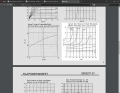
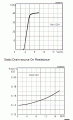
Use the value (or greater) in the data sheet for Vgs where the value of Rds(on) is given.
(Typical shown below).

1575823751216.png
Se need to fully saturate the Mosfet right?
Technically, no.

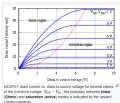
MOSFETs are fully on in the linear region, not the saturation region (below), (the terms are opposite of a BJT just to confuse us :) ).

1575822261595.png
 
Last edited:

jpanhalt

Joined Jan 18, 2008
11,087
You cannot use an ohm meter to measure Rds(on). The value can only be inferred from Vds and Id, and it is at a minimum when the device is fully on and Vgs is close to it's maximum value.
Aren't all resistance measurements with an ohmmeter (e.g., a DMM) based on estimation of V/I?

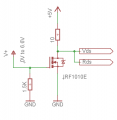
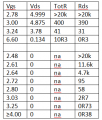
With this circuit and no applied voltage to the drain, except from my ohmmeter, one can measure Rds and show that it varies with Vgs.

1575828623992.png
1575828459273.png

My supply was not very stable, so I could not get values with and without an applied Vgs under "exactly" the same conditions, but the results do correlate well. Of course, I agree that using an ohmmeter is not ideal.

Here's a link from Vishay that describes how it characterized mosfets: https://www.vishay.com/docs/90715/an957.pdf
 

Papabravo

Joined Feb 24, 2006
22,075
The goal was not to measure the rds(on) at an unspecified Vds and Id, but to fine the minimum rds(on), Is the DMM measuring resistance after being applied to the drain and source with the +5V turned off? Does the DMM provide anywhere near the drain current mentioned in the spec for rds(on)
 

jpanhalt

Joined Jan 18, 2008
11,087
Hopefully not. That is why I recommended the datasheet, and failing, that the method described in the Vishay document. The fact is, it does measure Rds(on) at low current.
 

ci139

Joined Jul 11, 2016
1,978
Whacha smokin' Willis?
i put the picture right infront of your face and you manage to miss the graph ? about RDS(ON) against ID
// A bigger drain (load) resistor passes less current through the Drain-Source junction ? What ↓ the graph ↓ says about that ?
// get some sleep ...


ci139

Joined Jul 11, 2016
1,978
? Should i kill myself now . . . the REAL thing that defines the load is something that has (it's H-A-S) IMPEDANCE the heuristic Wattage is NOT a THING -- we can argue forever about that
 

Papabravo

Joined Feb 24, 2006
22,075
I agree that for some values of Vgs, a larger Id results in a higher rds(on), but the really significant observation is that with Vgs above a certain point rds(on) is effectively independent of Id. Going back to the original title of the thread; making Vgs as large as you can guarantees that rds(on) will be at or near it's minimum value. Having Vgs be smaller, you can only guarantee that rds(on) will be a minimum for that Vgs at low drain currents. The upward slope of those curves at higher drain currents means that many MOSFETS will destroy themselves if designers do not pay attention to details like this.

PS -- yes I saw the graphic in your post.
 
Last edited:

tindel

Joined Sep 16, 2012
939
Hi all

So general question about RDS on values.
Can we put an ohm meter on them and figure that out?

Also, how do we ensure that RDS on is at its lowest state. Se need to fully saturate the Mosfet right?

What considerations ensure that a mosfet is fully saturated?
Sorry about the arguments that have started on transistor physics. I hope you've stuck around, as I will attempt to answer your questions. Too many MC's and too many mics!

I currently work as a test engineer at a well respected IC manufacturer. One of the primary goals for the parts I work on is to accurately measure sub-ohm Rds,on - but not as low as dedicated transistors, usually between 0.5 and 1.0 ohm. Hopefully this gives you some idea of where I'm coming from and how my input is or isn't applicable to your application.

The only way to accurately measure Rds,on is to use a Kelvin connection measurement - also called a 4-wire measurement. A internet search will be helpful here. The idea is that you force current, measure voltage, calculate resistance. Simply using an ohm meter is not enough usually, as you will also get errors in the range of 0.1 to 0.2 ohms due to your ohm meter leads. Some ohm meters have delta functions which may help reduce this error to 0.05 to 0.1 ohm, in my experience.

Terminology and Physics aside - First you must drive the Vgs of your transistor to a high enough voltage to turn your FET ON. What Vgs voltage you decide to test at will be the most important factor in determining your Rds,on. The higher your Vgs, the lower the Rds. Your forced current can also have secondary effects on your readings for a couple reasons. 1) Self heating can cause changes in the resistance. To avoid this, most transistor manufactures measure Rds,on using low frequency pulses. 2) You do not want Vds to be near or above the transition point where Vds = Vgs - Vth. So you must ensure that you are not there. This can be done several different ways, but if you have the datasheet Vth and know your testing Vgs, it's pretty easy to keep your Vds low in comparison, perhaps by a factor of 5 or 10. If you don't have this information then you must characterize your part either at the individual piece level (if low quantity) or at the large quantity level which starts involving statistical methods to give you confidence in your manufacturing process variation.

If you have further questions, please IM me directly.
 
Top