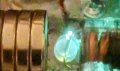
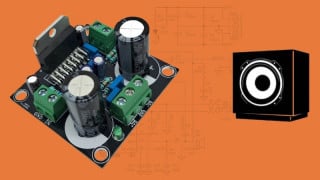
Very well, since you don't trust my posts I would suggest you bow out of this thread. For what it is worth I am not fond of Facebook either. But being a mod I took the chance and got the video so other members would not have to.
Please give instructions how to open a zip file on an iPhone and play the video.
I don't know what Facebook has to do with this thread. I don't see any Facebook links.
Honestly, I'm not 100 Percent sure why. It's complicated and I'm in the middle of a patent application witch makes it hard to talk about yet still find answers. I'm still trying to figure out what exactly is happening I'm using 2 _ 20volt 2ah Battery's to power it., step up to 60VDC and things get HOT and the ARC is wild. Obviously I'm sure that arc is way above 40 volts and I can't check the voltage of the circuit and or the batteries because the dmm goes O.L , I've blown like 10 up, and have gone through 3 true rms amp probes. It's frustrating. Here is another video of the arcing. But something I am having an issue with is now when I run the apperatus there comes to a point where the voltage gets high and the audio keeps on cutting out...it does it with my mobile phone and my regular camera. Any idea why it would just cut out? So weird. I wonder if there is anyway to extrapolate the audio to see what frequency it is, because likewise said, I try to check with the clamp meter, dmm even with voltage dividers and it blows them up.
Honestly, I'm not 100 Percent sure why. It's complicated and I'm in the middle of a patent application witch makes it hard to talk about yet still find answers.
How can you write a patent application about something you don’t understand? That doesn’t make sense.
A perliminary patent allows for that flexibility
It the wire through the bead complete or is there a break in it?there is a hole in the center
How were you attempting to measure voltage? Where were you connecting the meter’s leads? +/-
That's true but really bad advice. While an inventor CAN apply for a patent within 12-months of public disclosure in the US, the US has also moved to a FIRST INVENTOR TO APPLY rule as opposed to the old rule of, FIRST TO INVENT (and that is when lab notebooks, and witness signatures were much more important). Now, therefore, if the inventor discloses publicly, anyone who can write a reasonable description of what was assembled can beat the inventor to the US patent office.
Also, most EU countries don't allow patents on publicly disclosed before applying for a patent - the disclosed info becomes "prior art" and, therefore, public domain technology in those jurisdictions.
Really bad advice.
There is no requirement to demonstrate how a technology works, and you don't even have to prove it works "better" (cheaper or faster or... than any other existing technology).
There are many patents issued every week based on what was done, and the inventory wants to protect the effect they deem beneficial to them. An example, is the hundreds of thousands of pharmaceutical patents. A great number of the patents are just a patent of a chemical or mixture (or even an unidentified, unpurified reaction product of a list of ingredients that may or may not react) and the inventor Or the assignee may want to protect the effect the mixture causes. In many cases, there is no detailed physiological description of how the medication is metabolized or interrupts metabolism or slows or speeds a response to a stimulus or what ever the effect may be.
It makes complete sense to anyone in the business of creating and protecting technology.
Bayer patented Asprin in 1899 and had no idea how or why asprin worked at reducing fever, intimation and pain. There is still active research and technical papers written about the subject this year.
There is no requirement to demonstrate how a technology works, and you don't even have to prove it works "better" (cheaper or faster or... than any other existing technology).
There are many patents issued every week based on what was done, and the inventory wants to protect the effect they deem beneficial to them. An example, is the hundreds of thousands of pharmaceutical patents. A great number of the patents are just a patent of a chemical or mixture (or even an unidentified, unpurified reaction product of a list of ingredients that may or may not react) and the inventor Or the assignee may want to protect the effect the mixture causes. In many cases, there is no detailed physiological description of how the medication is metabolized or interrupts metabolism or slows or speeds a response to a stimulus or what ever the effect may be.
It makes complete sense to anyone in the business of creating and protecting technology.
Bayer patented Asprin in 1899 and had no idea how or why asprin worked at reducing fever, intimation and pain. There is still active research and technical papers written about the subject this year.
Having worked on several patents with good patent attorneys I know that writing a defensible patent is very hard work and requires knowing what practical effect of your device. If you can't describe what something does your patent, even if accepted, is going to be very hard to defend.
As an aside, I still find it irksome that people will come here soliciting free consulting, first without saying that's what they are doing, and second expecting to make money from the work of others with no intention of compensating them. If someone says, "I am working on a device and can't disclose what it is and have the expectation of making money from it, but won't compensate you for helping but I would appreciate your help." Then people could choose to help or not with informed consent.
I should have added that the inventor can establish priority by filing provisional patent application. They are simple to create, do not require claims or formal language, though drawings should conform to guidelines and they are very inexpensive for small entities (as opposed to large corporations). Take note: if you don't file within on year of the provisional application you lose the right to patent that invention.
Honestly, I'm not 100 Percent sure why. It's complicated and I'm in the middle of a patent application witch makes it hard to talk about yet still find answers. I'm still trying to figure out what exactly is happening I'm using 2 _ 20volt 2ah Battery's to power it., step up to 60VDC and things get HOT and the ARC is wild. Obviously I'm sure that arc is way above 40 volts and I can't check the voltage of the circuit and or the batteries because the dmm goes O.L , I've blown like 10 up, and have gone through 3 true rms amp probes. It's frustrating. Here is another video of the arcing. But something I am having an issue with is now when I run the apperatus there comes to a point where the voltage gets high and the audio keeps on cutting out...it does it with my mobile phone and my regular camera. Any idea why it would just cut out? So weird. I wonder if there is anyway to extrapolate the audio to see what frequency it is, because likewise said, I try to check with the clamp meter, dmm even with voltage dividers and it blows them up.
The thing is voltage and current do not matter by themselves, wattage is the thing. Wattage in always equals wattage out minus losses. There ain't no such thing as a free lunch (TANSTAAFL) a quote from Robert A Heinlein a famous science fiction author, defining entropy in a very quick phrase.
Another quote from him on the same subject:
1. you can't win,
2. You can't break even,
3. You can't quit the game.
There will never be a process we're power out is greater than power in, this is a scientific law.
Just a very picky point, it was actually Allen Ginsberg of all people. I’ve seen it attributed to many people, including Harlan Ellison, Isaac Asimov, but oddly neither Albert Einstein nor Abraham Lincoln.

 Facebook
 Google
 GitHub
 Linkedin