Emitter vs Collector.

crutschow

Joined Mar 14, 2008
38,932
I have to say I am 'almost' amused that people often assume things that they think other people are assuming
I was not talking about reverse 'gain'.
Since the subject of this thread included testing the forward and reverse gain of transistors to find the correct CBE order of BJTs, it was logical to assume your criticism of the simulation model was directed at that.
If not, then it seems that should have been clarified by you.
I don't think that's "way over the top" on my part.
 

WBahn

Joined Mar 31, 2012
33,326
Anyway, I was, in particular, talking about testing the reverse emitter breakdown voltage, really though the entire curve. Out of 1050 transistor models checked, only one included a parameter for that specification. That does not mean that none of them have it, but I checked LT Spice and it seems that none of the models have any parameter for that spec. Maybe you can find one or more that does? I have a feeling that LT Spice does not consider that in any model, but I could be wrong because I don't have the source code for LT Spice.
Also, it seems to be hard to find this on any data sheet too, such as with an NPN. I wanted to mention that spec for anyone who did these tests so they can be careful not to reverse overvoltage the base emitter during testing. As it turns out, this is a very complicated thing to specify, but see what you can find out.
Instead of looking at a thousand models and then developing a "feeling" about whether LTSpice supports modeling reverse breakdown, how about just looking at the LTSpice documentation to see whether or not it does?

https://ltwiki.org/files/LTspiceHelp.chm/html/Q-device.htm

The parameter BVbe is the base-emitter reverse breakdown voltage and BVcbo is the collector-base breakdown voltage. Other parameters let you control the behavior at breakdown.
 

WBahn

Joined Mar 31, 2012
33,326
Yes it depends how symmetrical it is. But there is some relation that often exists even if not a hard and fast rule.
Even if there is a relation, how does that imply that "high quality" transistors are going to have higher reverse gain?
 

Thread Starter

Wendy

Joined Mar 24, 2008
23,869
I haven't left this thread, I just got my 3D printer back after it's been down for quite a few weeks
 

MrAl

Joined Jun 17, 2014
13,870
Since the subject of this thread included testing the forward and reverse gain of transistors to find the correct CBE order of BJTs, it was logical to assume your criticism of the simulation model was directed at that.
If not, then it seems that should have been clarified by you.
I don't think that's "way over the top" on my part.
Hi,

Yes that's reasonable, and I also pointed that out in my reply.
 

MrAl

Joined Jun 17, 2014
13,870
Instead of looking at a thousand models and then developing a "feeling" about whether LTSpice supports modeling reverse breakdown, how about just looking at the LTSpice documentation to see whether or not it does?

https://ltwiki.org/files/LTspiceHelp.chm/html/Q-device.htm

The parameter BVbe is the base-emitter reverse breakdown voltage and BVcbo is the collector-base breakdown voltage. Other parameters let you control the behavior at breakdown.
Does your LT Spice version have any transistors that actually have BVcbo specified? I couldn't find any.
The 1000 transistors I looked at came from a separate download but I can't remember where I downloaded it from.

My suspicion is that it might be rare to see that parameter specified, and also possible that LT Spice does not really support it anyway. Why would so many transistor models not have that specified.

See if you can find any that have that and related params specified and I'll try them out in several simulations to see what happens.

Also, if you can find a data sheet with this information on it that could help too. I'll thank you later :)
 
Last edited:

MrAl

Joined Jun 17, 2014
13,870
Even if there is a relation, how does that imply that "high quality" transistors are going to have higher reverse gain?
Well it also depends on how the transistor is optimized, for forward operation or not. The best idea then is to think of if it is symmetrical or not.
 

WBahn

Joined Mar 31, 2012
33,326
Does your LT Spice version have any transistors that actually have BVcbo specified? I couldn't find any.
The 1000 transistors I looked at came from a separate download but I can't remember where I downloaded it from.

My suspicion is that it might be rare to see that parameter specified, and also possible that LT Spice does not really support it anyway. Why would so many transistor models not have that specified.

See if you can find any that have that and related params specified and I'll try them out in several simulations to see what happens.

Also, if you can find a data sheet with this information on it that could help too. I'll thank you later :)
You REALLY think that they are going to define parameters in their model documentation and then not support them???

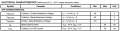
The very first data sheet I pulled up, for the 2n3904, has specs for all three breakdown voltages.

1791662954955.png

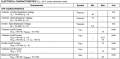
So I tried a second on, for the 2n2222, and guess what it had?

1791663196404.png

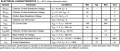
So I thought, hey, what about the BC337? Guess what?

1791663343148.png
Though this didn't have an explicit BV_CBO value.

The reason that so many models don't have the parameters included (meaning that they use the defaults) is that the people developing the models aren't getting paid to make models that implement every last aspect of the device that is possible, especially given the degree of variability between devices due to manufacturing capabilities. They are getting paid to make models that are suitable for the overwhelming majority of uses those models will see. Time spent going beyond that is not justified.
 

MrAl

Joined Jun 17, 2014
13,870
You REALLY think that they are going to define parameters in their model documentation and then not support them???

The very first data sheet I pulled up, for the 2n3904, has specs for all three breakdown voltages.

View attachment 372117

So I tried a second on, for the 2n2222, and guess what it had?

View attachment 372118

So I thought, hey, what about the BC337? Guess what?

View attachment 372119
Though this didn't have an explicit BV_CBO value.

The reason that so many models don't have the parameters included (meaning that they use the defaults) is that the people developing the models aren't getting paid to make models that implement every last aspect of the device that is possible, especially given the degree of variability between devices due to manufacturing capabilities. They are getting paid to make models that are suitable for the overwhelming majority of uses those models will see. Time spent going beyond that is not justified.
Hello again,

Well thanks for the partial data sheets, but from your first sentence and the three question marks you seem to be indicating that this is some sort of profound find or something. Also, your last paragraph says basically what I had been saying several times over again about the reverse breakdown, so I'm not sure what you are trying to get at.
Don't get me wrong, I do appreciate the effort, I really do, and I think this might help clarify the issue even further.

Ok, so we see reverse voltages of 6v, 6v, and 5v, and I repeatedly mentioned 5v, but if you really want to make this work, see if you can get that data to produce something useful in LT Spice. See if you can enter a value into one of the models or a new model downloaded or something and get it to work like we might expect it to.

Back when I worked in the industry this stuff came up several times in talks. We were looking into getting a biploar transistor (100 amp collector current rating typical) to turn off faster and faster. The breakdown voltage of the EB junction came into play because we were supplying a snap off pulse to the base emitter to turn it off. I went back to the Rutgers library to find some info on this, and although I did find some useful information, it was not quite enough.

The thing is, the reverse BE voltage is much more complicated than just a single number, and different things can influence that. The best conceptual idea is that it is like we have 100 very thin wires in a bundle and running some current like say 100 amps through it, and assume that all the wires share the current perfectly. Each wire sees 1 amp of course. We know that each of the wires can handle 1 amp without too much trouble, but we don't want to exceed that, and 100 amps should be the max. Everything seems just perfect, but there is another issue that comes up. When we first apply the current, the layout of the area at the end of the wire means some wires will initially get a higher current, and heat up and open circuit. If just one wire opens up, we are left with just 99 wires, and so now each wire has to handle about 1 percent more current. Not a big deal, but next time we pump the current into the wire, another wire opens up, then another, then another, each time we pulse the current. This could eventually cause 50 wires to open up, so now we will be lucky to get it to work at all, but luckily the resistance just goes up so the current ends up being naturally limited to a lower current. With 50 wires gone, the resistance must have gone up by 2 times. If we track the efficiency of the entire setup, we find that we can no longer pass 100 amps because of the wire loss and the impedances involved. Thus we lose efficiency.
Comparing this scenario to the emitter base, that's about the same thing that can happen. If we overshoot the spec, the emitter becomes less and less efficient over time due to tiny areas conducting more than others, and so the forward Beta drops. We end up with a crummy transistor when once it was pretty good. The reverse spec is important for this because excessive reverse voltage can cause damage little by little or if high enough, all at once.

The really amazing part is that this damaging reverse voltage level can change and so we might find that just 4v damages the transistor. Under very extreme cases, we might even see damage with a forward voltage. So specifying a single value like 5v is not really enough to fully evaluate what can or cannot happen to the transistor.
The question then becomes can any simulator give us some useful results so we can evaluate these problems. Can LT Spice be used for a really good evaluation.

Of course some of the people who make models may not care about this, but that's what I was basically saying: that the models probably do not cover some of these effects. The questions then is can we find a model or data sheet that can show us this, and a simulator that can handle it at least good enough so we can get a ballpark idea what we might expect.
 
Top