Electric motor conversion

Thread Starter

Forensics

Joined Jul 8, 2018
1
So hello human beings of similar interests,


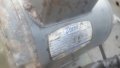
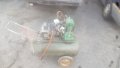
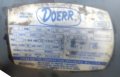
I have this old Doerr electric motor that is currently attached to an air compressor and it says that it's a 230v only that it can't be converted to 110v but I don't have access to a plug like that. Which in my opinion just isn't fun right? So i decided to do things that might explode and stuff and i just kind of flipped some wires around and hooked it up to a 110v plug and obviously I plugged it in and to my surprise it ran, and quite well..... for about 2 minutes as it slowly got hotter over the duration of it's running and slowed down until it hit a complete stop and vegan only humming. I was thinking that I blew the motor or something but I let it sit for a day and it cooled down and the exact same thing occurred and if like to know if this is caused by the conversion or by the motor itself?

From the new writer known as Forensics,
 

Attachments

Dodgydave

Joined Jun 22, 2012
11,395
It's designed for 230V @12A, so you have to run it on that voltage otherwise it won't give the same output power, and will take more current. If you are in Usa you can run it across the two phases.

What country are you in?
 
Last edited:

MaxHeadRoom

Joined Jul 18, 2013
30,562
1PH AC motors are not like DC version etc where you can run off of different voltages, 50/60hz 1ph motors do not take well to reducing Voltage or Frequency and consequentially fail.
Incidentally US (N.A.) residential AC 240v is single phase.
Max.
 

shortbus

Joined Sep 30, 2009
10,050
I was thinking that I blew the motor or something but I let it sit for a day and it cooled down and the exact same thing occurred and if like to know if this is caused by the conversion or by the motor itself?
It was able to restart because it is equipped with a thermal switch. But it will never run on 120V.
 

Hymie

Joined Mar 30, 2018
1,347
1PH AC motors are not like DC version etc where you can run off of different voltages, 50/60hz 1ph motors do not take well to reducing Voltage or Frequency and consequentially fail.
Incidentally US (N.A.) residential AC 240v is single phase.
Max.
You learn something new every day – I always thought the USA domestic supply was based on 120V phase to neutral and that the 240V was achieved across two phases (out of phase by 180 degrees)
 

MaxHeadRoom

Joined Jul 18, 2013
30,562
You learn something new every day – I always thought the USA domestic supply was based on 120V phase to neutral and that the 240V was achieved across two phases (out of phase by 180 degrees)
It is a secondary of a 240v 1ph transformer with a C.T. for 120v-0-120v.
Max.
 

Hymie

Joined Mar 30, 2018
1,347
It is a secondary of a 240v 1ph transformer with a C.T. for 120v-0-120v.
Max.
You keep learning something new every day – I always thought the purpose of the 240V phase to phase supply in North America was to reduce the current draw of power hungry appliances.

But with transformer losses, the supplied 120V current is increased above that it would otherwise be (without the transformer).
 

MaxHeadRoom

Joined Jul 18, 2013
30,562
The transformer is fed from a local distribution 3ph transformer, anywhere up to 4kv primary.
With 120v circuits when the current is identical in each of the 120v legs, the neutral current is zero.!
The 240v is used for high current demand appliances.
It is not phase to phase, 240v SINGLE phase.
Max.
 

crutschow

Joined Mar 14, 2008
38,325
with transformer losses, the supplied 120V current is increased above that it would otherwise be (without the transformer).
True.
But you always need the transformer, whether it's 120V or 240V.

I always thought the US used 120V for safety reasons but with 120V to neutral for each of the 240V hot leads, that would seem to be a moot point.
Using 240V would only be more dangerou if you got across both hot wires, and than would seem unlikely to happen accidentally.
 
Top