Facebook
 Google
 GitHub
 Linkedin
HI everyone I hope you are well,
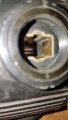
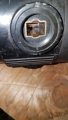
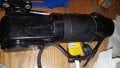
I have a electric wheelchair motor 4 brushes that I removed the brushes from.
I have some theory questions and practical advice needed. It s my first time. I made sure to mark which sens goes the brush back in.
THEORY
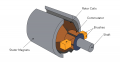
First I guess It would be good for me to have an understanding of how the electricity runs from the motor brass brush hole to the brush.
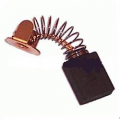
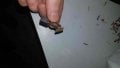
1 I see there are 90 degree flapped 2 ears on each side of the brass part of the brush. Is this where the electric contact happens only?
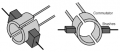
2 Since there are 2 ears on each brush, is it that one ear is positive and the other is negative? If so, how can the electricity find its way since the hole brush holder is made of brass or metal so that is like a built in shortcircuit . Maybe it does not work that way and it is just electricity being sent in short intervals travelling by either or both brass ears .
3 Also is the dark part of the brush(chalk like material) electrified? because I see a copper wire from the brass part to the dark chalk part.
---
PRACTICE.
I have been advise not to use sandpaper to remove the dark stuff in the inside of the brush hole to prevent some grinding material to go into the motor so I feel it is a wise advise to use stainless steal round brush to try to remove the black stuff kind of sticked on the side of one of the brush hole brass.
It seems that Deoxit is the product to use but I have a question : I see D5Hosa Caig Deoxit Contact Cleaner 5% Spray 5 Oz
wich is only 5 pourcent and a 100pourcent product called Labs D100L-16BX DeoxIT® D-Series D100L Mini-Brush Applicator
For now my need is only to clean the brush part. But in futur I might have to open the motor and clean the armature. I would prefer buying one product that can do both jobs but maybe I would have to but both. My researche told me that d5 si to use when you have stuff? to flush like an innondation. The D100minibrush would not have flushing capacity but is 20 times stronger.!!! 20 times more concentrated!
4Could someone clarify the use of those 2 products and if just getting the can spray d5 is able to clean the brush contact good enough. If the d100 can only be used on the brass brush area but the d5 can do both the brass brush hole AND be usefull for other parts of the motor let me know which part I would also allow to clean to help me make my choice.
5 For the brush , what parts do I have to clean exactly? All de brass of the hole? The ears of the brush? all the brass of the brush altogether , what about the dark chalky part of the brush should I apply some on it and on its slightly curved part that touches the armature? Is it advised to spray on the copper wire inside the spring too?
6 How do I clean that? is it just put liquid on and let it dry? how many applications? or is it better to take a tiny cloth full on liquid and rub it repetitively on the areas from question 5?
7 What wrong could happen if someone does never apply Deoxit on those parts? Which lead to the question of how often to apply the product. Is it based on how much the motor is used or how much time passes between application?
thanks for you patience
P.S. on top of the brush brass I wrote with a black marker to identify the brush. It is the first part we see when removing the plastic circular cover that protects from water
have a nice day.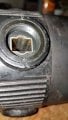
I have a electric wheelchair motor 4 brushes that I removed the brushes from.
I have some theory questions and practical advice needed. It s my first time. I made sure to mark which sens goes the brush back in.
THEORY
First I guess It would be good for me to have an understanding of how the electricity runs from the motor brass brush hole to the brush.
1 I see there are 90 degree flapped 2 ears on each side of the brass part of the brush. Is this where the electric contact happens only?
2 Since there are 2 ears on each brush, is it that one ear is positive and the other is negative? If so, how can the electricity find its way since the hole brush holder is made of brass or metal so that is like a built in shortcircuit . Maybe it does not work that way and it is just electricity being sent in short intervals travelling by either or both brass ears .
3 Also is the dark part of the brush(chalk like material) electrified? because I see a copper wire from the brass part to the dark chalk part.
---
PRACTICE.
I have been advise not to use sandpaper to remove the dark stuff in the inside of the brush hole to prevent some grinding material to go into the motor so I feel it is a wise advise to use stainless steal round brush to try to remove the black stuff kind of sticked on the side of one of the brush hole brass.
It seems that Deoxit is the product to use but I have a question : I see D5Hosa Caig Deoxit Contact Cleaner 5% Spray 5 Oz
wich is only 5 pourcent and a 100pourcent product called Labs D100L-16BX DeoxIT® D-Series D100L Mini-Brush Applicator
For now my need is only to clean the brush part. But in futur I might have to open the motor and clean the armature. I would prefer buying one product that can do both jobs but maybe I would have to but both. My researche told me that d5 si to use when you have stuff? to flush like an innondation. The D100minibrush would not have flushing capacity but is 20 times stronger.!!! 20 times more concentrated!
4Could someone clarify the use of those 2 products and if just getting the can spray d5 is able to clean the brush contact good enough. If the d100 can only be used on the brass brush area but the d5 can do both the brass brush hole AND be usefull for other parts of the motor let me know which part I would also allow to clean to help me make my choice.
5 For the brush , what parts do I have to clean exactly? All de brass of the hole? The ears of the brush? all the brass of the brush altogether , what about the dark chalky part of the brush should I apply some on it and on its slightly curved part that touches the armature? Is it advised to spray on the copper wire inside the spring too?
6 How do I clean that? is it just put liquid on and let it dry? how many applications? or is it better to take a tiny cloth full on liquid and rub it repetitively on the areas from question 5?
7 What wrong could happen if someone does never apply Deoxit on those parts? Which lead to the question of how often to apply the product. Is it based on how much the motor is used or how much time passes between application?
thanks for you patience
P.S. on top of the brush brass I wrote with a black marker to identify the brush. It is the first part we see when removing the plastic circular cover that protects from water
have a nice day.
Attachments
-
 1.9 MB Views: 14