Edison "Ediphone" machines.

Thread Starter

ApacheKid

Joined Jan 12, 2015
1,762
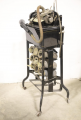
I have several of these old Edison "Ediphone" machines, a bit disheveled but what would one expect after over a century.
1713975216242.png

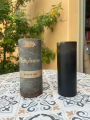
I also have a lot of wax cylinders, here's one:
1713975340410.png

Is there any easy way to "play back" these cylinders without using the machine itself, I fear the mechanical nature of the machines along with their age and worn out state along with the fragility of these 100 year old discs, is too risky.
 
Last edited by a moderator:

crutschow

Joined Mar 14, 2008
38,322
Is there any easy way to "play back" these cylinders without using the machine itself,
Doubt there is.
It would likely need to be some type of custom optical pickup, so would require an extensive design for both the electronics to detect the groove undulations, and the mechanics to maintain the sensor position detecting the groove.
 

Lo_volt

Joined Apr 3, 2014
370
I've seen archaeologists use a technique that combines huge numbers of images to create a 3-D model of a site so as to record the site as it was discovered (I saw it on Discovery channel show about Egyptian mummies) and before anything is moved. I wonder if such a technique could be used on a much finer scale to digitize the wax cylinders?
 

schmitt trigger

Joined Jul 12, 2010
2,027
Those are truly “museum - grade” objects!
Maintain them carefully, they should be worth a significant amount of money already, and as time passes, so its value should increase.

The Edison Museum in West Orange, NJ has one of those.
 

Thread Starter

ApacheKid

Joined Jan 12, 2015
1,762
Those are truly “museum - grade” objects!
Maintain them carefully, they should be worth a significant amount of money already, and as time passes, so its value should increase.

The Edison Museum in West Orange, NJ has one of those.
Yes, they are a bit beat up, signs of rust etc but safe, I bought them from an old landlord I was friendly within when I lived in Philly, in 2002. He told me he and his sister played with them and recorded themselves back in the 20s/30s, he also gave me a big box of cylinders. I live in Arizona which is kind to metal (but less kind to wax).
 

MisterBill2

Joined Jan 23, 2018
27,186
YES, there is a fairly simple way to capture what is recorded, but it requires having a clue as to the properties of the groove in the cartridge, because it will work best as a stylus very lightly traces the groove.
The plan will be to use a phono cartridge to very lightly trace the groove and recover the information. The challenge being that the cylinders are recorded as variable depth, while modern cartridges respond to sideways motion. So you may need a stereo cartridge and sum, or subtract, the two channels signals. The second challenge comes because they were recorded using a lead-screw to advance the recording path. So you will need a longer arm to support the cartridge, probably two feet long, balanced to not press too hard. The last challenge will be to spin the cylinder at the correct speed, which will require a variable speed motor and a suitable drum to hold the cylinder. You will also need a preamplifier to boost the signal to a level for your recorder.
 

KeithWalker

Joined Jul 10, 2017
3,603
The wax disks rotated at about 120 RPM. If you are serious about preserving the contents of the cylinders without damaging them, check out "Confocal microscopy". The correct way to hold a cylinder is by inserting two fingers into the open end.
 

AnalogKid

Joined Aug 1, 2013
12,045
One of the results of the component stereo wars of the 70's was a laser phonograph., so the tech is out there somewhere.

ak
 
Top