Dual Full-Wave Rectifier Power Supply Issue

Thread Starter

cece671

Joined Mar 28, 2015
6
Hello everyone,

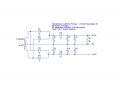
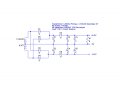
I am currently prototyping a power supply to power filaments in a vacuum tube circuit. I am using a dual full-wave rectifier design to generate +6.3V, -6.3V and 12.6V.

I breadboarded my design and was testing the circuit for AC ripple when capacitor C2 blew from overheating. I then realized that I had failed to connect the second resistor across the 0V / -6.3V terminals to which I had just attached my scope probe.

Could this be the reason why the capacitor overheated? Is there a design flaw that I fail to see?

I have attached a jpg of the circuit design with the second resistor omitted voluntarily to illustrate accurately what I was testing.

Material details:
Transformer: 120VAC primary, 12.6VAC 2A secondary
All Diodes: 1N5401
All Capacitors: 6800uF 10V Electrolytic
Load: 10K 1/2watt carbon film resistor.

Thanks in advance for any advice!PowerSupply12v6.jpg
 

Attachments

bertus

Joined Apr 5, 2008
22,922
Hello,

Why do you want to have a DC voltage for the filaments?
The peak voltage will be almost 9 volts.

In MANY circuits the filaments are directly powered with the 6.3 or 12.6 volts AC from the transformer.

Bertus
 

#12

Joined Nov 30, 2010
18,224
6.3 VAC x 1.414 = 8.9vDC at no load, theoretically.
You either had a bad capacitor or you had it installed backwards.
Still, you're running the capacitors with almost no safety factor on the voltage rating.
The math works...until a little disturbance arrives on the power line.
The maximum extended life of a capacitor is when the voltage rating is about twice the voltage applied.
Personally, I don't care if you want DC for filament heaters.
 

Thread Starter

cece671

Joined Mar 28, 2015
6
Hello,

Why do you want to have a DC voltage for the filaments?
The peak voltage will be almost 9 volts.

In MANY circuits the filaments are directly powered with the 6.3 or 12.6 volts AC from the transformer.

Bertus
Hi Bertus,

The power supply will be used to breadboard vacuum tube synth designs. The AC tends to make the circuits noisier, so its a question of quieting the circuit.

You are right about peak voltage, I am aware of this. As I mentioned this is a prototype and I am still working on the design.
The 1N5401 diode has a forward voltage drop of 1.2V, so I am still working out how to get it down to about 4.45Vdc to achieve peak voltage of 6.3Vdc.

Thanks for responding so quickly.
 

Thread Starter

cece671

Joined Mar 28, 2015
6
why dont you use the AC to feed the filaments, also the caps should be 16V rating.
Hi Dodgydave,

As mentioned to Bertus, DC is mainly to keep the circuit quiet.
Agreed, my first design had 10,000uF 16V Electrolytic capacitors and I second guessed myself when I calculated for 6.3Vdc peak voltage.

Thanks for your quick reply.
 

Thread Starter

cece671

Joined Mar 28, 2015
6
6.3 VAC x 1.414 = 8.9vDC at no load, theoretically.
You either had a bad capacitor or you had it installed backwards.
Still, you're running the capacitors with almost no safety factor on the voltage rating.
The math works...until a little disturbance arrives on the power line.
The maximum extended life of a capacitor is when the voltage rating is about twice the voltage applied.
Personally, I don't care if you want DC for filament heaters.
Hi #12,

You are right, I was working a little too close to the 10V limit. This is definitely an error of judgement on my part.
My original design had 10,000uF 16V caps. Which will promptly replace the 10V I was working with yesterday!

I will be working to achieve 4.45Vdc (rms) x 1.414 to get to my 6.3Vdc (peak).

Thanks for your quick response.
 

tcmtech

Joined Nov 4, 2013
2,867
If it was me I would have started with a 10 volt center tapped secondary transformer. After the typical voltage drops for the diodes are factored in you fall well within the working voltage range that most any tube heater element will work on.
 

MikeML

Joined Oct 2, 2009
5,444
With indirectly heated cathodes in a tube, why bother with DC? They put indirectly heated cathodes in tubes in the 1940s just so you dont have to go through all of this monkey motion...
 

crutschow

Joined Mar 14, 2008
38,503
With indirectly heated cathodes in a tube, why bother with DC? They put indirectly heated cathodes in tubes in the 1940s just so you dont have to go through all of this monkey motion...
Any AC voltage/current around low-level high-impedance preamp tube circuits can cause pickup of AC hum, even for indirectly heated cathodes. Since such hum is very annoying in audio circuits, high grade tube audio preamps often use DC on the filaments to eliminate that as a source.
 

crutschow

Joined Mar 14, 2008
38,503
You want 6.3VDC to give the same heating power as 6.3VAC RMS.
True. To get near 6.3VDC from 6.3VAC in a capacitor filter design you will need 3 diodes in series (2 besides the rectifier diodes).
For a given load you can further tweak it by adding a small resistor value in series with the load.
 

MCU88

Joined Mar 12, 2015
358
You want 6.3VDC to give the same heating power as 6.3VAC RMS.
Yes RMS Root Means Square. I had one funny teacher that told us that... first you root it then you square it hahaha... He literally did the rooting part with his hips moving in and out.

But we get the RMS derived from 0.707 x Peak. 1.414 x RMS to arrive back at the peak. 2.828 x RMS to get the Peak-to-Peak.
 

MikeML

Joined Oct 2, 2009
5,444
Any AC voltage/current around low-level high-impedance preamp tube circuits can cause pickup of AC hum, even for indirectly heated cathodes. Since such hum is very annoying in audio circuits, high grade tube audio preamps often use DC on the filaments to eliminate that as a source.
Oh, well, maybe we should be using things like transistors or integrated circuits that don't require heaters?;)
 
Top