Dual frequency plasma generator

Thread Starter

The Vet

Joined Jan 4, 2016
3
Hi All!

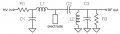
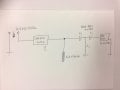
I would like to design a special plasma generator, where I use a high voltage (up to 20kV) low frequency (up to 50kHz) for plasma "ignition" and the plasma discharge is modified by an additional high frequency (13.56MHz) component. This plasma generation method is called dual-frequency plasma generator and is well known in plasma science. My problem is that no any published paper mention any detail about the filter system they use to separate the low frequency high voltage part and the high frequency part. Please check the attached schematic about the planned design. So I would need a low pass filter which leads the high voltage to the electrode, but blocks the RF. And of course I need a special high pass filter which can effectively block the high voltage low frequency component to prevent the damage of the RF generator and the tuner.
Any design idea, hints, suggestions are highly welcome!
Thanks in advance!

Researcher

(Ps.: I am not an electrical engineer, my background is biology, but I have a skill to build basically anything if I have a good schematic.)dual freq.JPG
 

shortbus

Joined Sep 30, 2009
10,050
My problem is that no any published paper mention any detail about the filter system they use to separate the low frequency high voltage part and the high frequency part
Are you sure they do it that way? Or could iit be done like in a Tig welder? To give the high frequency start.
 

Janis59

Joined Aug 21, 2017
1,894
The TIG welder vice versa has DC component for basic plasma and small RF component for ignition.
Yes, the problem may occur, if that are rather near frequencies, however the decades long experience with serial resonance devices on rtaher sensitive mosfets shows that one high voltage spark on coils always are transformed to oscillations resulting no harm to mosfet. Thus in the cheap designs ee throw the first electron in the plasma chamber by simple gas lighter, those plug-type into mains. Just keep near a coil and discharge, and the the RF ICP coil start to dance with those first electron until the plasma ball is out.

If this You dislike, may add a bit thorium (beta radioactive), it will give a electrons all the time.
If dont like a radioactivity (me likes not too), then next chance is indeed to create a two frequency machine, BUT, as higher the freq, the easier it ionizates. Thus, the weak one must have a highest freq.
You MAY put the bandpass and/or band-rejection filters to save the oscillators, however its not so important if both freq are distant and one is weak.
The best circ is Clapp, the best key is IXFH44N60, what is much cheaper than IXYS cool-mos series, and even faster. 20A, 600V, gate 40V what is important for any Clapp, frq until 100 MHz (at 60 full power, at 90 about half). Clapp gives a 60-90 MHz on the coil with at least 2-3 kV what is enough for any forvacuum discharge.
Take a care, touching this still is dangerous, inspite of frequency, damn painful and taking month to cure.
If interested to circuitry, just make a stable 12V source using NO of 78XX, them becomes `mad` in the RF fields. Use a slowest bjt You may find, if about F(T)=1 MHz be good, use a Zener diode and bjt to produce a 12V for fan and gate bias. Gate bias must be regulable (trimer) but this trimer MUST be insulated via choke to the gate, otherwise trimmer will smoke in fire. Some 20-50 turns are enough, over 3-6 mm core, wire 0,1-0,3 mm. The D is to 25-35 V 20A DC source, best the 25 USD China made 480W 24V 20A. The source to gnd should be connected via 2 mm wire wound coil of diam 20-30 mm and some 15-30 turns. Best if in series to put some 0,1 to 0,3 Ohm resistor (piece of nichrome or steel). The gate is going via the choke to that bias source, and to heavy duty capacitor of about 80 pF in series with ca 6 mm thick wire wound coil of 3-4 turns in diam 20-30 mm, ending in gnd. Thats all. Those capacitor best material is Rogers teflon-based `duroid` PCB about 2 pF per cm2. But install it in two layers, let HV is inside, so it is safer about touching, and less EMF (antenning effect). The mosfet must be mounted on PC radiator of good size with strong fan. Then RF power will be formed from DC 10-15 A, but with weaker radiator maximum will be about 5A consumption.
 

Janis59

Joined Aug 21, 2017
1,894
Actually, I see Your picture and start to think, what means the written text 20% Volts, I may understand 20 V or 220 V but what is 20%?? The same about 50b Hz, I may understand as 50 Hz as well the 50 kHz, but what is bHz??
 

Janis59

Joined Aug 21, 2017
1,894
Circuit I speak is about topology of like www.rfcafe.com/references/qst/images2/clapp-oscillator-qst-february-1953-3.jpg only instead of gauge is fatty mosfet, the L1C1 are those high voltage parts, as each receives about 2...4 kV of real RF Voltage; the C2 C3 not exist, it role takes parasythic capacitance C(gs); C4 R1 not exist, but instead is small coil and trimmer giving the 4 V bias DC. Instead of RFC stays 25mm coil with 0, Ohm resistor. Feeding voltage 20-24-27 V.
 

Thread Starter

The Vet

Joined Jan 4, 2016
3
Actually, I see Your picture and start to think, what means the written text 20% Volts, I may understand 20 V or 220 V but what is 20%?? The same about 50b Hz, I may understand as 50 Hz as well the 50 kHz, but what is bHz??
Sorry, my hand writing is not so nice...
Well, the low frequency part produces 20kV (20000V) voltages (peak to peak) at 50kHz frequency. So that is why the separation of the RF and the high voltage is relatively difficult for me.
But this is absolutely doable, but I dont know the proper solution.
Please check this paper for example:
https://www.researchgate.net/public...ing_200_kHz1356_MHz_dual_frequency_excitation

They use 200kHz low frequency high voltage source and a RF source, connected together to the electrode using a special matching network. Unfortunately they did not share any technical detail about the matching circuit... (I have already wrote to the corresponding author of this paper, but I heavily doubt he will give an answer...)

Actually I have already built the low frequency high voltage generator as well as the 13.56MHz RF source.
I just somehow have to solve to connect them on a common electrode...

I really appreciate any help or hints.

Thanks in advance!
 

Janis59

Joined Aug 21, 2017
1,894
Wow, seems we work in certainly near fields.
Actually, with a two frequency systems I am rather novice, we have one project to use the two magnets one working at 10 kHz and other 1 MHz, so because of strong coupling the one 30 kW generator will destroy the another one and vice versa. But that is a project for future not today. I planed there to use a two rejector filters of simple LC.
But, as at last twenty years I had eaten up many things in one freq plasma and well heaten the hands about atmospheric pressure plasma, I may reccomend (if the some 3 to 5, maximum 8 mm plasma ball is large enough, to use a ca 1 GHz oscillator instead. You then need only one frequency to ignite and it is very simple technique. Just one missing sentence in many books is - as the frequency is bigger as more balanced plasma becomes. Low frequency plasma has grand difference between molecular and electronic temperatures. One may be 36,6 C while anther 10 000 C. But not it is so at 1 GHz, where difference is very small, thus the "feeling" T and electronic T are both damn hot.
Now about circuit itself. Try to use the translate.google.com, the article is worth to read:
http://gnativ.ru/moshhnyj-generator-vch-na-mosfet-tranzistore/
http://gnativ.ru/vch-generator-na-tranzistore-mrf284l/
In the end You shall have a good videos thus You may evaluate do those atmospheric plasma balls are good for Your application.
 

Janis59

Joined Aug 21, 2017
1,894
RE: The Vet
The article is fine, thanks, but IDEA is not. This is a machine what commercial version was demonstrated to me some 5 years ago or maybe even 7, at Belorussian Mass&Heat Transfer Institute for randomize plastic film of 1,25 meters wide activation, because those electrically micro-drilled holes allow to paint ink become well stitched to even polyethylene surface. Just push film roll through machine, apply flexography, and nice package is made. How far I have heard, them already had sold about 100 or more of such machines, so the innovativity of the idea is under bold sign of question.
Secondly, the all the art of technicity in article is hidden in between two boxes named `matching network`.
 

Thread Starter

The Vet

Joined Jan 4, 2016
3
Dear Janis,

Thank you very much for your valuable comments.

I absolutely agree with you: "he art of technicity in article is hidden in between two boxes named `matching network`"
This is the "heart" of the entire system. I have already sent an email to the author of this paper regarding some questions about the impedance matching black box, but of course no any answers so far.

As I mentioned before, I am not an electrical engineer, I just have a good skills to build circuits if I have the proper schematic.
I asked the same question in an other forum, but not too useful comments has arrived. I just got a theoretical schematic, without any value of the components:
dual freq plasma.jpg

The high voltage generator is a simple, variable frequency half bridge drive with a flyback high voltage transformer. The frequency is set to a resonant frequency of the flyback whis is approximately 50kHz.
In the high voltage side I use a 30kohm current limiting resistor. If I use this as R1 what are the approximate values of the C1 and L1? (The cut off frequency is not critical, the point is to effectively block the 13.56MHz RF)
I have the similar question for the LPF on the RF side:
I use a high quality large ceramic HV capacitor as C2: 30pF (15kV). What are the approximate values of the C3, L3 and R2? Is it possible to design this LPF to operate as an impedance matching network, too? For example I use a variable C an L for C3 and L2?

Any hint are highly welcome!

Thanks in advance!

The vet (actually I am a veterinarian...)
 

Janis59

Joined Aug 21, 2017
1,894
Hi Vet! Actually I have some few publications even in veterinary electronics, about bovine mastitis early diagnostics by electronics and small farm computerisation complects. But in-deep I know about animals only that some of them are dangerous if human comes from behind and other if from the front :)
However if the aim was atmospheric plasma ball (seems the 1 GHz construction was not a dream climax in Your case, sadly), then I can only refer some years old article what is worth to read through, I just hanged it at https://www.dropbox.com/s/vf3fyomgask86m8/JBlahins ICPhistor.docx?dl=0
Examine there those US patents there, at least at one of them or even two there was given unhidden values of filter at QMS plasma torch case.
After output the signal is going via L33, after that C27 is going to gnd, but other C28 is going to outside, means load. The load is meant parallel C41 with L load ca 270-380 nH.
Then C27=380pF, C28=112 pF, L33=126 nH, C41=5 pF if f=27,12 MHz.
Note in the article there are two flaws, last year the better suited mosfer ARF6038 was released (10 USD) and Rogers Duroid (TM) PCB materials became available (~2 pF/cm2), thus there is solutions for reactive power largeness and corresponding `kaboom`!. If Your capacitor is just designed for DC not for RF, it is high possibility of `kaboom` and nicely accurate hole in the ceiling. Ensure please that is not Your body where hole is landed.
Last thingy: the impedance matching is not needed actually, if You have ability to variate the feeding voltage. For parallel resonance systems that voltage in case of 1-10 Torr semi-vacuumed gases is between 350 and 450 Volts, thus the peak to peak is double of it. For serial resonance systems the Voltage is adjusting by itself, as the Q is product of R(load), thus the resonant voltage multiplication happens absolutely automatic without of any deeds from Your side.
Some books on QMS atmosphere pressure torches says that at 27 MHz and 40,68 MHz (13,56 MHz are not in use anymore as it is too huge and power demanding) the voltage need is about 8-12 Volts (what I am too dumb to understand what author was thinking with that), but amperage for three to four turn coil is at least 85 Amps but better a 130 (what I really recognize as probable figure, if my semivacuumized demands 5...10...20 Amps. So, probably author made to say, that after ignition the voltage will fall for 8-12 V?? Or indeed at atmospheric similarly as welding voltage is between 20-24 Volt, then RF is more ionizating thus 12 V is enough?? Dont know, but it shows that here at 760 Torr probably the parallel resonance may be more welcome than at semivacummized plasma. Anyway, the sharp needle ionisating capability is in vacuum about 1 kV/mm and at free air about 3 kV/mm, so the need for 20 kV seems me slightly overkilling. The typical solution for vacuum chamber cleaning regime is just 3 kV 50 Hz source with some 2...20 kOhm resistor in the series, but about 50-100 Watts heavy. If You apply it here too, especially the wounded type, it is full stop for any RF frequencies, thus the question for low freq securing I see is very prost. By the way, often there choices are behing microwave cooker MOT transformer (3 kV, DC) or Cockroft-Walton circuit (see t wikipedia). I wonder if You really need a 50 kHz if it well works even at 50 Hz, Only the win is the smaller size at 50 kHZ. The power needed for atmospheric RF source is ca 5-7 kW at 13 MHz, about 3 kW at 27 and about 1...1,5 kW at 40 MHz. That is the reason why everyone tries to get the boost of frequency (but still there are difficulcies about over-kilowatt-able mosfets at 40 MHz).
 
Top