Facebook
 Google
 GitHub
 Linkedin

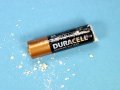
I just removed the battery in the photo from a clock; as you can see in the photo, it's an alkaline battery.
When I grew up (in the dark ages,) dry cell batteries were carbon-zinc (I think,) and when one leaked, it caused damage to the metal parts that it came in contact with. I remember using moistened baking soda to remove as much of the leakage as possible and neutralize the acid (I think) in an effort to salvage the device. The white stuff in the photo looks very similar, but doesn't seem to do any damage. I picked and shook most of it out of the device it was in, and didn't see any reason to use baking soda.
What is the residue in the picture, and what was the residue from the carbon-zinc batteries? Thanks.
When I grew up (in the dark ages,) dry cell batteries were carbon-zinc (I think,) and when one leaked, it caused damage to the metal parts that it came in contact with. I remember using moistened baking soda to remove as much of the leakage as possible and neutralize the acid (I think) in an effort to salvage the device. The white stuff in the photo looks very similar, but doesn't seem to do any damage. I picked and shook most of it out of the device it was in, and didn't see any reason to use baking soda.
What is the residue in the picture, and what was the residue from the carbon-zinc batteries? Thanks.
Last edited: