Does wood attenuate radio waves?

panic mode

Joined Oct 10, 2011
5,003
picky eh? that is correct... i was just waiting to see who would be the first one to bring it up. ;)
if one was to build receiver antenna to completely encompass transmitter, all transmitted energy would be received.
but making a Faraday cage or Dyson sphere is hardly a practical way to inspect thickness of lumber.
TS does not know yet many other more important things, like what species of wood he is to inspect, what the moisture content is, what frequency to use or if his setup should use directional antenna.
 

nsaspook

Joined Aug 27, 2009
16,330
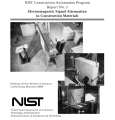
https://nvlpubs.nist.gov/nistpubs/Legacy/IR/nistir6055.pdf

Electromagnetic Signal Attenuation in Construction Materials
PublishedOctober 1, 1997
Author(s)
William C. Stone
Abstract
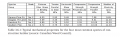
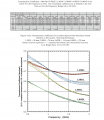
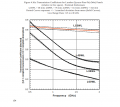
Laboratory studies of electromagnetic (EM) signal propagation through construction materials were carried out as part of the NIST initiative in Non-Line-of-Sight surveying technology. From these data it is possible to determine several important material-specific characteristics needed for the design of engineering systems which make use of EM signal propagation through matter: 1) the power attenuation as a function of the material thickness and 2) the values of the electrical permittivity and dielectric constants for a particular material as a function of frequency. The latter can be used to calculate the propagation delay time associated with an EM pulse penetrating through a specified thickness of a given material. This information is essential for error compensation for time-of-flight metrology instrumentation systems. In this report, only the power attenuation aspects are discussed; dielectric and permittivity constants will be discussed in a future volume. The materials investigated included brick, masonry block, eight different concrete mixes, glass, plywood, lumber (spruce-pine-fir), drywall, reinforced concrete, steel reinforcing bar grids, variations of the plywood and lumber tests in which the specimens were soaked with water, and composite specimens involving brick-faced masonry block and brick-faced concrete. For each material, varying thickness specimens were fabricated in order to measure attenuation as a function of penetration distance. Each specimen was placed in a special test range consisting of spread spectrum transmission and reception horns spaced 2 meters apart with a metal RF isolation barrier located midway between the antennas to eliminate multipath signals. The isolation barrier contained a window at its center against which the specimens were fit. Measurements of power loss were taken at 2 MHz intervals from 0.5 to 2 GHz and from 3 to 8 GHz.

1777062891858.png

1777063138042.png

1777063372899.png1777063463487.png
 
Last edited:
Top