does sub aliasing occur?

WBahn

Joined Mar 31, 2012
32,923
One can digitally downsample by not using any analog low pass filter, isn't it? The act of downsampling or decimating to 4800Hz can be considered using digital low pass filter. But it won't remove the false signal that gets below 6.6kHz, right?
Yes, you can downsample without using an ANALOG low pass filter, in fact, you CAN'T use an analog filter because, at this point, you don't have an analog signal, just a stream of digital values.

What false signal that gets below 6.6 kHz?

You have an fixed analog low pass filter that you can't do anything about that filters out everything above 6.6 kHz. The signal out of the filter is then samples at 2.4576 MSa/s and then decimated down to 38.4 kSa/s

That is the starting point for whatever digital processing you are going to do. Since I don't know how sharp the skirts are on that analog filter, I don't know how much content there is at frequencies above it. There will be some for frequencies a little bit above it, but not much.

[/QUOTE]
The original manual is all written in english. Gtec is from Austria and very good english speaking. Here is the manual:

gUSBamp30_InstructionsForUse.docx (nbtltd.com)
[/QUOTE]

That manual doesn't say anything about how you would configure it to produce a data stream at 4800 Sa/s without doing ANY digital low pass filtering beforehand. Setting FilterEnabled to zero does NOT disable low pass filtering, is just disables bandpass filtering. Bandpass and low pass are two different things.

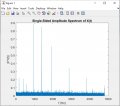
Anyway. I have this unknown 958Hz peak when I do FFT to my signal via Matlab. The following is using 4800Hz but no bandpass. (FilterEnabled set to 0). All 3 inputs of channel 1 is shorted.
It is likely an artifact of the digital processing. Notice that 4800 Hz / 5 = 960 Hz. Is that within the bin that is centered on 958.5 Hz?

These kinds of imaginary peaks that are numerical artifacts of the processing are common in software-defined radio.

Without known a lot more details, that's the best guess I can make.
 

Thread Starter

Gpand

Joined Dec 11, 2023
105
Yes, you can downsample without using an ANALOG low pass filter, in fact, you CAN'T use an analog filter because, at this point, you don't have an analog signal, just a stream of digital values.

What false signal that gets below 6.6 kHz?
Yes. What false signal gets below 6.6kHz? the $17500 g.USBamp is the primary one used by hundreds of R&D centers and institutions worldwide. It can skew the results if there are signals between say 256Hz to 6600Hz. Are there not? In aliasing, what applications that are plagued with it? What range of frequency that false signal can become involved?

About "It is likely an artifact of the digital processing. Notice that 4800 Hz / 5 = 960 Hz. Is that within the bin that is centered on 958.5 Hz?":

I used 9600Hz sampling in the FFT (no bandpass.. note the bandpass options are only for 0 to 2400Hz). Here the 958Hz remains and even forms many Harmonics:

usbamp 9600hz no passband.JPG


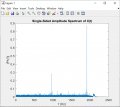
In the following is 2400Hz sampling with no bandpass and channel 1 inputs shorted. The 958Hz remains. Do you think it is possible it is a damaged component in the circuit perhaps caused by ESD? Notice in the following the 958Hz is smaller value than the harmonic which is 1912Hz. A harmonic should supposed to be smaller. Any clue to what caused the peaks?

usbamp shorted 2400hz sampling.JPG


You have an fixed analog low pass filter that you can't do anything about that filters out everything above 6.6 kHz. The signal out of the filter is then samples at 2.4576 MSa/s and then decimated down to 38.4 kSa/s

That is the starting point for whatever digital processing you are going to do. Since I don't know how sharp the skirts are on that analog filter, I don't know how much content there is at frequencies above it. There will be some for frequencies a little bit above it, but not much.


The original manual is all written in english. Gtec is from Austria and very good english speaking. Here is the manual:

gUSBamp30_InstructionsForUse.docx (nbtltd.com)


That manual doesn't say anything about how you would configure it to produce a data stream at 4800 Sa/s without doing ANY digital low pass filtering beforehand. Setting FilterEnabled to zero does NOT disable low pass filtering, is just disables bandpass filtering. Bandpass and low pass are two different things.


It is likely an artifact of the digital processing. Notice that 4800 Hz / 5 = 960 Hz. Is that within the bin that is centered on 958.5 Hz?

These kinds of imaginary peaks that are numerical artifacts of the processing are common in software-defined radio.

Without known a lot more details, that's the best guess I can make.
 

WBahn

Joined Mar 31, 2012
32,923
Again, these kind of spurious FFT spikes can come about as numerical artifacts of the processing and are commonly seen in software-defined radio applications. It does NOT indicated that some part is damaged.

And without knowing a lot more details about exactly how the signal is processed internally, I can't make any better guess.

Have you tried contacting an applications or field engineer at the manufacturer? This can be hard to do with some companies, but since most companies want their customers to be successful using their products, most of them are willing to provide significant technical support.
 

Thread Starter

Gpand

Joined Dec 11, 2023
105
Again, these kind of spurious FFT spikes can come about as numerical artifacts of the processing and are commonly seen in software-defined radio applications. It does NOT indicated that some part is damaged.

And without knowing a lot more details about exactly how the signal is processed internally, I can't make any better guess.

Have you tried contacting an applications or field engineer at the manufacturer? This can be hard to do with some companies, but since most companies want their customers to be successful using their products, most of them are willing to provide significant technical support.
The 6.6kHz low pass filter seems to be crucial in making sure all those wifi, radio waves, or Mhz range, etc. above 6.6kHz wouldn't get into the analog stage and get aliased by the ADC during sampling.

Is this a common practice by most amplifiers applications where a general low pass close to 7kHz is used? Do you do this too? What do you think is a major source of signal below 7kHz except 50 or 60Hz AC that can get into the signal? the only signal seems to be the audio range or 0 to 20,000Hz. Can this get into the 7kHz (or 0 to 7kHz) low pass? What else is there below 7kHz?
 

WBahn

Joined Mar 31, 2012
32,923
There is nothing special about 6.6 kHz.

Forget this device.

Let's say that you are interested in processing signals up to 1000 Hz with a 12-bit ADC.

In theory, you could sample the signal at 2000 Sa/s and reconstruct the input signal perfectly.

But, in practice, you know that life isn't this simple. You would need a lowpass filter with a perfect cutoff at exactly 1000 Hz, but such filters don't exist. For a real filter, you are going to get some attenuation of signals you want at frequencies below the cutoff frequency, and you are going to let through some of the signals above the cutoff frequency. The further above the cutoff frequency, the more attenuated those signals will be.

So what can you do?

You move the cutoff frequency of your low pass filter up above 1000 Hz enough so that the attenuation at 1000 Hz is tolerable. How far above? That depends on how sharp your filter is and how much attenuation is tolerable. For sake of discussion, let's say that this means you need to be a decade higher, so you put your filter cutoff frequency at 10 kHz. Then you need to determine how far above that you need to go before you have sufficient attenuation of the unwanted signals so that when they get aliased down into the baseband (which they will), they are small enough so that it doesn't matter. Let's say that you determine you need another decade to get to that point, so know you want your baseband to cover 20 kHz, which means you need to sample at 40 kSa/s.

But you only need 2 kSa/s to capture the signal of interest (perhaps a bit more to account for the inevitable jitter and quantization effects, but let's ignore that).

So you could decimate the signal by a factor of 20.

However, if you do this, then you are going to have the signal content in your digitized signal that is above 1000 Hz (and you may have a lot of it since your filter had a cutoff frequency of 10 kHz) and this content will get aliased down by the decimation.

So you apply a digital low pass filter to get rid of everything much above 1000 Hz. Even digital filters are not perfect, but they can be made pretty high order pretty easily, so say you put that cutoff at 1100 Hz.

Now you decimate the digital signal by 16 (which is a nice power of 2 less than 20) by averaging 16 samples to produce one sample. Doing this improves the SNR by a factor of 4, leaving you with a 1100 Hz band-limited signal at 2500 kSa/s.

As for what sources can cause noise that can get into a signal -- just about everything under the sun, and the sun itself. We are surrounded by electromagnetic energy, both natural and manmade.

As for audio, that is not electromagnetic energy. Now, if you are playing music over a speaker, there is electromagnetic energy around at those frequencies, but frequencies in that range transmit and receive so poorly that they are a non-factor.
 

Thread Starter

Gpand

Joined Dec 11, 2023
105
There is nothing special about 6.6 kHz.

Forget this device.

Let's say that you are interested in processing signals up to 1000 Hz with a 12-bit ADC.

In theory, you could sample the signal at 2000 Sa/s and reconstruct the input signal perfectly.

But, in practice, you know that life isn't this simple. You would need a lowpass filter with a perfect cutoff at exactly 1000 Hz, but such filters don't exist. For a real filter, you are going to get some attenuation of signals you want at frequencies below the cutoff frequency, and you are going to let through some of the signals above the cutoff frequency. The further above the cutoff frequency, the more attenuated those signals will be.

So what can you do?

You move the cutoff frequency of your low pass filter up above 1000 Hz enough so that the attenuation at 1000 Hz is tolerable. How far above? That depends on how sharp your filter is and how much attenuation is tolerable. For sake of discussion, let's say that this means you need to be a decade higher, so you put your filter cutoff frequency at 10 kHz. Then you need to determine how far above that you need to go before you have sufficient attenuation of the unwanted signals so that when they get aliased down into the baseband (which they will), they are small enough so that it doesn't matter. Let's say that you determine you need another decade to get to that point, so know you want your baseband to cover 20 kHz, which means you need to sample at 40 kSa/s.

But you only need 2 kSa/s to capture the signal of interest (perhaps a bit more to account for the inevitable jitter and quantization effects, but let's ignore that).

So you could decimate the signal by a factor of 20.

However, if you do this, then you are going to have the signal content in your digitized signal that is above 1000 Hz (and you may have a lot of it since your filter had a cutoff frequency of 10 kHz) and this content will get aliased down by the decimation.

So you apply a digital low pass filter to get rid of everything much above 1000 Hz. Even digital filters are not perfect, but they can be made pretty high order pretty easily, so say you put that cutoff at 1100 Hz.

Now you decimate the digital signal by 16 (which is a nice power of 2 less than 20) by averaging 16 samples to produce one sample. Doing this improves the SNR by a factor of 4, leaving you with a 1100 Hz band-limited signal at 2500 kSa/s.

As for what sources can cause noise that can get into a signal -- just about everything under the sun, and the sun itself. We are surrounded by electromagnetic energy, both natural and manmade.

As for audio, that is not electromagnetic energy. Now, if you are playing music over a speaker, there is electromagnetic energy around at those frequencies, but frequencies in that range transmit and receive so poorly that they are a non-factor.
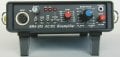
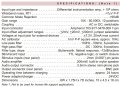
I have another amplifier that has analog low pass filter for every selection like 100hz, 1000Hz, 3000Hz. It is the BMA-200 with the specs:

bma-200 bioamplifier.JPG

specs.JPG

The BMA-200 costs $1600 compared to the g.USBamp $17500 price tag. But in my tests, the BMA-200 has less noise. I don't know if it is because the g.USBAMP has aliased frequency. Note that even if the latter has a 6.6kHz filter. The white noises can be eliminated even if it is digital low pass filter of say 4800Hz, you agree with this? I tried 50,000Hz analog low pass switch selecton (see the picture above) with the BMA-200 and used Audacity to set software low pass filter of 1000Hz and it removed the white noises. So aliased frequency may be the reason for the g.USBamp more noises. (?)

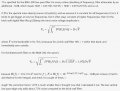
Someone computed how much tail a 2nd order Butterworth filter with -12dB/octave perform against one with brick wall filter, and he is surprised a 2nd order Butterworth has only 7.5% less tail. Do you confirm this? If true. What is the advantage of oversampling and averaging when the improvement is only 7.5% to a 2nd order Butterworth? or is it the increased SNR you are after and not because the analog low pass filter is not bricked walled? Do you know of any article that compares 2 equipments at length to compare the difference between ovesampling/averaging vs pure analogy filter only? The person wrote me these (do you know what editor can convert them to formulas on screen)?

He said:

brick wall vs 2nd order.JPG
 
Last edited:
Top