Facebook
 Google
 GitHub
 Linkedin

Hi all.
I'm working on a project to build a H-bridge with MOSFETs, up to 4.5kV @ 0.5mA max. It will be turn on for around 5 seconds max with a period of 10 seconds (rise and fall time about 0.5 second).
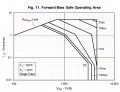
I have found a MOSFET rated at this range (IXTX1R4N450HV), but the forward-bias safe operating area suggest me to not operated this over 3000kV when it's on 'DC' (I assume that means a switching time more than 100ms, correct me if I'm wrong).
Another alternative here will then be stacking up multiple low voltage MOSFETs (4 x 1.5kV MOSFETs) in series for higher voltage rating. I have been researched for a while and the thing came out most frequently is the RC snubber circuit. Now, as far as I know, the RC snubber circuit is to eliminate the dynamic voltage difference in fast switching application. I will be curious if my application was to turn on/off the MOSFET in such a slow period, will it still matters to use a snubber circuit?
Thanks in advance to anyone!
I'm working on a project to build a H-bridge with MOSFETs, up to 4.5kV @ 0.5mA max. It will be turn on for around 5 seconds max with a period of 10 seconds (rise and fall time about 0.5 second).
I have found a MOSFET rated at this range (IXTX1R4N450HV), but the forward-bias safe operating area suggest me to not operated this over 3000kV when it's on 'DC' (I assume that means a switching time more than 100ms, correct me if I'm wrong).
Another alternative here will then be stacking up multiple low voltage MOSFETs (4 x 1.5kV MOSFETs) in series for higher voltage rating. I have been researched for a while and the thing came out most frequently is the RC snubber circuit. Now, as far as I know, the RC snubber circuit is to eliminate the dynamic voltage difference in fast switching application. I will be curious if my application was to turn on/off the MOSFET in such a slow period, will it still matters to use a snubber circuit?
Thanks in advance to anyone!