When I disassembly old electronic equipment I salvage big electrolytic caps. I know they degrade with use, but if they are OK when I remove, and I store them, do they degrade over time?
I have thousands of new old stock electrolytic capacitors, mostly coupling and bypass for low power circuits. They are stored in plastic parts drawers and large plastic bins at room temperature in the tropics (usually 25 to 35°C. In the 35 years that I have been using them I have not noticed a bad one.
The storage conditions of electrolytic capacitors are defined in the data sheet. These conditions are temperature between 5 °C and 35 °C with a humidity between 10% and 75%. The quality of the oxide layer can deteriorate during storage without externally applied voltage, especially at higher temperatures.
I agree with the above. It's like buying a used car with a broken odometer. You don't know how long you have left with used parts. You might get lucky and have something last five years. You might be disappointed in six months. The key word in those last two sentences is "Might".
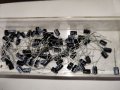
Thank you. Photography could have been better. They leaked electrolyte. I checked one for the heck of it after reading your reply; the capacitance was right there just shy of 10 microfarad but the ESR was 85 ohms. Regardless of how they look electrically, the whole drawerful is trash. The advice in this thread looks good to me. Just thought this was another example of degradation over time.

 Facebook
 Google
 GitHub
 Linkedin