DIY Auto Start / Stop Generator Control using Remote

Thread Starter

Sledgehammer_1

Joined Mar 5, 2018
33
I'm trying to avoid breaking the bank while still achieving the goal. I was just thinking about what it would take to automate a manual transfer switch... not much, simple circuitry, some servos and lever switches.
 
Last edited:

Reloadron

Joined Jan 15, 2015
7,892
I'm trying to avoid breaking the bank while still achieving the goal. I was just thinking about what it would take to automate a manual transfer switch... not much, simple circuitry, some servos and lever switches.
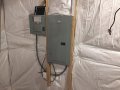
As to the ATS I was only referring to the picture to point out the mechanical linkage feature. More on that later.

As to automating a manual transfer. I started with a manual system using a 4 KW generator. This was about 25 years ago. My mother-in-law had brain surgery which did not go well. As years passed her health deteriorated with more equipment coming in for home care. It was obvious a power outage would be a nightmare. We bought the small 4 KW unit and it came in handy but was a hassle and we weren't getting any younger. I just set up an outside pony station and used a dual 30 amp breaker to back feed my circuit breaker panel. Finally during major home renovation I went with the big unit with the automatic transfer.

Even a little 30 Amp ATS is not cheap as you are seeing. Even a single relay design 30 amp as seen here on Amazon is an $85 part. They say single relay so I am not sure what is in the box? Even a simple non-relay transfer switch like this one is about $30.

Ron
 
I won't go into a lot of detail yet, but this https://www.shutterstock.com/search/plc URL gives you an idea of what a control cabinet looks like.

It's an electrical/electronics control panel erector set with re-useable parts.

You start with an enclosure with a 1/4" removeable aluminum plate in the back and a door. These are commercially available. They usually have a flange mount so it can be mounted on a wall.

Then you mount "T" shaped DIN Rail and wiring duct with holes you tapped in the AL plate/ Large items like say a transformer can be bolted to the panel directly via a tapped hole.

I'll just use this https://www.asi-ez.com/member/x526-DIN-Rail-Terminal-Blocks.asp website as an example of "terminal blocks" that are available. Explore the website for other stuff like power supplies, outlets, relays, connectors etc. all snappable on the DIN rail.

You can buy your own plastic case that mounts on the rail or stuff that hold a PCB. I can buy clips for my own stuff.

Explore this http://www.winford.com site too.

Also explore Snaptrack here: http://www.te.com/usa-en/plp/snaptrack/X26KJ.html


From experience, it's best to have a set of blocks for low voltage and high voltage near the penetration where incoming wires attach. I used 18 AWG wire with the lower stranding for interconnections.

Also look up "wire ferrules".

I can explain more later.
 
You can likely use an OPTO-FET to interface with your remote or an OPTOMOS relay. It really isn't a relay, but has much lower on resistance than the OPTO-FET and a little more expensive.
 

Thread Starter

Sledgehammer_1

Joined Mar 5, 2018
33
Arduino has won out over analog. Additionally after studying the EWD of the genset I discovered that the push Start/Stop button is triggered by going to ground, which makes modifying it stupid simple. Also when the push button is used the genset has starting logic built in that attempts 3 starts if the first attempt is unsuccessful . Here is the circuit design.
20180308161617890.jpg
 

Reloadron

Joined Jan 15, 2015
7,892
That went well. I would just use a few 5 VDC wall worts for sensing mains and genset voltage since it is more a yes it's there or no it isn't there digital logic. While I doubt the Start/Stop trigger is any current to speak of just make sure the opto-coupler can handle any load. Where you label the Arduino Sig your DO (Digital out will output a 5 volt logic level so you will need a resistor in series with your opto signal input, just to limit the current to the internal LED in the opto-coupler.

Nice that the genset already had some needed features built in.

Ron
 

Thread Starter

Sledgehammer_1

Joined Mar 5, 2018
33
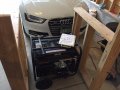
got the generator in and I am really impressed with the quality of everything. The control panel and buttons all feel quality, like they weren't just grabbed out of the bargain bin. It also has a silencer built into the air box which is slick, over all this generator is a fair bit quieter when compared to its stablemates. Filled it with oil and gas, hooked up the battery then hit the start button. The first start failed (no gas in the carb), then 5 seconds later it reattempted starting and fired up. Cool generator.

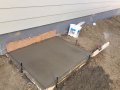
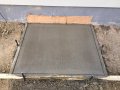
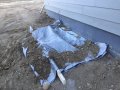
Now, today I built the generator shack pad. 4" thick, wire mesh reinforced 4,000 psi concrete 1% slope away from the house, broom finish. The cardboard between the house and the slab is acting as a void form to provide separation, the joint will get caulked. I bought anchor bolts for the walls but left them at the box store and didn't want to burn an hour to go back. So the walls will be secured to the slab via tap-con anchors.
IMG_2305.JPG
IMG_2306.JPG
IMG_2307.JPG

I also pulled all of the 10/2 wire from the panel location to the genset (just need to drill and install my wall pass through.
 

AnalogKid

Joined Aug 1, 2013
12,158
Put off a whole-house gen for decades, because we have about 1 power outage a year, usually 2-4 hours. 4 days after the gen went in, power went out for 7 hours in 90 degree heat. Good timing.

ak
 

Thread Starter

Sledgehammer_1

Joined Mar 5, 2018
33
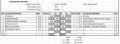
Yea I am excited, especially after calculating the load my house actually consumes. Its a new build so all the appliances are very efficient and those items that have motors utilize VFD's so they ramp up which reduces the surge energy required. Additionally all of my lights in the house are quality LED's (Each bulb consumes a hair under 10w). So I am able to power a lot more than we were able to 15 years ago with the same sized genset. I calculated the load and demand power required and sized a panel up and tried to spread the loads across the legs to balance the anticipated demand. Thoughts?

Capture.JPG
 

Reloadron

Joined Jan 15, 2015
7,892
It looks like a good plan to me. The first generator I used here was about 25 years ago, a gasoline powered 8 HP engine and a 4,000 Watt generator. Less the clothes drier it did fine. When the furnace blower would come on it would dip and come right back up. While load balance does figure in a good generator like you have will do fine. Just do not overthink all of this.

The nice part of all of this is a feeling of security. The system we have today does a once a week exercise routine and runs every Sunday morning at about 9:30 AM for about 20 min. My wife thinks of it as a sound of security. :) Once you have things all setup I suggest every now and then you run it.

Ron
 

Thread Starter

Sledgehammer_1

Joined Mar 5, 2018
33
Thanks for the insight Ron. Yea I am going to have a maintenance code in the arduino that will run the genset once a month for 30 mins, also am going to add modules to monitor load, battery voltage and fire detector. Combine that with a wifi module and I should be able to log in and see how the genset is preforming.
 

Reloadron

Joined Jan 15, 2015
7,892
Thanks for the insight Ron. Yea I am going to have a maintenance code in the arduino that will run the genset once a month for 30 mins, also am going to add modules to monitor load, battery voltage and fire detector. Combine that with a wifi module and I should be able to log in and see how the genset is preforming.
You can never have too many modules or monitor too many things. :)

Ron
 

Thread Starter

Sledgehammer_1

Joined Mar 5, 2018
33
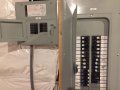
installed the DSP (dual service panel) next to the MDP.
IMG_2313.JPG
IMG_2312.JPG I turned on all the light switches and exhaust fans that I could before I reenergized the main. That way I could see if my 50a service breaker for the panel would trip or not. Flipped the switch and there was no drama, fridge kicked on into overdrive to cool down, furnace spooled up, water heater clicked on, every light in the house was on, tv, modem, and stereo were all on. Here's what I measured:

DSP L1: Peak 10A, std load 8A
  • Family Room (Tv, modem, stereo, lights)
  • Kitchen lights
  • Furnace
  • Water Heater
  • Fridge
  • Basement Lights
DSP L2: Peak 5A, std load 4A
  • Bedroom 2&3
  • Garage Opener
  • Master Bed, Bath Lights & Fans
  • Kitchen Duplex outlets
Makes me think I can add more to the panel.
 

Reloadron

Joined Jan 15, 2015
7,892
Looks real nice, new construction is such a pleasure to work with. As to the new panel? Yes, you start with those circuits which are essential and then add as you go along. Up here in NE Ohio the furnace is a priority followed by things like refrigerator, freezer and other essentials including lighting of course. :)

Ron
 

Reloadron

Joined Jan 15, 2015
7,892
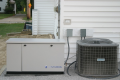
I keep saying I need to get a tiny building done around my unit and have yet to get it done. :)

Gen and AC.png

The yard is now all fenced and I would like to build a small box structure over the generator and air conditioner units. Looking good Mr Sledghammer. :)

Ron
 

Thread Starter

Sledgehammer_1

Joined Mar 5, 2018
33
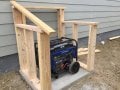
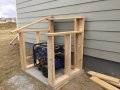
More framing, next comes the sheathing, roof unit and front door, wiring (supply plug, 120 service outlet 12v shed lights) then insulation and interior finish 5/8 drywall with fire caulk.
image.jpeg
image.jpeg
 

Reloadron

Joined Jan 15, 2015
7,892
Don't forget ventilation, air in and air (exhaust) out. If you have cold winters with sub freezing temperatures you may want to place a small warming heating element on the oil pan which will only be on when you have mains power available. Things are coming out very nice.

Ron.
 

Thread Starter

Sledgehammer_1

Joined Mar 5, 2018
33
Yep I've got ventilation designed, multiple turns in a baffled space for the supply and exhaust, fan is on the exhaust side so that it pulls air through the room rather than push air into it. Still trying to figure out how to do the exhaust. Double walled exhaust pipe through wall or route it to the room exhaust port.
 
Top