Discrete 741 build final project

Thread Starter

Wolframore

Joined Jan 21, 2019
2,619
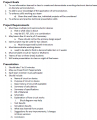
This is was my list and requirements:

I initially wanted to make a 555 but the instructor suggested the 741 since that's what we will focus on in 2nd semester... then afterwards he withdrew his suggestion saying I'm going to have a horrible time trying to get the current mirrors to work correctly. Challenge accepted!

Actually a logic circuits based on transistors would have been interesting... especially if it was programmable, but I'm saving that for one digital logic class.


1572283364112.png
1572283285986.png
 
Last edited:

OBW0549

Joined Mar 2, 2015
3,566
I initially wanted to make a 555 but the instructor suggested the 741 since that's what we will focus on in 2nd semester... then afterwards he withdrew his suggestion saying I'm going to have a horrible time trying to get the current mirrors to work correctly. Challenge accepted!
He's "kinda-sorta" right, but his objection is a bit overstated IMO.

If you were to randomly grab 2N3904's and 2N3906's out of a drawer, from an assortment of manufacturers, there certainly is the potential for enough Vbe mismatch to cause a significant imbalance in circuits like current mirrors, differential pairs, and so forth. However, you can sort transistors according to Vbe simply by connecting them in the transdiode configuration (i.e., collector shorted to base) and forcing them to pass a known amount of current while measuring their voltage drop. For example, to get a match at ≈ 1 mA collector current, you might use a 10 volt power supply with a 10 kΩ series resistor. You can then pick pairs (or triplets, or quads, or...) that closely match in Vbe.

Another trick of overcoming transistor mismatch is by putting "ballast" resistors in series with their emitters that will cause enough voltage drop (say, 100 mV or so) to "swamp out" any mismatch in transistor Vbe. For transistors passing around 1 mA collector current, for example, you might use 100Ω emitter resistors.
 

Thread Starter

Wolframore

Joined Jan 21, 2019
2,619
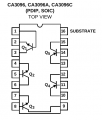
The guys had a solution... these are matched to within 2%: I plan on using 6 of them for the current mirrors and the differential front end.

http://www.diodes.com/datasheets/ds30311.pdf
http://www.diodes.com/datasheets/ds30293.pdf

2% can still cause issues but I agree we can ballast them and use the null offset to balance them. I'm confident we can get it working well enough to do an integrator. Using 10 Vpp squarewave there's some overhead using 15 and -15.

I'm having second thoughts about the output. I would like to change the main output transistors to something that can handle more current.

I've put the order in and now I'm patiently waiting for that slow boat from China. The matched pairs are from DigiKey.
 

ci139

Joined Jul 11, 2016
1,989

Thread Starter

Wolframore

Joined Jan 21, 2019
2,619
Agreed... you bring up a valid point.... it's true, I look at chip design as a bit of magic... PCB's make much more sense to me. What I was trying to say previously is that it should be easier to keep the signals and from current from leaking from one part of the circuit to another using discrete.... better or for worse. Might even be cleaner signals afterwards... we will see... I've done enough in sim... now it's time to design and build it. I'm working in EDA at this moment.
 

Thread Starter

Wolframore

Joined Jan 21, 2019
2,619
Just heard back from Lenore at EvilMadScientist... they do not match their transistors and have had no problems getting good results. They say that modern transistors seem to be consistent enough to work just fine.

I will proceed with individual transistors... if it doesn't work, the matched pairs are an easy change and I can do a second PCB.
 
Last edited:

Thread Starter

Wolframore

Joined Jan 21, 2019
2,619
Progress today: started on the pcb for the opamp. I’m struggling with the copper pour, having two opposite supply voltage plus a ground plane. I’m unsure how to do a copper pour.

I have a decent layout with a meaningful placement with good flow. Research shows inductance is the real issue which is difficult to mitigate. So short traces and ground pour is important.

I want the copper pour do reduce EMI/RF. I originally wanted power rails as a pour. I’m so used to DC circuits.

I’m leaning towards a signal ground pour on the bottom. It will not help to route. Perhaps a VCC and VEE rails along the top and bottom edges of the top layer which will help with routing. Anyone see an issue with this? This opamp will have an extra connection for signal ground.
 
Last edited:

Thread Starter

Wolframore

Joined Jan 21, 2019
2,619
Concerning PCB design:

I‘m not impressed with the examples out there. Many were done back when we had to etch for single sided... and same design thought process continues.

The board will work regardless and the 741 is not high speed but I want to reduce noise and designing antennas. Trying to get as much as I can out of it.

Few option best would be to use 4 layer with power planes in the middle (this is how I approach RF circuits). 2 layer option is to pour VEE (dc ground) on bottom route signals on top and a VCC strip to help route power.

I really have to get back to other things but I’m having so much fun with this project.
 

Thread Starter

Wolframore

Joined Jan 21, 2019
2,619
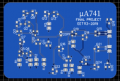
Ok spent some time on the first iteration of the 741. This is work in progress. I like to throw components on the board to check routing and study the signal flow.

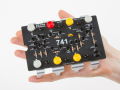
this approximately actual size referenced with a quarter. 2.75” x 2” about 3/4” short of a business card. using SOT23 and 0805. Please note there’s tons of room to go much smaller. Outputs not routed yet.
C9690C9C-6230-4969-96E7-33279C53C80B.jpeg

Observations: following the schematic layout is not optimal but will help to diagram the blocks for demonstration. I find that I would like to change the transistor pinouts which is possible to do on a silicon die but not practical using standard components. I will try to keep the stages blocked up in sections but I can already see better placement based on signal integrity. Having said that the schematic layout is not bad but very different from the actual placement used on a die.

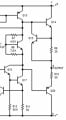
One area that was puzzling for the 24 transistor version was the biasing for the AB output transistors. Looking at it I realized that they used two transistors (Q23 and Q24) like diodes to provide biasing to reduce crossover distortion. It must be easier to just make transistors on a die. The 20 transistor version uses a voltage divider with a transistor to achieve the same. The advantage to using transistors is that they’re easier and usually smaller on a silicon die. since the resistor dividers are only a ratio the accuracy should be similar.

transistor bias vs resistor and single transistor bias for output AB amplifier.
6C237069-6786-448C-BAE4-5F1896AA6D31.jpeg0F5C459B-AE1A-4F42-B9E6-6D4D15BFB590.jpeg
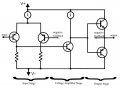
here is a grossly oversimplified block diagram of the 741 stages
BAF91FA8-2E37-4E0C-8D52-ABCE7A059571.jpeg
 
Last edited:

Thread Starter

Wolframore

Joined Jan 21, 2019
2,619
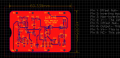
The design is shrinking and getting better routing: It is now 2.375" x 1.5" shrank about 36%. I may keep this as final board size so I can have plenty of room for headers and connections.... but it's possible to go smaller!
1572445575759.png
 
Last edited:

ci139

Joined Jul 11, 2016
1,989
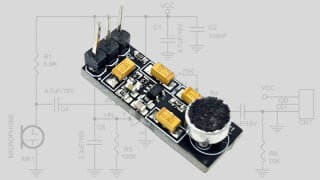
no intent to distract you but an alternate montage compact-design option avail for such kind of projects
though it's near impossible to physically debug/service such circuit later
but the "/!\benefit/!\" of such is that if you succeed with a "reduced noise" variant it allows you a grater "layout"/structurizing freedom for the components and "traces"
↓ there is no direct need to epoxy-casting as used in the proj. on the fig. ↓
 
Last edited:

Thread Starter

Wolframore

Joined Jan 21, 2019
2,619
Thanks @ci139 I really love those circuits, I do not have the patience for making them. I just design these... I'll pay my son to solder them.... HAHA. There's a guy that's online that makes amazing ones... I think they're called dead bug circuits. This guy is amazing: https://www.bhoite.com/sculptures/


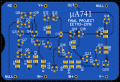
Here's my first version.... I really hate that I was so careful with signal routing and then have these long runs to connect the pins. But it should work well enough to connect to a breadboard:

final size 60 x 40mm or 2.375" x 1.5" for us standard people....

I would like to use some sort of pins but single pins are not very stable... I'll figure it out.. worse comes to worse. It will have wires soldered to 8 DIP spaced male for bread-boarding my integrator demonstration.

1572450135723.png

1572450318109.png
 

Thread Starter

Wolframore

Joined Jan 21, 2019
2,619
I showed our professor my progress and you could just see his face when I showed him the pcb design he said “but that’s so easy...” I believe he’s used to people fighting with breadboards which can be extremely traumatic. I once designed a CMOS circuit that would start doing funny things Speed up, slow down... etc. it took me 3 days to figure out it was a bad bread board leaving a pin floating. Plus all that capacitance and resistance of the jumpers... makes me cringe.

He set aside about 3 weeks of lab time for the final project and I believe he's concerned that I will have nothing to do.

So I volunteered to build 3 of them and make a differential probe / instrumentation amplifier and told him it would probably be good to about audio frequencies. He said save that for next semester... that I still need to make it work.

I’m still in design stage for the PCB... I have another approach I want to try. I would like to redesign this one strictly for signal flow and pin compatibility. The benefit of the first design is that it makes signal tracing easy using the schematics... so this second design will likely jumble components but hopefully give better performance. A good approach might be to start with the layout on the die.
 

jpanhalt

Joined Jan 18, 2008
11,087
Nice job.

Do you want to keep the LxW ratio the same as a DIP-8? Apparently not, but might look neat. The pins on a DIP-8 are on a 0.6" x 0.6" square. I did notice a slight deviation from 0.1" grid:
1572522106239.png

If you want it to plug in easily, putting those pins on grid would help. I also suspect the PCB could be made considerably smaller.
 

Thread Starter

Wolframore

Joined Jan 21, 2019
2,619
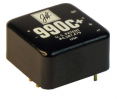
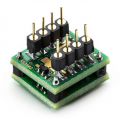
@jpanhalt that’s a good point, I will keep that in mind. I can change the aspect ratio for sure. There’s still a lot of work left but I can slow down while my parts arrive. I can see a few places I can make adjustments for better routing and visual impact. I work in mm it’s a pain to go back and forth from mm to mils but we all have that challenge. Just remember 25.4. I may do 2 or 3 versions. 1. the DIP8/schematic layout (done) 2. the IC die layout 3. the micro layout intended to be added to other circuits... like the old discrete/modular opamps like this... I've seen potted ones like this in high end audio.

1572540796923.png1572541191080.png

Yes it’s possible to go even smaller but I hesitate for a couple reasons... if this was a modular opamp to go into a circuit yes, smaller and better pin routing would be the goal And possibly shielding.

Since this is an educational device I would like to silkscreen functional areas and make it easier to signal trace while referencing schematics to better understand the circuit. The shape and placement of the pins (and cutout) are to remind how to identify pins and equate this to a DIP8 or SOP package. I may place some meaningful test points... although the component pads are fine but this might help someone understand the stages better.
 

jpanhalt

Joined Jan 18, 2008
11,087
Since this is an educational device I would like to silkscreen functional areas and make it easier to signal trace while referencing schematics to better understand the circuit.
I was thinking about that as I wrote my previous response. Adding pins is one option, but a better option might be to add "test pads" with or without little loops of wire to attach probes.
 
Top