Designing a simple alarm circuit using microcontroller

Thread Starter

nestbulala

Joined Dec 12, 2015
111
Hello Guys,
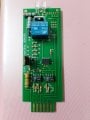
I have finished the proto-type for this project and tested according to my requirements and it is working fine. I am attaching a picture for your information.
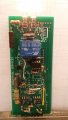
SE7-3531.jpg
 

Thread Starter

nestbulala

Joined Dec 12, 2015
111
Hello Guys,
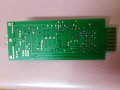
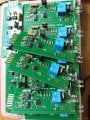
I have started producing the proto-type and there is no issue of overheating. The only problem I am facing is the voltage regulation. As suggested by eetech00 that I should used a DC-DC Converter but It was too expensive for this project. Anyway, the requirements were satisfied. Maybe we could introduce later an additional transistor resistor circuit to control the regulation.
Alarm Signal Module SE7-3532a.jpg Alarm Signal Module SE7-3532b.jpg Alarm Signal Module SE7-3532c.jpg
I would like to express my gratitude to eetech00 in helping me much for this project.
Nest
 

jayanthd

Joined Jul 4, 2015
945
LM2576HV-5V regulator will be fine for the circuit and also if you use a 5V relay. If 12V relay needs to be used then an additional LM2576HV-12 can be used to power the relay. This will keep the power supply cool.

If you use LDO regulators with 48V input then a lot of heat is dissipated in the regulators. The design will not be a good one.
 
Although his project is done and was supposed to simple there were a few things I didn't see:

1) A local trouble alarm; It would be set by Acknowledge (Alarm Silence). Reset by Reset.
2) Individual point LED's
3) Monitored contacts. Where a resistor I placed across the remote contact. A cut line is then sensed.

So, acknowledge (Alarm Silence) puts sets the local trouble alarm until reset. This primarily allows one to locate a faulty detector on a given loop when multiple detectors are used.
 

Thread Starter

nestbulala

Joined Dec 12, 2015
111
Although his project is done and was supposed to simple there were a few things I didn't see:

1) A local trouble alarm; It would be set by Acknowledge (Alarm Silence). Reset by Reset.
2) Individual point LED's
3) Monitored contacts. Where a resistor I placed across the remote contact. A cut line is then sensed.

So, acknowledge (Alarm Silence) puts sets the local trouble alarm until reset. This primarily allows one to locate a faulty detector on a given loop when multiple detectors are used.
LM2576HV-5V regulator will be fine for the circuit and also if you use a 5V relay. If 12V relay needs to be used then an additional LM2576HV-12 can be used to power the relay. This will keep the power supply cool.

If you use LDO regulators with 48V input then a lot of heat is dissipated in the regulators. The design will not be a good one.
LM2576HV-5V regulator will be fine for the circuit and also if you use a 5V relay. If 12V relay needs to be used then an additional LM2576HV-12 can be used to power the relay. This will keep the power supply cool.

If you use LDO regulators with 48V input then a lot of heat is dissipated in the regulators. The design will not be a good one.
KISS,
1) What do you mean by a local trouble alarm. If the board has its own problem and it should flag an alarm?
2) Individual point LEDs.
3) Monitored Contacts.
I think if we include all those parameters in this design, it will not be KEEP IT SIMPLE STUPID. LOL.

Jayanthd,

Can I use this LM2596 as attached.
 

Attachments

KISS,
1) What do you mean by a local trouble alarm. If the board has its own problem and it should flag an alarm?
2) Individual point LEDs.
3) Monitored Contacts.
I think if we include all those parameters in this design, it will not be KEEP IT SIMPLE STUPID. LOL.
I come from different uses and design of of an alarm systems/sequential interlocks. I know what happens when you do the wrong one.
When I did my first relay mashed alarm, I never heard of monitored contacts, nor a PLC for that matter - back in the 80's. The alarm/shutdown system "Had to work" because it was a matter of life and death. We had a significant event and the system worked, but not designed in.
The hydrogen detector was in the box waiting for the management go ahead. A safety device failed and the operator while re-seating a valve introduced a burst of 1500 PSI of Hydrogen into a flex line rated for vacuum.

I did not use monitored contacts and events required a momentary contact closure. So, if the wire was cut -- OOps.

I did introduce an ersatz version of a monitored contact with an extra LED and SPDT contacts for some points. Namely the fire alarm interface that it went off. Reason: 1) We needed to know when the alarm was reset, 2) Occasionally we would be in a safe condition, but need the system on to maintain vacuum. So, the LED was visible and would be looked at when the gasses were selected.

The same panel had a hood velocity alarm and another group made a different kind of system that used a "sequential interlock" which was really cheap. In my version, wind outside might turn off the system and indicate that it did so. With the sequential alarm, the systm just magically turned off with no idea what did it.

My version had actual velocity measurements and the other was just a switch. Everytime you clean the detector, you have to rotate the probe and insert into the tubulance region for max sensitivity.

I made my system more part of the building/lab and not the experiment.

Initially I used big 3PDT relays. 1 contact for alarm loop, 1 for indicator and 1 for latch. Simple? Right?

So, initially it provided enable signals to the reactors. Later, expanded to 3+ and turned on the gasses at the cylinders to be used electro-pneumatically. There was a keylock. It's only use was during a complete shutdown. In hindsight, probably two keylocks should have been used. One just removing gas control. A fuse could be removed if that was needed.

One system could turn it's own gas (H2S) on at it's panel, but the panel indicated that it did.

The panel only shut down the reactors and sometimes silently. Alarms like toxic gas and Hydrogen might locally shut of the reactors and set off strobes. Higher level alarms would pull the fire alarm but from the detectors to FAP not the control panel to FAP.

If the fire alarm went off, these reactors were to shut down.

In a later upgrade another system had a PLC that handled safety independently, but it did have to have the enable signal from the gas control panel and it did have to pass some alarms to from the local panel. That one needed an UPS to initiate shutdown and a generator. Alarms were not 100% backed up. For toxic gas, a paper tape would have the most recent after it had about a minute to be on generator. The Hydrogen alarm would have an FAP indication, but nothing local until it was back online.

You do make some sacrifices. Some were not my call.

For the really stupid one that I wasn't allowed to be involved eventually it came to be that they wanted me to fix it. I said, "nope" because I can;t probe anything internal. You wired two 19" rack cases together with wires. I can;t take it out or if I move one, wires break.
You, at least, have to allow me to connector it to "building stuff" . So a 37 pin connector was installed that went to the same terminals.
So, at least you can take the top unit out by moving just a few connections.

At some point, I also my way where I got power to the box for the velocity alarm. Better, but still crap.

I guess in the real world, some annunciators announce as well as time-stamp for analysis later.

One machine had a bunch of water flow sensors and you bypass the ones your not using, so it requires some sort of operator smarts.

Sequential interlocks kinda worked like CABINET DOORS CLOSED", VACUUM LOW ENOUGH, WATER FLOW OK

So, monitored contacts would have been useful and I "sort of" incorporated them for some points. The FAP required terminating resistors for inputs, but not outputs. The FAP was maybe 150 feet away and through 3 firewalls. Keeping tabs on that wire was a good thing even if done manually.

LOCAL TROUBLE example Fire Alarm Panel

A wire is cut to a sensor. Because of the monitored contact method, it's considered "Trouble" and the panel has a buzzer.
If the panel goes in real alarm, the Alarm bells throughout the building go off. In many cases the system is divided into zones.
A zone could be a number of ceiling detectors say in the "storeroom". Let's suppose a photoelectric detector goes off. no smoke. We get an alarm. Someone responds and turns off the piercing bells and the alarm panel goes into trouble. A local piezo buzzes.
The zone is identified at the annunciator or the panel. Now, you have to do a walk-thru to find out what detector went off.
let's say they clean it with a burst of air and trouble clears.

I don't know EXACTLY how it;s supposed to work. I think in some panels, trouble open and trouble short and alarm can be identified.
The trend is toward addressable detectors, I think.

A "backup generator" has a lot of "complex alarms".

There isn't one thing that fits all. So, you learned about a few concepts that you probably didn't need.
 

bertus

Joined Apr 5, 2008
22,925
Hello,

How much current is needed on the low voltage side?
You might consider the TL783 linear regulator.
That can handle upto 125 Volts input voltage.

Bertus
 

Attachments

Thread Starter

nestbulala

Joined Dec 12, 2015
111
KISS,
Quote:I come from different uses and design of of an alarm systems/sequential interlocks. I know what happens when you do the wrong one.

I am only a beginner, your way of thinking is over my head. It may take years for me to develop such talent. Anyway, I did make a little effort here with much help from you guys and I appreciate it very much.

eetech00, Jayanthd, bertus, the dragon, dickcappels:

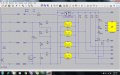
Maybe this circuit will work using the DC-DC Converter If I keep the transistor and the diode to keep the voltage down.
https://www.aliexpress.com/item/10P...32683517524.html?spm=a2g0s.9042311.0.0.T8Ro5N
Alarm Signalling Circuit SE7-S3533V8.jpg
 

ArakelTheDragon

Joined Nov 18, 2016
1,366
DC to DC converter is not an inverter.

DC to AC converters are inverters.
Sorry about that.

In order to reduce the voltage, you ca use a capacitor with a MOS transistor. The idea is to charge the capacitor to a certain level with impulse current and during the resting period of the first MOS, a second MOS will turn on and power whatever you want.

You can also use a thyristor.
 
Top