Current Transformer relay circuit - Help

Reloadron

Joined Jan 15, 2015
7,890
Alrighty, I have used similar current transducers, mostly from CR Magnetics. The Vout versions are self powered and the Installation Data Sheet shows how both current out and voltage out versions.

OK, lets assume you set the jumpers for a 0 t0 20 Amp range. So 0 to 20 amps becomes a 0 t0 10 volt output. Now it's a matter of reading the voltage and scaling it to the current. Now did you want something to happen at a specific current? Also the version you have, with AC it's actually Average Responding, RMS Indicating which is fine as long as you are not measuring a non-sinusoidal sine wave.

So if you decide to run with this unit what's your exact goal?

Also and not that it matters to any extent, units like this are more often called Current Transducers rather than Current Transformers.

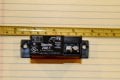
This is a Current Transformer:

CTa.jpg

This is a Current Transducer:
CT3.jpg

Ron
 
Last edited:

MisterBill2

Joined Jan 23, 2018
27,528
Now th question has been posed twice! I am asking it more clearly this time: What is the specific goal to be achieved by operating some sort of relay at some specified but not stated current level?
The problem is that it takes some amount of POWER (V x I) to operate any electromagnetic relay. Each different current transformer is only able to deliver some maximum amount of power, which is directly related to it's size.
 

Thread Starter

wilke_jb

Joined Nov 1, 2025
10
Thanks for all the help guys. Yes I did find the answer I think but I also like closing the loop for everyone that has helped! I did think I described the original problem but I simplified it so it wouldn't be too much of a read - sometimes you need details though and I will describe it here.

Full description: The original reason for this circuit was to monitor a heating element to test it for breakage. This is part of a larger system that uses a PLC and some other components to heat a series of 19 elements in a very specific order. I thought that when the element was triggered, (via PLC sequencing and a series of high power contactors that connect a transformer to each element) I could sense the input amperage to the transformer (somewhere in the 12 to 18 amp range) and I could close a contact to indicate that an amperage (any amperage really) has been achieved, therefore setting a bit in the PLC that sets a "good" light for that element. This way I would have a visual signal that each of the 19 heating elements worked during their cycle. Obviously, if any light doesn't illuminate then you know that that specific element or elements didn't draw any amperage and therefore there is a break in the element or problem in the wiring/control components.

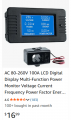
I was hopeful that the Current transducer along with the relay I already had could accomplish this but it would seem not. I do think there is a way to do this with a transistor or the reed switch someone mentioned but I just feel that for my needs the amazon part for $17 will do the trick - I don't want to re-invent the wheel here I just need to solve the problem - which is exactly what ALL of you helped me to do - so thank you all so much - truely! I will do my best to report back here when I receive the part and let you know if this worked! Thanks again!
 

ronsimpson

Joined Oct 7, 2019
4,694
I have many smart machines, and things that I made smart.
These current monitoring relays tell me important information.
Examples: The freezer should come on every hour or two. It should not remain off for 4 hours. The refrigerator, same story.
The furnace(s) should pull motor power within 2 minutes of turning on. I want to know if it fails long before the house, barn, chickens, dogs get cold. The water pumps should work when turned on. Waiting until the plants die is not acceptable.

Most machines, just turning them on is not enough information. Seeing they are pulling power is much smarter. Someday I want to monitor how much power they pull. The freezers "short cycle" when they are failing. The current sense relays can see that. The freezers also pull too much or too little power long before they fail.
 

Thread Starter

wilke_jb

Joined Nov 1, 2025
10
I have many smart machines, and things that I made smart.
These current monitoring relays tell me important information.
Examples: The freezer should come on every hour or two. It should not remain off for 4 hours. The refrigerator, same story.
The furnace(s) should pull motor power within 2 minutes of turning on. I want to know if it fails long before the house, barn, chickens, dogs get cold. The water pumps should work when turned on. Waiting until the plants die is not acceptable.

Most machines, just turning them on is not enough information. Seeing they are pulling power is much smarter. Someday I want to monitor how much power they pull. The freezers "short cycle" when they are failing. The current sense relays can see that. The freezers also pull too much or too little power long before they fail.
Yeah I understand - I too wanted to use my old data logger to check how much power I'm using on certain circuits in my house - like the hot water tank to prove to my son that 37 minute showers are not cost effective!

The data logger is nice too because it has some settable alarms to let you know when certain thresholds are met.

Thanks again for all the help
 

Reloadron

Joined Jan 15, 2015
7,890
Full description: The original reason for this circuit was to monitor a heating element to test it for breakage.
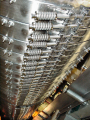
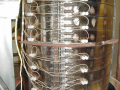
I had a similar project years ago. The heaters were part of a autoclave heating system. Once things were closed up the heater bands were covered. I used these for each heater band. Back in the day we were paying $10.00 USD each and each clave used 72 bands top to bottom. With a single glance I could tell if I had any open elements.

Things looked like this:
Clave2.png

Clave3.png

Each half of each band is 6.0 KW. Each half is 240 VAC and they were fed by 480 VAC 3 Phase Delta. While we did monitor total current the little indicators were sweet as at a glance I could spot open elements. Something you may want to consider in the future. We could still get by with several open elements it just took longer to get up to operating temp. Anyway it's food for thought for you or anyone. :)

Ron
 

Reloadron

Joined Jan 15, 2015
7,890
I too wanted to use my old data logger to check how much power I'm using on certain circuits in my house - like the hot water tank to prove to my son that 37 minute showers are not cost effective!
That was seriously funny and I know that drill very well.
 

ronsimpson

Joined Oct 7, 2019
4,694
to check how much power I'm using on certain circuits in my house
There are a number of monitoring devices like this one. It comes with 18, 10 or 2 current transformers. Talks WiFi.
1762195296145.png
I use something like this but from SonOff. Very simple.
1762195487613.png
In the barn I have a two channel version of this.
1762195572049.png
 

MisterBill2

Joined Jan 23, 2018
27,528
There are current sensors used for verifying heater operation for injection molding machines. I have seen the installations and seen the drawings, and those are a standard product that I have never used. So the concept is totally valid and the product in use a lot.
 
Top