Current Transformer relay circuit - Help

Thread Starter

wilke_jb

Joined Nov 1, 2025
10
I'm very new to the electronics thing - so please word any response with that in mind. I am trying to use components I already have to save cost. i need help with a circuit that will sense a current and output to a relay. The two components I have are a current transformer that will output 0-10 volts dc with selectable 0-10, 0-20 or 0-50 A input. I have a 12v dc cube relay that needs between 35 and 45 mA to operate. The current that the transformer outputs on the 0-10 v is not enough to operate the relay. I was hoping that I could use some sort of transistor or something to close to make contact for the relay to be powered during a 10 to 20 amp event? is there an easy way to do this? Please help and dumb it down for me.

Also,
I did look at this beforehand and it seems close but not exactly what I need. I think this was a current transformer without a voltage output?
https://forum.allaboutcircuits.com/threads/on-off-indicator-using-a-current-transformer.91368/page-3

Thanks!
 

Tonyr1084

Joined Sep 24, 2015
9,744
Welcome to AAC.
I have a 12v dc cube relay that needs between 35 and 45 mA to operate. The current that the transformer outputs on the 0-10 v is not enough to operate the relay.
Relays of a particular voltage may take a minimum of 70% of the rated voltage to engage the relay. Once activated, they may hold all the way down to 40% of the rated voltage before they drop out. Have you tried using your transformer to activate a 12 volt relay?

I've successfully used 24VDC relays on a 12VDC circuit. To be exact, it was in an automotive application. Once the engine starts the voltage can go as high as 14.5V, though 13.8 is far more common. That very small relay was clicking in at almost 58%. I'm not saying your relay will click in at nearly 60%, but 10V is 83 1/3% of 12V. If you haven't tried it yet - I'm thinking it probably will work.

Now, if you've tried it - and it hasn't worked then there's more to this than you've discovered or disclosed.
 

ronsimpson

Joined Oct 7, 2019
4,645
Need 40 Ampere-turns to be certain to switch it, so 4 turns of wire carrying 10A will work.
I noticed in the relay data sheet it takes 10 to 40 AT to close the contacts. That is a wide range.
I also noticed the relay opens back up somewhere at or below 5AT. (probably also has a very has a wide range)

The placement of the wires is very critical.
 

ronsimpson

Joined Oct 7, 2019
4,645
If so - @ronsimpson seems to have an excellent solution. Cheap too.
In China I see them at $0.99 usd right now. In the US on amazon they run $11 to $7. Before tariffs I got a box of them at under $2 each.
They seem to be stable and work. I do not like needing a source of power to make them work. I got the 5 volt versions and use an old phone charger.
 
Last edited:

Thread Starter

wilke_jb

Joined Nov 1, 2025
10
What transformer are you using? I do not know of a part that outputs 0-10V.

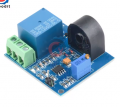
I have some of these. It needs 5V or 12 or 24Vdc to run. There are several different looking versions.

View attachment 358114
What transformer are you using? I do not know of a part that outputs 0-10V.

I have some of these. It needs 5V or 12 or 24Vdc to run. There are several different looking versions.

View attachment 358114
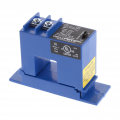
I'm using an AcuAmp from automation direct - P/N: ACT0150-10-S
 

Thread Starter

wilke_jb

Joined Nov 1, 2025
10
Welcome to AAC.

Relays of a particular voltage may take a minimum of 70% of the rated voltage to engage the relay. Once activated, they may hold all the way down to 40% of the rated voltage before they drop out. Have you tried using your transformer to activate a 12 volt relay?

I've successfully used 24VDC relays on a 12VDC circuit. To be exact, it was in an automotive application. Once the engine starts the voltage can go as high as 14.5V, though 13.8 is far more common. That very small relay was clicking in at almost 58%. I'm not saying your relay will click in at nearly 60%, but 10V is 83 1/3% of 12V. If you haven't tried it yet - I'm thinking it probably will work.

Now, if you've tried it - and it hasn't worked then there's more to this than you've discovered or disclosed.
Thanks for the reply - I have tried to switch the relay directly to no affect. I'm using an IDEC RJ2S-C-D12 and I thought this may do it but it doesn't seem to work. I'm fine with some trial and error here. I'm thinking that this coil I'm using just doesn't have enough amperage to bring the coil in?
 

Thread Starter

wilke_jb

Joined Nov 1, 2025
10
In China I see them at $0.99 usd right now. In the US on amazon they run $11 to $7. Before tariffs I got a box of them at under $2.
They seem to be stable and work. I do not like needing a source of power to make them work. I got the 5 volt versions and use an old phone charger.
What are these called or do you have a part number I can order from - this may be what I need?
 

Reloadron

Joined Jan 15, 2015
7,852
One more time can you share the part number for the CT you have.CTs like this are pretty common and usually use a jumper to select the range and have Vout or 4 to 20 mA out proportional to the input.

Ron
 

Thread Starter

wilke_jb

Joined Nov 1, 2025
10
One more time can you share the part number for the CT you have.CTs like this are pretty common and usually use a jumper to select the range and have Vout or 4 to 20 mA out proportional to the input.

Ron
The pn is : ACT0150-10-S
It is a 0-10v output and yes it has a jumper to pick your amperage range. 0-10, 0-20 or 0-50. I too have seen the 4 to 20ma versions but this one converts to voltage - i have 3 of them and i used them on a datalogger years ago.
 

MisterBill2

Joined Jan 23, 2018
27,159
There are a lot of different current transformers, as far as sizes go. Besides that, ordinary relays with copper coils tend to change resistance a bit as the temperature changes.
If the TS explains the required function it is likely that an alternative scheme can be suggested.
 

MisterBill2

Joined Jan 23, 2018
27,159
I see also that the $136 device has a DC output. So there is a lt more to it.
Once again I am asking for some description of the goal of the project. Driving a relay with rectified filtered DC might be able to work. That would require adding a small bridge rectifier and a filter capacitor .
 
Top