@joeyd999 The best way to end the CV19 is for everybody to hold their breath for six weeks. But that's not practical. We have to make some exceptions for some situations. If you can drive - why take the bus or train? You're exposing yourself to the virus. If you can't drive - you still need a way to supply your needs. Even in the jungle, a trip to the watering hole is risky, but necessary.
My guess is -- if one were to do the analysis -- we'd find that mass transit is high on the list of reasons why COVID is spreading so fast and deep in NYC.
Boston has a subway, commuter rail and bus public transit system. It has not closed but is mainly empty
They broadcast a PSA that said they were sanitizing the system hourly. There were videos of employees spraying the vehicles, wiping down the railings, entrance booths and ticket kiosks.
However shortly thereafter a local news investigative group sat in a station with a camera for several hours. No one came by to wipe, sanitize nor clean.
Exactly what I would expect. I’d have someone there with supplies and any rider who spent 15 minutes wiping the station down, would ride for free.
UPDATE: @joeyd999, if that were the case, I’d expect a rapid rate of infection for any city with a large public transportation, particularly this with subways. There’s Boston, DC, Atlanta, Chicago, LA and San Francisco.
I’d expect a rapid rate of infection for any city with a large public transportation, particularly this with subways. There’s Boston, DC, Atlanta, Chicago, LA and San Francisco.
Going to the grocery store is scary enough. I snap on surgical gloves before I touch the carts. IF (when) wipes are available I'll still wipe down the cart. Then I get nervous about picking things up off the shelf. Who touched a box then put it back? Did they have the virus?
There's a limit to how much we can clean. Once getting things home I HOPE I didn't bring home something contaminated. We use our own bags. Don't want to touch the bag dispenser because someone else may have touched it. (likely) There's always a measure of risk. Social distancing and sanitizing mitigates the risk but it doesn't completely eliminate it. We get mail. That makes me nervous. We order packages that sometimes come from China. That scares me. Someone asked about "Desanitizing" packages. (that's their own words) Nevertheless, there's fair reason to be concerned about picking up a box from your porch when you don't know who handled it or what they might have.
Like I said, there's risk in going to the watering hole. We must face that fact. Until we each have our own food replicator and personal force field - risk is the name of the game. All we can do is limit the chances of catching the virus.
Or instead, no one wipes down the station? How much has your risk of using public transportation increased?
Who is responsible for publicly stating that they are disinfecting stations, yet no one is doing so?
The population using public transportation right now has little or no choice. They very possibly have limited means. This work option benefits them personally. They are motivated to do a good job, because they depend on others before them to do their job.
But possibly the most compelling argument is this provides a work option in order to receive a benefit, rather than accepting welfare.
Like I said, there's risk in going to the watering hole. We must face that fact. Until we each have our own food replicator and personal force field - risk is the name of the game. All we can do is limit the chances of catching the virus.
Greater than a 99.9% reduction in live bacteria was realized in laboratory tests. In the clinical trials, an 83% reduction in bacteria was seen on the copper alloy components, when compared to the surfaces made from standard materials in the control rooms. Finally, the infection rates were found to be reduced by 58% in patient rooms with components made of copper, when compared to patients' rooms with components made of standard materials.
Copper has long been known to have anti-bacterial properties. I wonder if it has similar effects on viruses. OTH, copper oxidizes quite easily, how would they cope with that?
Or instead, no one wipes down the station? How much has your risk of using public transportation increased?
Who is responsible for publicly stating that they are disinfecting stations, yet no one is doing so?
The population using public transportation right now has little or no choice. They very possibly have limited means. This work option benefits them personally. They are motivated to do a good job, because they depend on others before them to do their job.
But possibly the most compelling argument is this provides a work option in order to receive a benefit, rather than accepting welfare.
True. But the bottom line is always the dollar. Being financially liable for someone's illness will prevent them from taking any steps at all. The public is at larger risk, but the company or operator isn't liable.
I remember a number of decades back when California was in a drought. A company started cloud seeding in an effort to bring rain to Southern California. Then a storm came up and it started to flood people out and to start hillsides sliding down. The company CONTINUED to seed. To stop seeding would admit responsibility. The bottom line - dollars.
Yours and my motivations will be survival. However, would you depend on me to do a good job when I'm a blithering idiot? I've known many blitherer's I would never trust with my life. Yet we have a government filled with these blithes. You might do a fantastic job cleaning the hand rails. But when I come along, I'm cleaning it for myself. Or wearing gloves. It's easier for me to protect myself than to depend on someone who has no idea of how to clean (not suggesting you) to protect my life from virus.
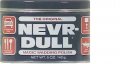
Copper! Have wondered about that. Hospitals are painted with an anti-bacterial paint that is VERY expensive. But I've used copper crystals in a solution to apply to a metal surface to reveal whether stainless steel over ferrous steel has been sufficiently stripped away before welding. Applying the solution would cause steel to rust whereas stainless steel wouldn't. The crystals are available at any chemical supply house, and adding them to paint would (might) work to make a home less susceptible to bacteria. Like @cmartines said, I, too, wonder if it would have a similar effect on virus'. But I'm not going to run to the store to buy paint and order chemicals from who knows where, where who knows who has handled it, just to experiment whether it will kill virus' too.
Copper has long been known to have anti-bacterial properties. I wonder if it has similar effects on viruses. OTH, copper oxidizes quite easily, how would they cope with that?
The New England Journal of Medicine. The scientists found that severe acute respiratory syndrome coronavirus 2 (SARS-CoV-2) was detectable in aerosols for up to three hours, up to four hours on copper, up to 24 hours on cardboard and up to two to three days on plastic and stainless steel.
Lots of copper surfaces are coated with a sealer or a clear paint. Had a copper lamp that never needed polishing because of this coating. Can't think of the proper term for it - but - - - .
Would in deed have to be bare copper for it to work. Now that makes me think if I took regular paint and added a copper to it, would that create a barrier and thus protect bacteria and virus'?
Lots of copper surfaces are coated with a sealer or a clear paint. Had a copper lamp that never needed polishing because of this coating. Can't think of the proper term for it - but - - - .
Would in deed have to be bare copper for it to work. Now that makes me think if I took regular paint and added a copper to it, would that create a barrier and thus protect bacteria and virus'?
Construction copper flashing is not coated as the bare copper surface provides the needed properties. The deep patina can be easily avoided with regular cleaning and polishing. https://basiccopper.com/22mi16ou24ga.html

 Facebook
 Google
 GitHub
 Linkedin