Coronavirus?!

Status
Not open for further replies.

cmartinez

Joined Jan 17, 2007
8,767
The gist: Countries with a lot of malaria, and a lot of HCQ usage before the pandemic began, enjoyed lower infection rates.
I'd be very careful when interpreting said countries' stats ... there are other factors (such as low indoors activities) that could be participant in the low infection rates. But of course, what you've mentioned is very much worth considering.
 

SamR

Joined Mar 19, 2019
5,491
Personally I prefer vitamin D. Probably much more effective, safe, cheap, no prescription needed. Other benefits also.
I was taking an across-the-counter/non-prescription vitamin D supplement for other reasons as prescribed by one of my doctors. On my last visit to the Mayo Clinic, after my blood test results came back, I was told to cease Vitamin D supplements due to a Toxic Level of it in my blood. There is such a thing as too much of a good thing.
 

cmartinez

Joined Jan 17, 2007
8,767
I was taking an across-the-counter/non-prescription vitamin D supplement for other reasons as prescribed by one of my doctors. On my last visit to the Mayo Clinic, after my blood test results came back, I was told to cease Vitamin D supplements due to a Toxic Level of it in my blood. There is such a thing as too much of a good thing.
Vitamin D needs sunlight for it to work and be properly metabolized... are you spending a little time outdoors as well?
 

402DF855

Joined Feb 9, 2013
271
Vitamin D needs sunlight for it to work and be properly metabolized... are you spending a little time outdoors as well?
Can you expound on this? My understanding is that you need sunlight to create vitamin D, but supplementation provides the nutrient when skin exposure to sunlight is insufficient.
 

SamR

Joined Mar 19, 2019
5,491
spending a little time outdoors as well?
Not nearly enough, pretty much a shut-in. Vitamin D is normally added to milk (which I don't drink) for those that don't get enough sunlight. Never heard that it needed sunlight to activate?

From the Mayo Clinic
"Vitamin D isn't naturally found in many foods, but you can get it from fortified milk, fortified cereal, and fatty fish such as salmon, mackerel and sardines. Your body also makes vitamin D when direct sunlight converts a chemical in your skin into an active form of the vitamin (calciferol).

The amount of vitamin D your skin makes depends on many factors, including the time of day, season, latitude and your skin pigmentation. Depending on where you live and your lifestyle, vitamin D production might decrease or be completely absent during the winter months. Sunscreen, while important to prevent skin cancer, also can decrease vitamin D production.

Many older adults don't get regular exposure to sunlight and have trouble absorbing vitamin D. If your doctor suspects you're not getting enough vitamin D, a simple blood test can check the levels of this vitamin in your blood."
 

cmartinez

Joined Jan 17, 2007
8,767
Can you expound on this? My understanding is that you need sunlight to create vitamin D, but supplementation provides the nutrient when skin exposure to sunlight is insufficient.
My bad... I was confusing the body's ability to produce vitamin D using sunlight, and its ability to metabolize glucose under the same condition. Sorry about that.

The team also found that the earlier the light exposure occurred, the lower the BMI, and the later the light exposure occurred, the higher a person's BMI, with the results showing that exposure to morning light accounted for around 20 per cent of a person's BMI.
 

wayneh

Joined Sep 9, 2010
18,106
Your body also makes vitamin D when direct sunlight converts a chemical in your skin into an active form of the vitamin (calciferol).
When I talk about vitamin D, I'm actually referring to D3 (cholecalciferol). Milk is fortified with a tiny amount of vitamin D. It may be enough to prevent rickets but it's not enough to avoid cancer, covid, etc.
 

wayneh

Joined Sep 9, 2010
18,106
I was taking an across-the-counter/non-prescription vitamin D supplement for other reasons as prescribed by one of my doctors. On my last visit to the Mayo Clinic, after my blood test results came back, I was told to cease Vitamin D supplements due to a Toxic Level of it in my blood. There is such a thing as too much of a good thing.
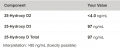
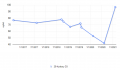
I'm skeptical. Any idea what number they saw? They may be following the ancient advice that you should be at just 20-30 ng/ml. I wouldn't bat an eye at any level below 100 ng/ml. No one dies in this country from vitamin overdoses. It's literally zero.

Vitamin D is more like a hormone than a vitamin, and too much of it without concern for balance with other hormones may be a problem. So it makes sense to take K2 along with D3 to prevent bone loss. But I think it would be very difficult two get to a "toxic level" with a supplement at any normal level. I'm taking over 10-fold more than the typical recommendation and I can't get my level above 40ng/ml until summer gets here.
 

wayneh

Joined Sep 9, 2010
18,106
The case against lockdown-mania:
https://www.mediaite.com/opinion/th...ctiveness-as-the-basis-of-all-covid-coverage/
Like their allies the “experts” and dictatorial governors themselves, the news media is very heavily invested in their original reaction not being seen as having caused enormous suffering for little, if any, ultimate gain (they are still routinely getting duped into reporting warnings that turn out to be totally unwarranted, like that of a recent “Super Bowl, Super Spreader,” which apparently never came to materialize). Ironically, and frustratingly, this will very likely cause the country to remain shut down, especially in the blue states like here in California, much longer than the science is telling us should be necessary.
 

nsaspook

Joined Aug 27, 2009
16,329
The sky is falling message is done because the Crystal Ball is cracked. Early predictions of a Winter CV-19 Oasis in California and a Winter CV-19 holocaust in Florida both were proved wrong
The media was feed the case model predictions of doom and they fell for it hook, line and sinker. What we hear now is that the previously infected that gained immunity is driving 'Herd Immunity', that thing that supposedly was impossible with natural infection is now a major factor in why cases are falling world-wide.

https://www.nytimes.com/interactive/2021/02/20/us/us-herd-immunity-covid.html
With the vaccine rollout underway and coronavirus cases declining after a dark winter surge, it may seem as though the end of the pandemic is in sight. In reality, how soon could we get there?

One answer lies in herd immunity, the point when enough people are immune to the virus that it can no longer spread through the population. Getting there, however, depends not just on how quickly we can vaccinate but on other factors, too, like how many people have already been infected and how easily the virus spreads.
...
This chart shows the current path to herd immunity in the United States, based on a model developed by PHICOR, a public health research group. It looks at the number of people who have been fully vaccinated and combines that with an estimate of the number of people who have been infected and have recovered to measure total immunity.

When the orange line crosses into the blue area, that means we have entered the herd immunity range. The exact threshold for herd immunity for the coronavirus is unknown, but recent estimates range from 70 percent to 90 percent.
Now that cases are actually headed down the models all adjusted their predictions to correlate with real data.


The model predictions before actual case data corrections for this year.
 

nsaspook

Joined Aug 27, 2009
16,329
I wish the models I created during my career had the benefit of hindsight. You publish and pray you’re not too horribly wrong. These guys just draw a new chart like the old one never happened.
https://www.quantamagazine.org/the-hard-lessons-of-modeling-the-coronavirus-pandemic-20210128/
Not a Crystal Ball
Because epidemiological models make statements about the future, it’s tempting to liken them to weather forecasts — but it’s also deeply wrong. The two are in no way ever comparable, as scientists who work with the models are quick to emphasize. Yet the mistaken belief that they can make similar kinds of predictions is often at the heart of public tension over modeling’s “failures.”

That’s why scientists — not just in epidemiology, but in physics, ecology, climatology, economics and every other field — don’t build models as oracles of the future. For them, a model “is just a way of understanding a particular process or a particular question we’re interested in,” Kucharski said, “and working through the logical implications of our assumptions.” Many epidemiological researchers consider gaining useful insights into a disease and its transmission to be the most crucial purpose of modeling.

Goldenfeld blames the public’s misunderstanding of models for some of the scorn hurled at his group’s reopening work for the University of Illinois. “The purpose of our model was to see if [a given intervention] could work. It wasn’t to predict on November the 17th of 2020, you’ll have 234 cases,” he said. “The point is to understand what is the trend, what is the qualitative take-home message you get from this. That’s the only thing you can reasonably expect.”

But that distinction can easily get lost, particularly when a model’s outputs are numbers that can sound deceptively precise.
Manrubia’s group was discovering a depressing reality: The peak of an epidemic could never be estimated until it happened; the same was true for the end of the epidemic. Work in other labs has similarly shown that attempting to predict plateaus in the epidemic curve over the long term is just as fruitless. One study found that researchers shouldn’t even try to estimate a peak or other landmark in a curve until the number of infections is two-thirds of the way there.

“People say, ‘I can reproduce the past; therefore, I can predict the future,’” Manrubia said. But while “these models are very illustrative of the underlying dynamics … they have no predictive power.”
 
Last edited:

wayneh

Joined Sep 9, 2010
18,106
I think they’re coming to the realization that I did: A model is a good way to describe all the things you already know, so that you can learn things when reality strays away from your model. As the model gets better and better, you quit learning.
 
Status
Not open for further replies.
Top