Facebook
 Google
 GitHub
 Linkedin

If I say that I calculated the value of something and got an answer of 42, do I really need to say that I got an answer of positive 42? Do I really need to put +42 in order to be clear that I don't mean -42? Or is it reasonable for me to assume that the overwhelming majority of people are going to correctly conclude that I mean positive 42 and not negative 42.Yeah that’s a pretty good explanation as well. I will attach the exact explanation of the one I was told to use later on tomorrow. That is a fair point that a lot of times error come from the lack of practical experience. However for something like this which seems to be rooted in theory, you would think the authors would write in a very specific manner. I enjoy your responses on here because I can really understand what you are getting at from the details that you share and explain what you mean when you type a word. Many people in general but including text authors seem to assume certain words mean certain things which eventually can be fine but at the beginning makes it confusing. This was my point earlier about defining current without using the words positive or negative. I don’t think we should be introducing the concept of current as saying it moves in the direction of positive charge. For an experience person this is easily discernible as you said signed quantities are just typically referenced as positive and only written as negative when needed to be specified. But for a beginner how are they supposed to know then what to do if they get a negative current if it is defined so vaguely. The statements current moves in the direction of positive charge and positive current moves in the direction of positive charge do not inherently mean the same thing. They will only be equivalent if in the first one you know that current is specifying positive, which some beginners may not know
Conventional vs Electron flow
- Thread starter electricalengineer3
- Start date
- Status
- Not open for further replies.
Scroll to continue with content
I agree, it is definitely not about me or any one individual person. However, what I will say is that when you are making that statement that current moves in the direction of positive charge, than you are implying positive current. When you make that statements, you cannot be thinking of it as any current, it must be thought of as positive, and the good news is we all tend to think that way. I think you agree with this?I must say, It's not about you. Countless people have advanced far beyond this point without a tiny fraction of the angst seen here.
I guess it works out well because students either will read the statement and know it refers to positive. Or they can say to their instructor, wait doesn’t that statement technically mean that positive current is in the direction of positive charge, and their instructor would give the explanation everyone here has, that when the word doesn’t have an adjective, it’s positive.
I agree it is reasonable to assume that you would mean positive 42. Honestly what you’re saying makes a ton of sense it just seems unintuitive to refer to only positive current unless otherwise stated when defining the quantity. But I guess that’s not even an issue. It’s similar to saying a velocity vector points in the direction an object is traveling. Obviously if you have a negative velocity vector that’s not true anymore. But if you insert the word positive in front of velocity it makes sense. And everyone’s brain is doing this on its own when we talk this way, like you said.If I say that I calculated the value of something and got an answer of 42, do I really need to say that I got an answer of positive 42? Do I really need to put +42 in order to be clear that I don't mean -42? Or is it reasonable for me to assume that the overwhelming majority of people are going to correctly conclude that I mean positive 42 and not negative 42.
If I say that I calculated the value of something and got an answer of 42, do I really need to say that I got an answer of positive 42? Do I really need to put +42 in order to be clear that I don't mean -42? Or is it reasonable for me to assume that the overwhelming majority of people are going to correctly conclude that I mean positive 42 and not negative 42.
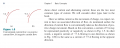 Just responding to this post arbitrarily to show my book. You see the author says, the direction of current flow is conventionally taken as the direction of positive charge movement. Then says you can represent is as positive one way or negative the other. Well how can that be possible, both of those pictures are representing the direction of current flow, one has a positive value one has a negative value, they can't both be in the direction of positive charge. The author obviously means the direction of (positive) current flow is conventionally taken as the direction of positive charge movement. But when you explain it this way and leave out the word positive, you are relying on people who are learning this for the first time to understand it means positive. Sure, many of them will know that, but some will not and there's no reason to leave out the positive just for the first time. Its easily fixed just by putting a statement in there that anytime the book references current with no adjectives, from that point on it means the current is positive.
I mean you have to at least agree that it wouldn't hurt to instead word it that the convention would say instead that positive current is in the direction of positive charge, or current is in the direction of positive charge (where current implies positive unless otherwise specified). There is no harm in making sure we explain it like this or the way Riedel does. Again, like you said though this is just my opinion, so you may not agree and that's okayI must say, It's not about you. Countless people have advanced far beyond this point without a tiny fraction of the angst seen here.
Both of those are for the same current using the same convention.View attachment 210106Just responding to this post arbitrarily to show my book. You see the author says, the direction of current flow is conventionally taken as the direction of positive charge movement. Then says you can represent is as positive one way or negative the other. Well how can that be possible, both of those pictures are representing the direction of current flow, one has a positive value one has a negative value, they can't both be in the direction of positive charge. The author obviously means the direction of (positive) current flow is conventionally taken as the direction of positive charge movement. But when you explain it this way and leave out the word positive, you are relying on people who are learning this for the first time to understand it means positive. Sure, many of them will know that, but some will not and there's no reason to leave out the positive just for the first time. Its easily fixed just by putting a statement in there that anytime the book references current with no adjectives, from that point on it means the current is positive.
Again (and again, and again), regardless of what convention I use, I can ALWAYS flip a coin when I am deciding which direction to draw my reference arrow for ANY particular current. The arrow says NOTHING about what direction the charge is actually moving, it merely tells me how to interpret the signed value that come up with for the current associated with that arrow. I At the time I am making this decision, I may not know what direction the current is actually flowing. Or the current may vary in time and so at some times it is flowing in one direction and at other times it is flowing in the other direction.
ALL I am establishing when I draw my reference arrow in a particular direction is that WHEN the value associated with that arrow HAPPENS to be a positive value, that the current is flowing in the direction of the arrow.
Let's assume that our current is a beam of positively charged ions traveling upward and to the right under the influence of a magnetic field (thus the curvature).
The left hand drawing says that because the current is +5A in the upward direction, that the net change in charge that passes from the lower end to the upper end is +5 coulombs per second. For simplicity sake, let's assume that the two ends of the path are charge reservoirs (such as a really big metal sphere) that start out neutral along the path is some device that can transfer charge from one to the other where it collects (think of something like a Van der Graaf generator).
What is the value of Q21 = Q2-Q1 after 10 seconds where Q1 is the charge on the upper sphere and Q2 is the charge on the lower sphere.
Per the left diagram:
Q1 = -I·T
The minus sign is because the reference direction of the arrow is leaving sphere 1.
Q2 = +I·T
The plus sign is because the reference direction of the arrow is approaching sphere 2.
Q21 = Q2 - Q1 = (+I·T) - (-I·T) = +2I·T
Since I = +5A = +5 C/s and T = 10 s we end up with
Q12 = +2I·T = +2(5 C/s)(10 s) = +100 C
So sphere 2 is 100 C more positive than sphere 1.
What about the right hand diagram?
Q1 = +I·T
The plus sign is because the reference direction of the arrow is approaching sphere 1.
Q2 = -I·T
The minus sign is because the reference direction of the arrow is leaving sphere 2.
Q21 = Q2 - Q1 = (-I·T) - (+I·T) = -2I·T
Since I = -5A = +5 C/s and T = 10 s we end up with
Q12 = -2I·T = +2(-5 C/s)(10 s) = +100 C
So sphere 2 is 100 C more positive than sphere 1.
The exact same result.
I agree, the net charge on the spheres will be the same either way you use it. The positive arrow one way and the negative arrow the other are both conventional current, completely agreed. But if those arrows are both conventional current and the statement before those is “current is in the direction of positive charge”, that can only be true for one of the arrows. We know it is referring to the positive one because as you said no adjectives implies positive. But will every first year student know that, I don’t think so? It just seems like an incomplete way to define it. For it to be 100% correct you have to be interpreting it the right way. If someone reads “current points in the direction of positive charge” they could look at the arrow with a negative value and say I guess that points in the direction of positive charge because this arrow represents current, which would not be true but with a literal reading of the statement it can be hard. You have to read that statement knowing when you see the word current it means positive current. If you know that then you could see the negative arrow and say okay positive charge direction is the other way because that statement is only true for positive current. But without that specificity, and being alone reading a book there’s not going to be anyone to tell that reader they’re not looking at it the right way and they should interpret the statement about current as if it were always meant to be positive unless stated otherwise. I just don’t get why someone would not put the word positive in there just for safety purposes. Maybe when you have been saying that it always implies positive, everyone knows that, including first year students, but I might just be the outlier who needs more clarification the book doesn’t provide. It doesn’t say that when they state current is in the direction of positive charge, that the current must be positive to be true. You either have to know that inherently or the book has to tell you. As you said many times before, any experience person knows that the word alone always implies positive I guess I’m just weirdBoth of those are for the same current using the same convention.
Again (and again, and again), regardless of what convention I use, I can ALWAYS flip a coin when I am deciding which direction to draw my reference arrow for ANY particular current. The arrow says NOTHING about what direction the charge is actually moving, it merely tells me how to interpret the signed value that come up with for the current associated with that arrow. I At the time I am making this decision, I may not know what direction the current is actually flowing. Or the current may vary in time and so at some times it is flowing in one direction and at other times it is flowing in the other direction.
ALL I am establishing when I draw my reference arrow in a particular direction is that WHEN the value associated with that arrow HAPPENS to be a positive value, that the current is flowing in the direction of the arrow.
Let's assume that our current is a beam of positively charged ions traveling upward and to the right under the influence of a magnetic field (thus the curvature).
The left hand drawing says that because the current is +5A in the upward direction, that the net change in charge that passes from the lower end to the upper end is +5 coulombs per second. For simplicity sake, let's assume that the two ends of the path are charge reservoirs (such as a really big metal sphere) that start out neutral along the path is some device that can transfer charge from one to the other where it collects (think of something like a Van der Graaf generator).
What is the value of Q21 = Q2-Q1 after 10 seconds where Q1 is the charge on the upper sphere and Q2 is the charge on the lower sphere.
Per the left diagram:
Q1 = -I·T
The minus sign is because the reference direction of the arrow is leaving sphere 1.
Q2 = +I·T
The plus sign is because the reference direction of the arrow is approaching sphere 2.
Q21 = Q2 - Q1 = (+I·T) - (-I·T) = +2I·T
Since I = +5A = +5 C/s and T = 10 s we end up with
Q12 = +2I·T = +2(5 C/s)(10 s) = +100 C
So sphere 2 is 100 C more positive than sphere 1.
What about the right hand diagram?
Q1 = +I·T
The plus sign is because the reference direction of the arrow is approaching sphere 1.
Q2 = -I·T
The minus sign is because the reference direction of the arrow is leaving sphere 2.
Q21 = Q2 - Q1 = (-I·T) - (+I·T) = -2I·T
Since I = -5A = +5 C/s and T = 10 s we end up with
Q12 = -2I·T = +2(-5 C/s)(10 s) = +100 C
So sphere 2 is 100 C more positive than sphere 1.
The exact same result.
So, how would you interpret the left hand figure, the one with 5A, if you were told that the value of the current has changed and is now -5A?I agree, the net charge on the spheres will be the same either way you use it. The positive arrow one way and the negative arrow the other are both conventional current, completely agreed. But if those arrows are both conventional current and the statement before those is “current is in the direction of positive charge”, that can only be true for one of the arrows. We know it is referring to the positive one because as you said no adjectives implies positive. But will every first year student know that, I don’t think so? It just seems like an incomplete way to define it. For it to be 100% correct you have to be interpreting it the right way. If someone reads “current points in the direction of positive charge” they could look at the arrow with a negative value and say I guess that points in the direction of positive charge because this arrow represents current, which would not be true but with a literal reading of the statement it can be hard. You have to read that statement knowing when you see the word current it means positive current. If you know that then you could see the negative arrow and say okay positive charge direction is the other way because that statement is only true for positive current. But without that specificity, and being alone reading a book there’s not going to be anyone to tell that reader they’re not looking at it the right way and they should interpret the statement about current as if it were always meant to be positive unless stated otherwise. I just don’t get why someone would not put the word positive in there just for safety purposes. Maybe when you have been saying that it always implies positive, everyone knows that, including first year students, but I might just be the outlier who needs more clarification the book doesn’t provide. It doesn’t say that when they state current is in the direction of positive charge, that the current must be positive to be true. You either have to know that inherently or the book has to tell you. As you said many times before, any experience person knows that the word alone always implies positive I guess I’m just weird
If the arrow stayed in the same direction I would say that the arrow represents a net negative charge movement of -5C/s in the direction of the arrow and thus an associated net positive charge movement of 5C/s opposite the arrow.So, how would you interpret the left hand figure, the one with 5A, if you were told that the value of the current has changed and is now -5A?
I might also say that the direction of the positive current has flipped. (I believe this statement could leave out the positive because if the value changed for the arrow from + to negative, either way you look at it both the positive current flipped direction and the negative current direction flipped, so I think in this case it would be fine to also say just the current has changed direction)
If my response was just the direction of current has flipped, how would you personally interpret that.
And what happens if you apply either of those interpretations to the right hand diagram in that figure?If the arrow stayed in the same direction I would say that the arrow represents a net negative charge movement of -5C/s in the direction of the arrow and thus an associated net positive charge movement of 5C/s opposite the arrow.
Do you not get exactly the same meaning as the left hand figure?
The direction of positive current has not flipped. The sign of the current has meaning only in relation to a reference direction. The reference direction is defined by the direction the reference arrow is pointing, which has not changed.I might also say that the direction of the positive current has flipped.
Think in terms of velocity. If I define my coordinate system so that the velocity is to the right when it is positive and I now tell you that the velocity of an object is -10 m/s, is it not still the case that positive velocity is to the right? Our object may not be moving to the right, but that's fine since our object does not have a positive velocity.
Do you mean if this had been your response to my question? That's what I will assume.If my response was just the direction of current has flipped, how would you personally interpret that.
That would be fine because that is certainly one possible cause for the current going from +5 A to -5 A. Another possible cause would be that the ion beam is still going in the same physical direction but that now the ions are negatively charged.
But I think I see what might be tripping you up right now.
The two responses:
"The direction of current has flipped," and, "The direction of positive current has flipped," are not equivalent in this case. You are overgeneralizing from the prior discussion that there is an unstated "positive" adjective when we talk about the meaning of a reference current.
The meanings of words change depending on the context of use. Consider the meaning of "lost" in the following two sentences:
I lost my keys.
I lost my wallet.
The word "lost" should most likely be interpreted as meaning that I don't know where the item mentioned is presently located.
But what about:
I lost my house.
It is unlikely that I don't know where the house is presently located and far more likely that I am no longer the owner of the house. Previously what I "lost" was the location of the item, now what I have lost is the ownership of the item.
How about:
I lost my father.
Now there is a strong likelihood that what I am referring to is that my father has died.
Thus we can't make up a single definition of the word "lost" that we can blindly use -- we have to consider the context of use and decide which of several possibilities is most appropriate. In doing so, we could be wrong.
For instance:
I lost my child.
Any of these three are quite reasonable interpretations and just knowing the item isn't enough to make a good case for one over the others. But what if I provide more context:
I lost my child in an amusement park.
I lost my child in the divorce.
I lost my child in the car accident.
In the case of our current (no pun intended) discussion, we have different kinds of currents.
We have physical current, which consists (for our purposes) of charges that are moving.
We have the symbolic (or reference) current, which is a definition of the location of the current and its polarity.
We have the actual (or numerical) current, which is the value of the current.
The combination of the actual current and the reference current, along with the convention we are using and knowledge about the system in question, tells us what the physical current is.
So when I ask, "What if the current changes from +5 A to -5 A?"
By far the most likely way to interpret that is, "What if the actual current changes from +5 A to -5 A?"
So you respond, "The direction of the current has flipped."
Which current are we talking about. Since the question is most likely talking about actual current, the answer is most reasonable talking about actual current, so it is the same as, "The direction of the actual current has flipped." That would be fine.
Now consider what happens if you blindly add an unstated "positive" into the mix and respond, "The direction of the positive current has flipped."
Since the question is talking about actual current, we try that one first and interpret it as, "The direction of the positive actual current has flipped." The direction of positive actual current has not flipped. Nothing has changed about positive actual current. But we no longer have a positive actual current, we have a negative actual current. So making this statement makes little sense, hence you probably aren't talking about actual current.
So we try the next most likely and interpret it as, "The direction of the positive reference current has flipped." That would be wrong -- the reference current hasn't changed at all.
So you can't always blindly throw in a "positive" if a polarity isn't explicitly stated, you must consider the context of the discussion to determine if it is appropriate or whether it would change the interpretation by forcing a context switch.
Okay, I think I get what you’re saying. But what my intention is with saying the direction of positive current changes in this case means that when the current was 5A the positive current was flowing from top to bottom. Then when our value in that reference direction is now negative the positive current is now flowing from bottom to top. I think what you got from my statement was that when I said positive current changed direction that I could have meant that rather than positive current being in the direction of positive charge, it now changed to being in the direction of negative charge. This is not what I meant to convey. And I actually do agree with you. In this case making those statements with the positive there, it makes it seem as if we are saying we are redefining current. If we just simply say the current has changed directions, than this implies that whatever way you were thinking of the current, it is now going the other way. So if you were thinking of it being positive from top to bottom it is now positive from bottom to top. If I said the current changed direction because we had a positive arrow pointing from top to bottom and now we have a negative arrow pointing from top to bottom. This mean that the value we had for our current in our original reference direction is now the correct value for the opposite direction. If we write the actual current (value of the current changed direction) it makes sense because what was our value? It was +5A, what is it now? -5A, therefore the +5A is going the other way. So the actual current AKA value we had has changed from one direction to the other. Am I understanding my mistake correctly? And was the alternate statement about positive and negative net charge flow correct?And what happens if you apply either of those interpretations to the right hand diagram in that figure?
Do you not get exactly the same meaning as the left hand figure?
The direction of positive current has not flipped. The sign of the current has meaning only in relation to a reference direction. The reference direction is defined by the direction the reference arrow is pointing, which has not changed.
Think in terms of velocity. If I define my coordinate system so that the velocity is to the right when it is positive and I now tell you that the velocity of an object is -10 m/s, is it not still the case that positive velocity is to the right? Our object may not be moving to the right, but that's fine since our object does not have a positive velocity.
Do you mean if this had been your response to my question? That's what I will assume.
That would be fine because that is certainly one possible cause for the current going from +5 A to -5 A. Another possible cause would be that the ion beam is still going in the same physical direction but that now the ions are negatively charged.
But I think I see what might be tripping you up right now.
The two responses:
"The direction of current has flipped," and, "The direction of positive current has flipped," are not equivalent in this case. You are overgeneralizing from the prior discussion that there is an unstated "positive" adjective when we talk about the meaning of a reference current.
The meanings of words change depending on the context of use. Consider the meaning of "lost" in the following two sentences:
I lost my keys.
I lost my wallet.
The word "lost" should most likely be interpreted as meaning that I don't know where the item mentioned is presently located.
But what about:
I lost my house.
It is unlikely that I don't know where the house is presently located and far more likely that I am no longer the owner of the house. Previously what I "lost" was the location of the item, now what I have lost is the ownership of the item.
How about:
I lost my father.
Now there is a strong likelihood that what I am referring to is that my father has died.
Thus we can't make up a single definition of the word "lost" that we can blindly use -- we have to consider the context of use and decide which of several possibilities is most appropriate. In doing so, we could be wrong.
For instance:
I lost my child.
Any of these three are quite reasonable interpretations and just knowing the item isn't enough to make a good case for one over the others. But what if I provide more context:
I lost my child in an amusement park.
I lost my child in the divorce.
I lost my child in the car accident.
In the case of our current (no pun intended) discussion, we have different kinds of currents.
We have physical current, which consists (for our purposes) of charges that are moving.
We have the symbolic (or reference) current, which is a definition of the location of the current and its polarity.
We have the actual (or numerical) current, which is the value of the current.
The combination of the actual current and the reference current, along with the convention we are using and knowledge about the system in question, tells us what the physical current is.
So when I ask, "What if the current changes from +5 A to -5 A?"
By far the most likely way to interpret that is, "What if the actual current changes from +5 A to -5 A?"
So you respond, "The direction of the current has flipped."
Which current are we talking about. Since the question is most likely talking about actual current, the answer is most reasonable talking about actual current, so it is the same as, "The direction of the actual current has flipped." That would be fine.
Now consider what happens if you blindly add an unstated "positive" into the mix and respond, "The direction of the positive current has flipped."
Since the question is talking about actual current, we try that one first and interpret it as, "The direction of the positive actual current has flipped." The direction of positive actual current has not flipped. Nothing has changed about positive actual current. But we no longer have a positive actual current, we have a negative actual current. So making this statement makes little sense, hence you probably aren't talking about actual current.
So we try the next most likely and interpret it as, "The direction of the positive reference current has flipped." That would be wrong -- the reference current hasn't changed at all.
So you can't always blindly throw in a "positive" if a polarity isn't explicitly stated, you must consider the context of the discussion to determine if it is appropriate or whether it would change the interpretation by forcing a context switch.
Last edited:
NO!Okay, I think I get what you’re saying. But what my intention is with saying the direction of positive current changes in this case means that when the current was 5A the positive current was flowing from top to bottom. Then when our value in that reference direction is now negative the positive current is now flowing from bottom to top.
The direction of positive current is defined by the direction of the reference arrow, which has not changed! ALL that has changed is the VALUE of the actual current (per the premise of the current discussion: https://forum.allaboutcircuits.com/threads/conventional-vs-electron-flow.166883/post-1523682).
Positive current is in the direction of the arrow. Period. That is what the arrow's direction tells us. It does not matter what the value is, if that value is positive, the current is in the direction of the arrow. If that value is negative, it is in the opposite direction.
Furthermore, we are talking about the left hand figure -- Figure 1.5(a) -- which show a reference current flowing from bottom to top. Let's be consistent with that figure.
Think about the inherent contradiction in what you are saying.
If the current is +5 A, you are saying that THIS current is flowing from in the direction of the arrow (positive charges flowing from bottom to top) because it is positive.
So what if it changes to -5 A? You are claiming that because THIS value happens to be negative, that somehow the meaning of a positive value changes. Okay. What if that were true? It would mean that a positive value now means that current is flowing in the direction opposite the arrow, or that positive charges are moving from top to bottom. But if a positive value now means top to bottom, what must a negative value mean? It must mean the other way, or that positive charges are moving bottom to top. So the consequence is that +5A and -5 A both somehow mean that positive charges are moving from bottom to top. Well, then what value of current would we use to indicate that positive charges are moving from top to bottom?
The process and interpretation are SIMPLE!
You use some method to decide what direction you are going to orient your reference arrow. You can flip a coin!
You draw the reference current with the arrow pointing in the direction you arbitrarily decided.
WHEN and IF the VALUE of that current happens to be positive, it means EITHER that positive charges are flowing in the direction of the arrow OR that negative charges are flowing in the direction opposite to the arrow.
WHEN and IF the VALUE of that current happens to be negative, it means EITHER that positive charges are flowing in the direction opposite to the arrow OR that negative charges are flowing in the direction of the arrow.
The sign of the VALUE of the current has NO effect on this interpretation, it is completely dictated by the direction of the arrow that defines the reference current.
I wasn’t meaning to redefine positive current reference. The arrow is drawn bottom to top as you say and has a positive value. If that value changes to a negative value, that means the positive current value arrow is no longer pointing from bottom to top(the arrow pointing bottom to top is now associated with a negative value), it is now pointing from top to bottom (if you’re reference direction also changes from top to bottom). If the value is originally a positive current from bottom to top and gets changed to a negative value from bottom to top, you can not still say that the current value from bottom to top is positive. It did have a positive value, and now it has a negative value, which inherently means that the current in the other reference direction (top to bottom) is now the one that has a positive value (whereas that reference would have begun negative). When I’m saying that changing the value from +5A to -5A changes the direction of positive current, I am saying that to get a positive current you can not leave the reference arrow pointing Bottom to top(this reference arrow will no longer give you a positive current), to now have a positive current you must point your positive direction reference from top to bottom. Not sure what I am missing there.NO!
The direction of positive current is defined by the direction of the reference arrow, which has not changed! ALL that has changed is the VALUE of the actual current (per the premise of the current discussion: https://forum.allaboutcircuits.com/threads/conventional-vs-electron-flow.166883/post-1523682).
Positive current is in the direction of the arrow. Period. That is what the arrow's direction tells us. It does not matter what the value is, if that value is positive, the current is in the direction of the arrow. If that value is negative, it is in the opposite direction.
Furthermore, we are talking about the left hand figure -- Figure 1.5(a) -- which show a reference current flowing from bottom to top. Let's be consistent with that figure.
Think about the inherent contradiction in what you are saying.
If the current is +5 A, you are saying that THIS current is flowing from in the direction of the arrow (positive charges flowing from bottom to top) because it is positive.
So what if it changes to -5 A? You are claiming that because THIS value happens to be negative, that somehow the meaning of a positive value changes. Okay. What if that were true? It would mean that a positive value now means that current is flowing in the direction opposite the arrow, or that positive charges are moving from top to bottom. But if a positive value now means top to bottom, what must a negative value mean? It must mean the other way, or that positive charges are moving bottom to top. So the consequence is that +5A and -5 A both somehow mean that positive charges are moving from bottom to top. Well, then what value of current would we use to indicate that positive charges are moving from top to bottom?
The process and interpretation are SIMPLE!
You use some method to decide what direction you are going to orient your reference arrow. You can flip a coin!
You draw the reference current with the arrow pointing in the direction you arbitrarily decided.
WHEN and IF the VALUE of that current happens to be positive, it means EITHER that positive charges are flowing in the direction of the arrow OR that negative charges are flowing in the direction opposite to the arrow.
WHEN and IF the VALUE of that current happens to be negative, it means EITHER that positive charges are flowing in the direction opposite to the arrow OR that negative charges are flowing in the direction of the arrow.
The sign of the VALUE of the current has NO effect on this interpretation, it is completely dictated by the direction of the arrow that defines the reference current.
And just to clarify the other point about when to interpret the right way:“if that value is positive, the current is in the direction of the arrow” This quote is a situation where you are inherently putting the word positive in. in other words, if the value is positive, the positive current is in the direction of the arrow. The reader of this quote should not see the word current and wonder if that could be negative, they should assume positive?
Then stop doing it.I wasn’t meaning to redefine positive current reference.
Maybe this will help.
If I have -5 A flowing from bottom to top (those three words are merely a verbal description of the reference arrow), then when I say that this is the same as +5A flowing from top to bottom (those three words are a verbal description of a DIFFERENT reference arrow) I have changed the reference current from being bottom to top to being top to bottom.
When you say that because the value of the current flowing from bottom to top is negative that means that positive current is flowing top to bottom, that IS a redefinition of the reference arrow.
Imagine two reference arrows being drawn on that path, one flowing bottom to top (call it Ifred) and one flowing from top to bottom (call it Isue). If I fred is -5 A, then Isue will be +5 A. But Isue is using a different reference current than Ifred is. A positive current for Ifred is STILL from bottom to top -- it's just that Ifred happens to not be positive. If you want to say that positive current is from top to bottom, you have to switch references and use Isue, because it is Isue that is positive, not Ifred.
Exactly and if you are using Isue and someone reverses the battery and all the sudden Isue holds a negative value, the reference direction may not change, but the direction of current that holds a positive value will be opposite of your positive reference now. This is what I meant in response to your initial question. You change the value to negative that means you are changing the reference direction that will give you positive current, but it also means you are inherently changing the reference direction that gives you negative current. Therefore, it doesn’t help to specify positive in this case, you are just changing the direction of current in general (both positive and negative at the same time) and again in this case I am representing the values when I say Positive and negative. I think the word current in the context of talking about direction is fine because if you are changing the direction a positive value goes you are also changing the value a negative value goes, there’s no way to mess up. The time to interpret the word as being positive is in the definition phase. This would apply to the statement of my textbook and I even watched an electro boom 101 video recently where he says we stuck with the convention that current and electrons move in the opposite direction. But what if someone watching the video always thinks in negative current, they won’t understand his statement. In cases like these you have to understand it’s a time when the speaker means current is positive. There’s no way that a negative current and a positive current in the same circuit can both be moving opposite electrons, but we know which one is doing what. Again, this I didn’t really get until you explained it, and I definitely see how there’s different times where inferring positive is critical and times where it doesn’t matter a bit. For that I say thank you, I wish I could repay anyone who answered on here but I’m not sure how. Again, call me out if any of the above is wrong, but I think I have it straight now (hopefully).Then stop doing it.
Maybe this will help.
If I have -5 A flowing from bottom to top (those three words are merely a verbal description of the reference arrow), then when I say that this is the same as +5A flowing from top to bottom (those three words are a verbal description of a DIFFERENT reference arrow) I have changed the reference current from being bottom to top to being top to bottom.
When you say that because the value of the current flowing from bottom to top is negative that means that positive current is flowing top to bottom, that IS a redefinition of the reference arrow.
Imagine two reference arrows being drawn on that path, one flowing bottom to top (call it Ifred) and one flowing from top to bottom (call it Isue). If I fred is -5 A, then Isue will be +5 A. But Isue is using a different reference current than Ifred is. A positive current for Ifred is STILL from bottom to top -- it's just that Ifred happens to not be positive. If you want to say that positive current is from top to bottom, you have to switch references and use Isue, because it is Isue that is positive, not Ifred.
Side note: the commenter below made me look at some of those other posts and I saw you say in one that using electron convention (meaning like the navy convention), that you would get the opposite voltage drops across resistors as conventional. The voltages should be the same no matter what right?
Last edited:

Unbelievable, how limited human language is... and yet we've gotten this far, technologically speaking. A simple search on this website about this same subject reveals a number of lengthy discussions related to this same topic. It's amazing to me how reality can be described from more than one point of view and yet not fall into logic contradictions... other than the ones created by semantics itself.
Exactly, it’s kind of crazy, I find these conversations helpful, and I’m sure plenty find them very annoying. It’s weird though some things we have to make sure everybody agrees to talk the same way about, and some things seem to just naturally hardwire themselves into our brain. And some things hardwire themselves into our brain because someone made a convention to think of them that way. WBahn seems to have an extremely good hold on this kind of thing, so I’m glad he was on this site in my case,Unbelievable, how limited human language is... and yet we've gotten this far, technologically speaking. A simple search on this website about this same subject reveals a number of lengthy discussions related to this same topic. It's amazing to me how reality can be described from more than one point of view and yet not fall into logic contradictions... other than the ones created by semantics itself.
I have to be a bit careful here because the fine details of how people use "electron flow" current are very inconsistent because there are many places where things can be patched up by judicious application of the magical mystery minus signs. How a given person solves a specific problem gives hints as to where they are applying them (as a consequence of the equations they choose to use and how they use them) and it is not unusual for the same person to use them in different places when solving different types of problems. As long as they don't try to solve a larger problem that includes both types of problems as part of it, they often get by just fine and they may even manage to go their entire career without running into this potential buzz saw; they either limit themselves (or their supervisor limits them) to working on problems that don't exceed their complexity limit, or they develop a strong ability to do a good job of breaking bigger problems down into smaller problems such that each smaller problem is within their limits.Side note: the commenter below made me look at some of those other posts and I saw you say in one that using electron convention (meaning like the navy convention), that you would get the opposite voltage drops across resistors as conventional. The voltages should be the same no matter what right?
But I have seen several times when someone gets completely messed up on a more complicated problem that can't be easily partitioned to separate these issues because they are being internally inconsistent with where they are applying the magical mystery minus signs and because they don't realize they are applying them, they can't see where things are going off the rails.
All of that just to say that whether they would need to flip the polarities of all voltages in their circuit depends on the details of how they are applying their magical mystery minus signs on that problem.
In general, if they insist on using positive values for currents flowing in the same direction as the electrons in a circuit, then they are treating electrons as having a positive charge. There's really no getting around that. If they then want to claim that, absent other forces, charge wants to flow from higher potential to lower potential, then the direct consequence of that is that what we currently call the negative terminal of a battery is at a higher potential than the positive terminal of a battery. That means that if we assign the voltage zero to what we currently call the negative terminal of the battery, then the voltage at the terminal that we currently call the positive terminal will have a negative value since it is at a lower potential than zero.
There is no shortage of electron-flow texts that explicitly state that the negative terminal is at a higher potential than the positive terminal (we saw one of them in this thread since it was revived) precisely so that they can claim that electrons flow through a circuit from higher potential to lower potential. But voltage IS the measure of electrical potential, so they are saying that the voltage of the negative terminal of a battery is higher than the voltage of the positive terminal of that battery.
How do they reconcile this inconsistency? Simple -- they apply a magical mystery minus sign. They don't see this because they are sloppy with the math.
If they really want to avoid using any magical mystery minus signs and they want to treat the electron is if it is positive charged and if they want to keep the voltages with the same polarities that they currently have, then they have to modify many of the fundamental laws of physics, including Maxwell's Equations, to incorporate the necessary magical mystery minus signs, making them merely mystery minus signs (no obvious reason why they are there), but no longer magical (they don't get applied out of thin air in order to make things work out as if by magic).
But none of them want to do this (I have yet to find a single person that does, anyway) and all of them still want a positive amount of coulombs per second flowing onto an isolated plate to magically yield a number of coulombs on the plate that is algebraically decreasing with time. Patching the equations to take the magic out of this doesn't solve all the problems because now we can't know when "coulombs" is referring to electrons that behave as if they were positively charges and when it refers to the electrons that behave as if they were negatively charged.
What would be the best way to resolve this is to create a new unit, let's call it the backoumb (backwards coulomb) such that 1 C = -1 B (let's assume that B isn't used for anything else). Then 1 A is still 1 C/s (which all of the electron-flow people insist it is) but this is equal to -1 B/s, which we can the revampere (reverse ampere) such that 1 A = -1 R (same caveat as before).
Now they can point their arrows from negative to positive and calculate their currents in revamps using positive values to their heart's content.
I actually knew a physicist (a professor at my undergraduate alma mater,but now I can't recall which of three or four possible candidates it actually was) that did just this. He worked a lot with ion beams of both polarities and so he had discovered that defining these units (he named them after his kids, if I remember) helped him make far fewer mistakes in his work because which he used depended on the type of beam and it both made it easier for him to visualize things, but also to avoid silly mistakes because of a bunch of minus signs flowing through the work and to catch issues because a negative value usually meant something was wrong. This is very much akin to using resistance (in ohms) and conductance (in seimens or mhos) for largely the same reasons.
Last edited:
Ah gotcha, so some of those people who use the electron flow convention also do so in such a way where they redefine voltage as well. Meaning they change the definition that a numerically higher voltage (high positive number) illustrates now a high potential energy for negative charge and not positive charge. Whereas the way we have it now a very large in magnitude but negative number would be where an electron has the higher potential energy. I have never seen them do this for voltage too; usually they do it in such a way the voltages are the same just with their current values multiplied by -1. Or perhaps they don’t change it numerically, but just talk about it in a different way. Along with that, was the rest of my post accurate?I have to be a bit careful here because the fine details of how people use "electron flow" current are very inconsistent because there are many places where things can be patched up by judicious application of the magical mystery minus signs. How a given person solves a specific problem gives hints as to where they are applying them (as a consequence of the equations they choose to use and how they use them) and it is not unusual for the same person to use them in different places when solving different types of problems. As long as they don't try to solve a larger problem that includes both types of problems as part of it, they often get by just fine and they may even manage to go their entire career without running into this potential buzz saw; they either limit themselves (or their supervisor limits them) to working on problems that don't exceed their complexity limit, or they develop a strong ability to do a good job of breaking bigger problems down into smaller problems such that each smaller problem is within their limits.
But I have seen several times when someone gets completely messed up on a more complicated problem that can't be easily partitioned to separate these issues because they are being internally inconsistent with where they are applying the magical mystery minus signs and because they don't realize they are applying them, they can't see where things are going off the rails.
All of that just to say that whether they would need to flip the polarities of all voltages in their circuit depends on the details of how they are applying their magical mystery minus signs on that problem.
In general, if they insist on using positive values for currents flowing in the same direction as the electrons in a circuit, then they are treating electrons as having a positive charge. There's really no getting around that. If they then want to claim that, absent other forces, charge wants to flow from higher potential to lower potential, then the direct consequence of that is that what we currently call the negative terminal of a battery is at a higher potential than the positive terminal of a battery. That means that if we assign the voltage zero to what we currently call the negative terminal of the battery, then the voltage at the terminal that we currently call the positive terminal will have a negative value since it is at a lower potential than zero.
There is no shortage of electron-flow texts that explicitly state that the negative terminal is at a higher potential than the positive terminal (we saw one of them in this thread since it was revived) precisely so that they can claim that electrons flow through a circuit from higher potential to lower potential. But voltage IS the measure of electrical potential, so they are saying that the voltage of the negative terminal of a battery is higher than the voltage of the positive terminal of that battery.
How do they reconcile this inconsistency? Simple -- they apply a magical mystery minus sign. They don't see this because they are sloppy with the math.
I don't know of anyone that knowingly redefine voltage, but the way they use things it is often the case that they would need to in order to be internally consistent (i.e., be able to dispense with the magical mystery minus signs).Ah gotcha, so some of those people who use the electron flow convention also do so in such a way where they redefine voltage as well. Meaning they change the definition that a numerically higher voltage (high positive number) illustrates now a high potential energy for negative charge and not positive charge. Whereas the way we have it now a very large in magnitude but negative number would be where an electron has the higher potential energy. I have never seen them do this for voltage too; usually they do it in such a way the voltages are the same just with their current values multiplied by -1. Or perhaps they don’t change it numerically, but just talk about it in a different way. Along with that, was the rest of my post accurate?
Saying that the negative terminal of the battery is at a higher potential than the positive terminal is simply wrong, unless you redefine the laws of physics to result in the polarities of all of our batteries (and every other voltage) to swap. This is perfectly valid, by the way, since the choice was arbitrary to begin with. But they won't even attempt to go there.
Saying that the negative terminal of the battery is at a higher potential than the positive terminal for electrons is a move in the right direction, but it still ignores that electric potential is a property of space (assuming a conservative electric field, which is reasonable for this discussion) and that it is independent of whether the charges in that space are positive or negative (assuming those charges are having negligible effect on the electric fields in that space, which is usually the case for practical circuits).
What they should say (and some do) is that, owing to their negative charge, electrons have a higher electrical potential energy at the negative terminal of the battery than they do at the positive terminal.
- Status
- Not open for further replies.