Controlling 120VAC with KU-6399 Relay

Thread Starter

Starfox

Joined Nov 17, 2018
18
Hello forum,
I picked up a Potter & Brumfield KU-6399 relay earlier today that I was hoping to use to switch a 120VAC motor that I have for a project. The datasheet included below says that the voltage for the coil at 25C is 6 to 110VDC and 6 to 240VAC. Also that it must operate 75% of nominal voltage or less. Furthermore it also specifies that for High Voltage DC Switching the coil voltage is: 240VAC or 110VDC. In addition, on the relay itself it specifies 1/3HP, 120VAC; 1/2HP, 250VAC; 10A, 250VAC; 10A 28VDC.

I preferably would like to operate the switching of this relay at as low of power as possible. Can anyone please clarify what the minimum DC requirement would be to operate this relay? I am trying to switch an AC motor at as low of a coil input as possible (to drive with a smaller analog circuit). I should also note I have some IRF510/IRF9510 Power MOSFET (if these would be any use to drive the switching). Thank you for your time!
 

Attachments

Reloadron

Joined Jan 15, 2015
7,892
OK but what you need to do is note the complete part number. For example KU-6399 is a good start. The complete part number will give you the coil voltage for your specific relay. KU is an open relay and KUP is an enclosed relay. Following the dash is the contact arrangement, followed by a letter which is A = AC coil and D = DC coil, followed by a number which is the mounting arrangement, followed by another number which is Terminal & Contact Material, followed by another number Gold Flashed Contact Option and finally the last number which is the coil voltage. All of the relays in that data sheet work that way as to part numbers.

Your number of KU-6399 makes no sense other than KU telling us it is an open and not enclosed relay. Read the data sheet you linked to, there has to be more to your part number. The last digits preceded by a dash should be the coil voltage. The data sheet you linked to is not for the relay you have, it is not for a KU-6399, at least I can't find that part number in that data sheet. I also see the part number as you listed it but can't find a data sheet with the coil voltage?
In addition, on the relay itself it specifies 1/3HP, 120VAC; 1/2HP, 250VAC; 10A, 250VAC; 10A 28VDC.
That is the contact ratings for motors, do you see a coil voltage anywhere? Maybe printed on the coil?

Ron
 

Thread Starter

Starfox

Joined Nov 17, 2018
18
OK but what you need to do is note the complete part number. For example KU-6399 is a good start. The complete part number will give you the coil voltage for your specific relay. KU is an open relay and KUP is an enclosed relay. Following the dash is the contact arrangement, followed by a letter which is A = AC coil and D = DC coil, followed by a number which is the mounting arrangement, followed by another number which is Terminal & Contact Material, followed by another number Gold Flashed Contact Option and finally the last number which is the coil voltage. All of the relays in that data sheet work that way as to part numbers.

Your number of KU-6399 makes no sense other than KU telling us it is an open and not enclosed relay. Read the data sheet you linked to, there has to be more to your part number. The last digits preceded by a dash should be the coil voltage. The data sheet you linked to is not for the relay you have, it is not for a KU-6399, at least I can't find that part number in that data sheet. I also see the part number as you listed it but can't find a data sheet with the coil voltage?

That is the contact ratings for motors, do you see a coil voltage anywhere? Maybe printed on the coil?

Ron
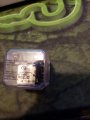
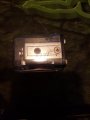
Thank you very much for your informative response Ron! I am very new to using anything involving relays, so that information is very good to know. The coil does not have any voltage information printed on it. At the top of the relay it is labeled "Potter & Brumfield, KU-6399-1, KUP-7A15, 120V 50/60 Hz, 1/3HP, 120VAC; 1/2HP, 250VAC; 10A, 250VAC; 10A 28VDC, 109P662 REV.C, MADE IN MEXICO, 4-08-91." with 911701 stamped in yellow and 6399 written in what looks like sharpie. So I am assuming 7 is the contact arrangement, the coil is AC, 15 is the mounting arrangement? I am unsure how to distinguish the rest, maybe this other information will help?
 

Attachments

LesJones

Joined Jan 8, 2017
4,509
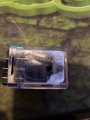
Measure the coil resistance and see which version of the relay it matches. Also relays with AC coils normaly have a copper shading ring on the end of the coil. From the middle picture in post #3 it looks like condensation or some other contamination inside the relay case.

Les.
 

Reloadron

Joined Jan 15, 2015
7,892
OK, much better and looks like you have a 120 VAC 50/60 Hz coil. So you have an AC motor along with a 120 VAC relay coil. The nominal DC coil resistance should be about 2,250 ohms and coil current will be in mA. At 120 VAC motor voltage you should be OK up to a 1/3 HP motor.

Ron
 

Thread Starter

Starfox

Joined Nov 17, 2018
18
Measure the coil resistance and see which version of the relay it matches. Also relays with AC coils normaly have a copper shading ring on the end of the coil. From the middle picture in post #3 it looks like condensation or some other contamination inside the relay case.

Les.
Yeah there is a copper shading ring on the end of it, good to know thanks! Also it's from peeling the sticker off.
 

Thread Starter

Starfox

Joined Nov 17, 2018
18
OK, much better and looks like you have a 120 VAC 50/60 Hz coil. So you have an AC motor along with a 120 VAC relay coil. The nominal DC coil resistance should be about 2,250 ohms and coil current will be in mA. At 120 VAC motor voltage you should be OK up to a 1/3 HP motor.

Ron
Wonderful, thank you very much for your time Ron!
 
Top