Constant current at several hundred volts DC from batteries

Thread Starter

sirch2

Joined Jan 21, 2013
1,069
I've a half baked idea to make my own geophysics resistivity system and am wondering about the feasibility of creating a constant current DC source at a few hundred volts from batteries. Commercial units are available but they cost in the £1000's so I'm wondering what components I'd need to make such a constant current supply. Obviously the voltage can be achieved as used on insulation testers but I'm guessing they don't have current regulation.

Any pointers, I'm happy to research but don't really know where to start or what would be a good approach.
 

Thread Starter

sirch2

Joined Jan 21, 2013
1,069
Typically around 500mA at 200V to 800V on commercial units. Given the ground I'm thinking of using this in then probably the lower end of that, 200-300V .

<ETA> for me its more about what is feasible at a reasonable price so if 300V is going to cost a lot more than 200V then 200V will do. I know that's a bit vague for Engineers ...
 
Last edited:

Thread Starter

sirch2

Joined Jan 21, 2013
1,069
If all you are measuring is R then why won’t 80V @ 50mA do?
Or alternatively, just get a earthing rod tester!
The short answer might be "because that's how the commercial units work" and I'm sure many PHd's have gone into refining those devices. The way this works is that there are 4 electrodes, 2 inject current and two measure the potential at points in between. To conduct a survey the electrodes are moved along and also the spacing is increased to get a measure of resistivity at depth, electrode spacing might be many metres apart and there needs to be enough current to have a measurable potential.

I'm particularly interested in how I might create a constant current supply?
 

Ian0

Joined Aug 7, 2020
13,097
The way this works is that there are 4 electrodes, 2 inject current and two measure the potential at points in between.
That is exactly how an earth rod tester works.
I'm sure many PHd's have gone into refining those devices.
would they be Geology Ph.D.s or electronics engineering Ph.Ds?
Post a link to one of them so we can see what they have done.
I'm particularly interested in how I might create a constant current supply?
The usual way with a voltage reference and a transistor, just that at worst case you would need a heatsink big enough to dissipate 150W.
 

panic mode

Joined Oct 10, 2011
4,864
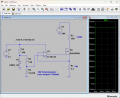
as already mentioned, 0.5A * 300V = 150W. that is a lot of heat. so your MOSFET(s) need to handle that as well as high supply voltage. one can put several MOSFETs in parallel to share the load but they still must be on a large heatsking with cooling fan.

1764854344612.png
 
Last edited:

MrChips

Joined Oct 2, 2009
34,628
I don't know from where you arrived at 500 mA.
Let's try 100 mA.
A current sense resistor of 10 Ω would give a sense voltage of 1 V.
300 V source would be good for soil resistivity of up to 3000 Ω-m.
Edit: 1000 Ω-m with source probes 3 m apart.

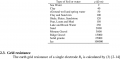
Here is a listing of different soil resistivity.

1764857644334.png
 

panic mode

Joined Oct 10, 2011
4,864
Thank you @panic mode that's really helpful
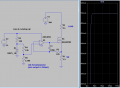
that was the basic idea and it works well. depending on used parts/values you may see a transient at the begin. this may cause overshoot 10-20% of the expected current. so for 500mA, there may be a short initial spike that goes to 550-600mA.
to compensate for that one can use RC element in the negative feedback. with suitable values one can completely eliminate overshoot, something like this:

1764861224161.png
 

ronsimpson

Joined Oct 7, 2019
4,646
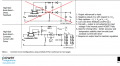
Building a 500mA 300V CC can make some real heat. (power loss)
I have used Power Int. parts many times. I like the LinkSwitch parts.
The bottom schematic is for driving CC into LEDs. I think this will work for CC into something different.
Inside the IC there is a 700V 1A MOSFET. LNK3209 I think you should get 500mA out without a problem.
I only used the PCB as a heatsink.
There needs to be a circuit added to keep the voltage under control if there is no load.
I am promoting the idea of using PWM so only 1 watt is lost oven under a short circuit.
1764864656084.png
 

Thread Starter

sirch2

Joined Jan 21, 2013
1,069
I don't know from where you arrived at 500 mA.
Let's try 100 mA.
A current sense resistor of 10 Ω would give a sense voltage of 1 V.
300 V source would be good for soil resistivity of up to 3000 Ω-m.
Edit: 1000 Ω-m with source probes 3 m apart.

Here is a listing of different soil resistivity.

View attachment 359945
Thanks, understandably there isn't a lot out there on the specifics of commercial units, the 500mA was an average guesstimate from searches suggesting that typical currents might be anywhere from milliamps to 2A. I have an insulation tester so I guess I could use that to give me a rough value of the resistivity of the soils/rock I am hoping to investigate.
 

Thread Starter

sirch2

Joined Jan 21, 2013
1,069
Building a 500mA 300V CC can make some real heat. (power loss)
I have used Power Int. parts many times. I like the LinkSwitch parts.
The bottom schematic is for driving CC into LEDs. I think this will work for CC into something different.
Inside the IC there is a 700V 1A MOSFET. LNK3209 I think you should get 500mA out without a problem.
I only used the PCB as a heatsink.
There needs to be a circuit added to keep the voltage under control if there is no load.
I am promoting the idea of using PWM so only 1 watt is lost oven under a short circuit.
View attachment 359956
Thanks, I'll take a look
 

MisterBill2

Joined Jan 23, 2018
27,173
BOB asked my question in post #4!! What sort of batteries??
Given the price of batteries even for photo-flash, you will need LOTS of money to get even 200 volts from a battery bank, and at 100 mA it will not last for long. If your measuring scheme will work with AC at some frequency, then an inverter with a current transformer to drive a regulator could work for a much lower price. And it would weigh much less.
AND, consider that 800 volts at 100 milliamps is80 watts. That is a fair amount to draw from any conveniently sized battery for very long.
 

Ian0

Joined Aug 7, 2020
13,097
I would suggest using a square wave at a non-line frequency (or its harmonics). That would allow a correlation function between the detected current and the squarewave which would eliminate much of the noise.
 
Top