Confusion about MOSFET Vgs

Thread Starter

Tom Auger

Joined Aug 9, 2017
13
Hello, this is my first post here and I'm really new at electronics, so please bear with me (and use the simplest language, please!)

I'm considering the following n-channel MOSFET from Sparkfun for an Arduino-based project to dim a lot of single-colour 12V LEDs: https://www.sparkfun.com/products/10213

The datasheet here: https://www.sparkfun.com/datasheets/Components/General/RFP30N06LE.pdf seems to indicate that Vgs is +10, and Vgs(th) is 1-2V.

Given that I intend to run PWM out of an Arduino data pin at 5V, is that sufficient, when fully ON to provide the full 12V power to the LEDs?

I have read (for example, here: http://www.newelectronics.co.uk/electronics-technology/making-sense-of-mosfet-datasheets/48782/) that the voltage at the gate must exceed the maximum Vgs rating in order to let the full voltage through (powering the LEDs at full brightness).

So I'm not sure why Sparkfun is recommending this particular component, or I'm just not properly informed.

Can anyone help me clear away my confusion (or recommend another part that would be more appropriate for this project)?
 

crutschow

Joined Mar 14, 2008
38,337
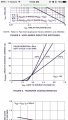
The parameter to look at, when using a MOSFET as a switch, is the Vgs used for specifying the ON resistance, as shown here for the Sparkfun MOSFET:
upload_2017-8-9_10-21-23.png

Since that Vgs if 5V, you are good for an Arduino output of 5V.

Vgs of 10V is the Absolute Maximum Rating.
Beyond that you can damage the MOSFET.
 

Thread Starter

Tom Auger

Joined Aug 9, 2017
13
Amazing crutschow, thanks for the quick answer! So I'm looking for parts where Rds(on) is achieved a Vgs <= 5V. Awesome!

What would happen if I supplied MORE voltage at the gate ie: approaching 10V as in the Vgs spec? Would Vds still remain the same at 12V? Or would something else happen?

I guess my follow-up question is: if it's fully ON at 5V, why is Vgs listed at +10 (-8) V?

Thanks
 

ebeowulf17

Joined Aug 12, 2014
3,307
Amazing crutschow, thanks for the quick answer! So I'm looking for parts where Rds(on) is achieved a Vgs <= 5V. Awesome!

What would happen if I supplied MORE voltage at the gate ie: approaching 10V as in the Vgs spec? Would Vds still remain the same at 12V? Or would something else happen?

I guess my follow-up question is: if it's fully ON at 5V, why is Vgs listed at +10 (-8) V?

Thanks
When you want more detail, look for graphs like this one (from your datasheet.) Most MOSFETs will include graphs of Rds on or Ids vs Vgs, maybe both of you're lucky. IMG_2238.PNG
 

cmartinez

Joined Jan 17, 2007
8,727
I guess my follow-up question is: if it's fully ON at 5V, why is Vgs listed at +10 (-8) V?
Most mosfets are designed to work at a gate to source voltage of 10V to be fully on, and have a maximum rating of 20V. Your mosfet is what's called a "logic-level type" to make it compatible with 5V electronics, such as your arduino. The 10V you've mentioned is its maximum rating, that is, the mosfet will work just fine (and fully on) when a voltage of between 5 and 10V is applied at its gate (relative to its source). If you apply a voltage below 5V, it will not be fully conductive and might heat up considerably, depending on how much current it's conducting. A voltage above 10V will damage it.
 

crutschow

Joined Mar 14, 2008
38,337
What would happen if I supplied MORE voltage at the gate ie: approaching 10V as in the Vgs spec? Would Vds still remain the same at 12V?
If Vgs is 10V the MOSFET is fully on (the same as a Vgs of 5V) with a very low Vds voltage as determined by the ON resistance and the drain-source current.
Vds equals the supply voltage when Vgs=0V.
 

Thread Starter

Tom Auger

Joined Aug 9, 2017
13
If Vgs is 10V the MOSFET is fully on (the same as a Vgs of 5V) with a very low Vds voltage as determined by the ON resistance and the drain-source current.
Vds equals the supply voltage when Vgs=0V.
Woah. Wait a minute, is that the case for n-channel MOSFETS? It sounds like what you're saying is that there would be NO power to the LEDs when I'm supplying > 5V to the gate, whereas if I set the logic pin supplying power to the gate to LOW, that's when the LEDs would come on?

I'm probably misunderstanding something. Forgive my lack of knowledge.
 

cmartinez

Joined Jan 17, 2007
8,727
Woah. Wait a minute, is that the case for n-channel MOSFETS? It sounds like what you're saying is that there would be NO power to the LEDs when I'm supplying > 5V to the gate, whereas if I set the logic pin supplying power to the gate to LOW, that's when the LEDs would come on?

I'm probably misunderstanding something. Forgive my lack of knowledge.
The key is understanding:
  • Vgs = voltage gate-to-source
  • Vds = voltage drain-to-source
 

crutschow

Joined Mar 14, 2008
38,337
When the MOSFET is ON (conducting) the drain-source voltage is very low.
It's acting as a switch.
 
Last edited:

Thread Starter

Tom Auger

Joined Aug 9, 2017
13
When the MOSFET is ON (conducting) the drain-source voltage is very low.
It's acting as a switch.
Hi crutschow, thanks for sticking with me here. I also apologize for being somewhat dense on the matter.

Here is my understanding of how this particular MOSFET works (from a practical standpoint, not a theoretical one):

When you connect +5V to the gate, this turns the MOSFET ON. This then allows power to flow from the source (+12V) to drain (eventually to ground). When the MOSFET if OFF, there is no power flowing from source to drain.

If my understanding is correct, why do you then say that the drain-source voltage is low? Wouldn't it be high (12V)?

Sorry if I'm missing a concept here.
 

MrChips

Joined Oct 2, 2009
34,636
There is a distinction between a low-side switch and a high-side switch.


Usually, one would put an N-channel MOSFET on the low side of the load, i.e. source pin connected to GND.
When the switch is ON, the switch is closed, i.e. it appears as a short circuit to GND. Hence the drain-source voltage is almost zero.

In other words, when any switch, mechanical or solid-state, is turned ON (what is known as an NO switch = "normally-open"), the resistance across the switch is low and hence the voltage drop across the switch is also low.
 

shortbus

Joined Sep 30, 2009
10,050
If my understanding is correct, why do you then say that the drain-source voltage is low? Wouldn't it be high (12V)?
No, he is talking about the voltage "absorbed" by the resistance in the mosfet it's self, due to the resistance inherent in the mosfet when turned on. In other words what was shown in the graphs in post#4.
 

crutschow

Joined Mar 14, 2008
38,337
When you connect +5V to the gate, this turns the MOSFET ON. This then allows power to flow from the source (+12V) to drain (eventually to ground). When the MOSFET if OFF, there is no power flowing from source to drain.
Power doesn't flow.
It's the current that flows.
If my understanding is correct, why do you then say that the drain-source voltage is low? Wouldn't it be high (12V)?
No.
I am talking about the voltage measured directly across the drain to source.
If that is 12V, then the transistor is off.
Between what two points are you referring to? (Voltage is always measured between two points.)

Think of a mechanical switch.
When the switch is on (contacts closed), there is no voltage drop across the terminals.
The MOSFET acts the same way.
 

Thread Starter

Tom Auger

Joined Aug 9, 2017
13
Thank you to everyone for the helpful responses.

I'm still thinking like a programmer and not like an engineer. I'm still very hazy about the notion of "voltage drop" so when I hear "voltage" I'm thinking "power" as in "the light is ON".

I think what you are explaining is that when you say there is no voltage between the two points, it means that they are connected and that the power is flowing through those two points equally, whereas when you say there IS voltage between the two points, it means that there is a voltage DIFFERENCE between them (because presumably it's 12V on one side and 0V on the other).

Am I close to getting this right?
 

MrChips

Joined Oct 2, 2009
34,636
Thank you to everyone for the helpful responses.

I'm still thinking like a programmer and not like an engineer. I'm still very hazy about the notion of "voltage drop" so when I hear "voltage" I'm thinking "power" as in "the light is ON".

I think what you are explaining is that when you say there is no voltage between the two points, it means that they are connected and that the power is flowing through those two points equally, whereas when you say there IS voltage between the two points, it means that there is a voltage DIFFERENCE between them (because presumably it's 12V on one side and 0V on the other).

Am I close to getting this right?
No. Thinking like that is going to get you into trouble.

If there is 0V difference between two points A and B, there is no current flow between the two points. That does not mean that there is a short between A and B.

A short between A and B is a different scenario. There could be 1000A flowing across a short and still be 0V difference between A and B, because by Ohms Law, I = V/R, if R is zero, current = I could be any value from 0 to infinity.

For the topic of this discussion, if a switch is OPEN, think open circuit - no current flows. If a switch is CLOSED, think low resistance, current is allowed to flow.
 

crutschow

Joined Mar 14, 2008
38,337
I'm still very hazy about the notion of "voltage drop"
Voltage is always measured between two points.
There's no such thing as a voltage at one point.
So a "voltage drop" is the voltage across those two points.
If the voltage drop is zero then either the two points are shorted together, or there is no voltage being applied across the two points (as with a switch that is open but not connected to anything).
 

Thread Starter

Tom Auger

Joined Aug 9, 2017
13
If the voltage drop is zero then either the two points are shorted together, or there is no voltage being applied across the two points (as with a switch that is open but not connected to anything).
Right. That makes sense. So in the case of what you mentioned earlier, which is it? To come back to crutschow's original quote:

"If Vgs is 10V the MOSFET is fully on (the same as a Vgs of 5V) with a very low Vds voltage as determined by the ON resistance and the drain-source current."

Does that mean that when 5V is applied to the gate, the n-channel MOSFET is "closed" and there is power running through the DS channel, or is it "open"? My understanding of n-channel MOSFETs is that they are normally open and the voltage at Vgs is what closes it and thus allows the 12V power to flow through DS.

I think I was a little thrown off (all right, a lot thrown off) by the "low voltage" statement.

You have to admit that statements like this one: "If the voltage drop is zero then either the two points are shorted together, or there is no voltage being applied across the two points" are ambiguous at best. Is there another way to express that there either _is_ or _isn't_ current flowing from source to drain under certain conditions that might be easier for a beginner to grasp unambiguously?

I'm learning a lot from everyone's comments. I can't believe the response to this one thread. Thank you!
 

crutschow

Joined Mar 14, 2008
38,337
Does that mean that when 5V is applied to the gate, the n-channel MOSFET is "closed" and there is power running through the DS channel,
Yes.
The usual term used with transistors is ON not "closed", which is a relay or mechanical switch term, but if that helps you understand, go for it.
I think I was a little thrown off (all right, a lot thrown off) by the "low voltage" statement.
That's the voltage from drain to source (across the contacts if you will).
You have to admit that statements like this one: "If the voltage drop is zero then either the two points are shorted together, or there is no voltage being applied across the two points" are ambiguous at best.
Sorry, I don't. :p
It is a precise technical statement with no ambiguity (at best or worst).
Is there another way to express that there either _is_ or _isn't_ current flowing from source to drain under certain conditions that might be easier for a beginner to grasp unambiguously?
Not sure.
"If" the MOSFET is ON and "if" there is a source of voltage/current connected from the MOSFET drain to source, then there will be current through the MOSFET and a low voltage-drop from drain to source.

If the MOSFET is OFF or there is not a voltage/current source then the will be no current flowing.

Don't think I can make it any clearer than that. :rolleyes:

If you still have problems then you may need to brush up on some circuit theory and Ohm's law as you seem to be having a problem with the basic concepts.
 
Last edited:
Top