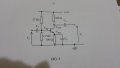
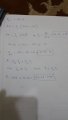
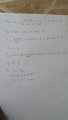
I see some errors in your calculations starting with the second equation.
It can't be 24V as you are not including any voltage drop across the transistor.
First you calculate the approximate voltage at the base due to R3 and R4 (initially ignoring the small base current), and then go from there to calculate the emitter and collector voltages and current.
After that you can backtrack to include the small base current voltage drop due to the collector current in the equivalent R3||R4 resistance and tweak the base voltage.
Then go back and tweak the resulting emitter and collector voltages.
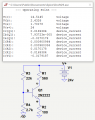
Here's the results of my LTspice simulation:
See if you can get your calculations to be reasonably close to those values.
(The simulation has about a Vbe of 0.7V rather than the 0.6V you are instructed to use, so that's one difference).
...
First you calculate the approximate voltage at the base due to R3 and R4 (initially ignoring the small base current), and then go from there to calculate the emitter and collector voltages and current. After that you can backtrack to include the small base current voltage drop due to the collector current in the equivalent R3||R4 resistance and tweak the base voltage.
Then go back and tweak the resulting emitter and collector voltages.
... View attachment 114310
What i was asking is based on what he already calculated, what is his choice for the transistor, as that was the whole point of doing this in the first place. He has three choices and he has to pick one now.
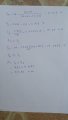
I believe your last calculations are correct.
The difference between my simulation and your calculations is that you ignored the effect of the base current on the base voltage from the input bias resistors.
What you have found is Uceq ( quiescence point, operating point of a device) ≈ 10.7V and Ptotq ≈ 0.22W. And now, based on those calculations you have to choose (select) a proper (suitable) transistor from table B.
And \( V_{CE0} \) is the maximum allowable voltage that can be applied from the collector to the emitter (with base terminal left open) of a transistor before it becomes damaged (before magic smoke escape) .
Yes.
Vceo is the worst-case condition for the maximum collector emitter voltage so you would look for a transistor that has a Vceo rating of at least 50% more than the maximum Vce the transistor would see in the circuit for good reliability.
Note that this maximum voltage with an AC input will be greater than the bias value you calculated.
If this is the case then
Vceo should be more than
50% × 10.64 =16 v
Both BC 109 and BC 107 satisfy our requirement .
Which one should I select in this case?
Since there is no price limitations I think I should select BC 107 since its rating is greater.
What you suggest?
Use the collector and emitter resistance values to calculate a max current if transistor shorted.
About 37 mA. This further limits your transistor choices to just one with parameters exceeding in-circuit conditions.
But 10.64V is not the maximum Vce that the transistor would see in the circuit. Vce_max appear when BJT is on the edge of cur off. In real life we pick BJT with Vce0 > Vcc.

 Facebook
 Google
 GitHub
 Linkedin