Facebook
 Google
 GitHub
 Linkedin

Hello AAC forum,
The circuit is a PIR (passive infrared sensor)
HC-SR501 that works with a microcontroller
https://ww1.microchip.com/downloads...iny25-ATtiny45-ATtiny85_Datasheet-Summary.pdf
to turn on some bright 12v LED lights.
Because the the PIR and the LEDs run
on 12 volts the voltage to the
ATtiny has to be knocled down to
5 volts using a linear voltage
regulator 7805.
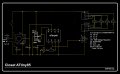
The problem is the 7805 is overheating.
When I pulled the ATtiny85 out of
the socket the 7805 does not get
hot. But with the ATtiny MC in the
circuit the 7805 heats up quickly.
So the surmise is that
the MC is pulling more current
than the 7805 can handle.
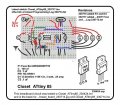
Does this look like the issue to you?
If so do you think a 10k resistor between
the 7805 5v output and the ATtiny
and the voltage input to Attiny, pin
8, solve the problem?
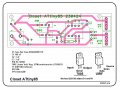
The strange thing is the circuit
was run on a breadboard for several
days before designing the PCB.
The breadboard does not heat up
but the PCB does.
Thanks.
Allen Pitts
Dallas Texas
The circuit is a PIR (passive infrared sensor)
HC-SR501 that works with a microcontroller
https://ww1.microchip.com/downloads...iny25-ATtiny45-ATtiny85_Datasheet-Summary.pdf
to turn on some bright 12v LED lights.
Because the the PIR and the LEDs run
on 12 volts the voltage to the
ATtiny has to be knocled down to
5 volts using a linear voltage
regulator 7805.
The problem is the 7805 is overheating.
When I pulled the ATtiny85 out of
the socket the 7805 does not get
hot. But with the ATtiny MC in the
circuit the 7805 heats up quickly.
So the surmise is that
the MC is pulling more current
than the 7805 can handle.
Does this look like the issue to you?
If so do you think a 10k resistor between
the 7805 5v output and the ATtiny
and the voltage input to Attiny, pin
8, solve the problem?
The strange thing is the circuit
was run on a breadboard for several
days before designing the PCB.
The breadboard does not heat up
but the PCB does.
Thanks.
Allen Pitts
Dallas Texas